When a pipe bursts at 2:00 AM or a flash flood overwhelms your sump pump, panic sets in fast. You need Water Restoration in Tulsa Oklahoma immediately, not tomorrow. Every minute of delay allows moisture to migrate deeper into subfloors, wall cavities, and insulation. Consequently, structural integrity weakens and mold spores begin to colonize within 24 to 48 hours. This guide walks you through the exact steps to take right now, the science behind professional drying, and how to vet the crew you hire to protect your largest investment.
Key Takeaways
- Shut off the main water valve and electricity to affected zones before pros arrive.
- IICRC certification is the non-negotiable standard for any restoration contractor.
- Category 3 (black water) losses require full PPE and porous material removal.
- Document everything with photos and video for your insurance adjuster immediately.
- Local Tulsa humidity and clay soil demand specialized dehumidification strategies.
Understanding the Urgency of Water Damage in Tulsa Homes
Tulsa weather swings from ice storms to torrential spring rains. Therefore, homes here face unique hydrostatic pressure on foundations and frozen pipe bursts in winter. Water is invasive; it follows the path of least resistance, traveling horizontally under baseboards and vertically up drywall via capillary action. Furthermore, the high humidity levels common in Green Country slow natural evaporation. As a result, “air drying” is a myth that guarantees secondary damage. Professional mitigation uses psychrometrics—the science of air properties—to manipulate temperature and vapor pressure, forcing moisture out of materials rapidly.
Categories of Water Contamination You Must Know
The Institute of Inspection Cleaning and Restoration Certification (IICRC) classifies water into three categories. Consequently, the category dictates the safety protocols, demolition extent, and antimicrobial treatment required.
Category 1: Clean Water
This originates from a sanitary source like a broken supply line, tub overflow, or rainwater intrusion. It poses no substantial risk from ingestion or inhalation. However, Category 1 degrades to Category 2 within 24 hours as bacteria multiply. Therefore, rapid extraction and drying often save carpet, pad, and drywall.
Category 2: Gray Water
Gray water contains significant contamination and potential discomfort or sickness if contacted. Sources include dishwasher discharge, washing machine overflow, or toilet bowl overflows (urine only). Consequently, carpet padding must be discarded. Carpet may be cleaned if treated quickly, but porous materials like insulation require removal.
Category 3: Black Water
This is grossly unsanitary. Sources include sewage backups, flooding from rivers (Arkansas River flash floods), or toilet backflows originating from beyond the trap. Black water carries pathogenic agents. Therefore, all porous materials—drywall, carpet, pad, insulation—must be removed. Technicians wear full hazmat PPE. Furthermore, structural framing requires aggressive antimicrobial application before drying begins.
The Professional Restoration Process Step by Step
Reputable firms follow the IICRC S500 Standard. Consequently, skipping steps creates liability and future mold claims. Here is what a certified project manager executes on your property.
Inspection and Assessment
Technicians use infrared thermal imaging cameras and penetrating moisture meters. They map the “wet boundary” to define the drying chamber. Furthermore, they identify safety hazards—asbestos, lead paint, electrical risks—and categorize the water loss. A detailed scope of work and estimate is generated for your insurance carrier.
Water Extraction and Removal
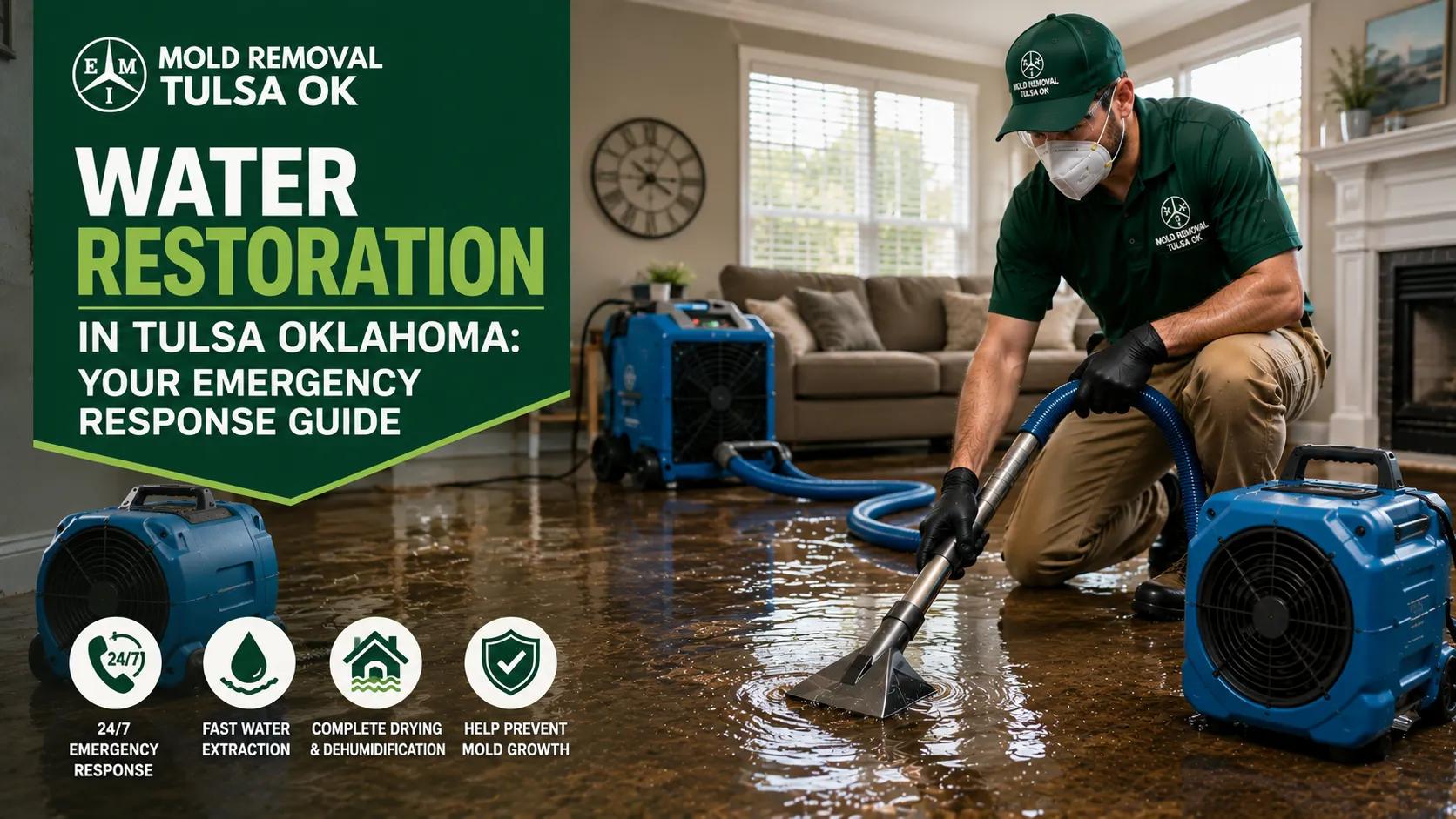
Submersible pumps and truck-mounted extraction units remove standing water. Portable extractors with weighted extraction heads pull water from carpet and pad. Consequently, extraction is 1,200 times more efficient than evaporation alone. The more liquid removed physically, the faster the drying phase.
Drying and Dehumidification
Air movers (high-velocity fans) create airflow across wet surfaces. This breaks the vapor pressure boundary layer. Simultaneously, low-grain refrigerant (LGR) dehumidifiers or desiccant units pull moisture from the air. Technicians monitor specific humidity and grain depression daily. Therefore, they adjust equipment placement to target “hard-to-dry” assemblies like double-layer drywall or hardwood floors.
Cleaning and Sanitizing
Non-porous surfaces receive EPA-registered antimicrobial treatments. HEPA vacuums remove settled spores. Furthermore, air scrubbers with HEPA filtration run continuously to capture airborne particulates during demolition and drying. Content cleaning occurs off-site for salvageable belongings.
Restoration and Repairs
Once materials hit dry standards (verified by moisture meters), reconstruction begins. This includes hanging new drywall, installing trim, painting, and flooring replacement. Consequently, a seamless transition from mitigation to build-back reduces project timeline and claim friction.
Why Tulsa Climate Complicates Drying Times
Northeast Oklahoma sits in a humid subtropical zone. Summer dew points often exceed 70°F. Consequently, outdoor air holds massive moisture loads. Opening windows during mitigation introduces more water vapor than it removes. Furthermore, expansive clay soils swell when saturated, shifting foundations and cracking new plumbing repairs. Experienced local crews understand they must seal the drying chamber and rely solely on mechanical dehumidification. They also monitor crawl spaces where high humidity lingers longest.
Navigating Insurance Claims for Water Damage
Most policies cover “sudden and accidental” discharge. However, gradual leaks, seepage, or flood (rising ground water) are typically excluded unless you carry a separate NFIP flood policy. Therefore, read your “Duties After Loss” section. You must mitigate further damage. Document the source (photo of burst fitting), the spread (video walkthrough), and the mitigation invoice. Furthermore, request a “scope of loss” from your adjuster. Compare it line-by-line with your restoration contractor’s estimate. Discrepancies are common; a good contractor supplements the claim with Xactimate pricing data.
How to Choose the Right Restoration Company in Tulsa
Not all water damage companies are equal. Storm chasers arrive after major events, lacking licensing or local accountability. Use this checklist before signing a work authorization.
Certifications Matter (IICRC)
Verify the firm holds a current IICRC Firm Registration. Ask for the technician’s Water Damage Restoration Technician (WRT) and Applied Structural Drying (ASD) certificates. Consequently, this proves training in psychrometry and microbial remediation protocols.
24/7 Emergency Response
Water does not wait for business hours. Confirm a live answer service and a local dispatch yard. Furthermore, ask for their average “on-site” time for the Tulsa metro area. A truck leaving Owasso or Broken Arrow adds critical delay.
Local Experience with Tulsa Building Codes
Permits are required for structural repairs, electrical, and plumbing. A local contractor pulls permits correctly. Furthermore, they know the specific requirements for vapor barriers in crawl spaces common in mid-century Tulsa ranch homes.
Insurance Liaison Services
The best firms assign a project manager who speaks “adjuster language.” They provide daily drying logs, psychrometric charts, and moisture mapping reports. Consequently, this documentation accelerates claim approval and reduces your out-of-pocket stress.
Preventing Mold Growth After Water Intrusion
Mold requires moisture, food (cellulose), and time. You control moisture. Therefore, maintain indoor relative humidity below 60% post-mitigation. Run bathroom exhaust fans 20 minutes after showers. Ensure downspouts extend 6 feet from foundation. Furthermore, inspect crawl space vapor barriers annually. If musty odors return, call for a post-remediation verification (PRV) inspection immediately.
Typical Costs for Water Restoration in Tulsa Oklahoma
Costs vary wildly by category, affected square footage, and material types. However, rough benchmarks help set expectations. Category 1 extraction and dry-out for a 400 sq. ft. room typically runs $3,000–$5,000. Category 2 with pad removal and antimicrobial rises to $5,000–$8,000. Category 3 sewage losses involving demolition and rebuild often exceed $15,000. Furthermore, hardwood floor drying systems (tenting) add $10–$15 per square foot. Always get a detailed, line-item estimate before work begins.
Frequently Asked Questions
How fast must water extraction begin to prevent mold?
Extraction should begin within the first hour of discovery. Mold germination starts at 24–48 hours on wet cellulose. Therefore, 24/7 emergency response is critical for limiting demolition scope and health risks.
Will my homeowners insurance cover the hotel stay during repairs?
Most standard HO-3 policies include “Loss of Use” or “Additional Living Expense” coverage. This pays for reasonable housing and meals if the home is uninhabitable. Keep all receipts and submit them to your adjuster for reimbursement.
Can I save hardwood floors after a flood?
Yes, if addressed within 24–48 hours. Specialized drying mats and negative pressure systems pull moisture through the boards. However, cupping or crowning may require sanding and refinishing once equilibrium moisture content is reached.
What is the difference between mitigation and restoration?
Mitigation stops further damage: extraction, drying, temporary tarping. Restoration rebuilds the property to pre-loss condition: drywall, paint, flooring, trim. Some firms handle both; others specialize only in mitigation.
How do I know if the structure is truly dry?
Professionals provide a drying log with daily moisture readings. They compare affected materials to unaffected “dry standards” (e.g., drywall at 12% MC). Request the final verification report before signing the certificate of completion.
Don’t Let Water Win—Act Now
Every second counts. Protect your home, your health, and your wallet with IICRC-certified experts who know Tulsa’s unique challenges.
Call 24/7 Emergency Line: (918) 268-5526
Licensed • Insured • Locally Owned & Operated
Helpful resources: For more information, see EPA guidelines on mold and FEMA disaster recovery resources.