
When severe weather strikes Green Country, the aftermath often leaves homeowners scrambling for reliable storm damage repair in Tulsa Oklahoma. High winds, massive hail, and sudden tornadoes don’t just dent siding; they compromise the structural integrity of your biggest investment. Acting fast is critical, but acting smart protects your wallet and your warranty. This guide walks you through the exact steps to take from the moment the skies clear to the final handshake with your contractor.
Key Takeaways
- Safety First: Never inspect a roof or enter a damaged structure until professionals declare it safe.
- Document Everything: Photos and videos taken immediately after the storm are your best evidence for insurance claims.
- Local Expertise Matters: Choose contractors with a physical Tulsa address and established relationships with local insurance adjusters.
- Beware of Storm Chasers: Avoid out-of-town crews demanding large upfront deposits or offering to “cover your deductible.”
- Code Compliance: Ensure repairs meet current City of Tulsa building codes, especially for roof decking and ice/water shields.
Identifying the Specific Threats to Tulsa Homes
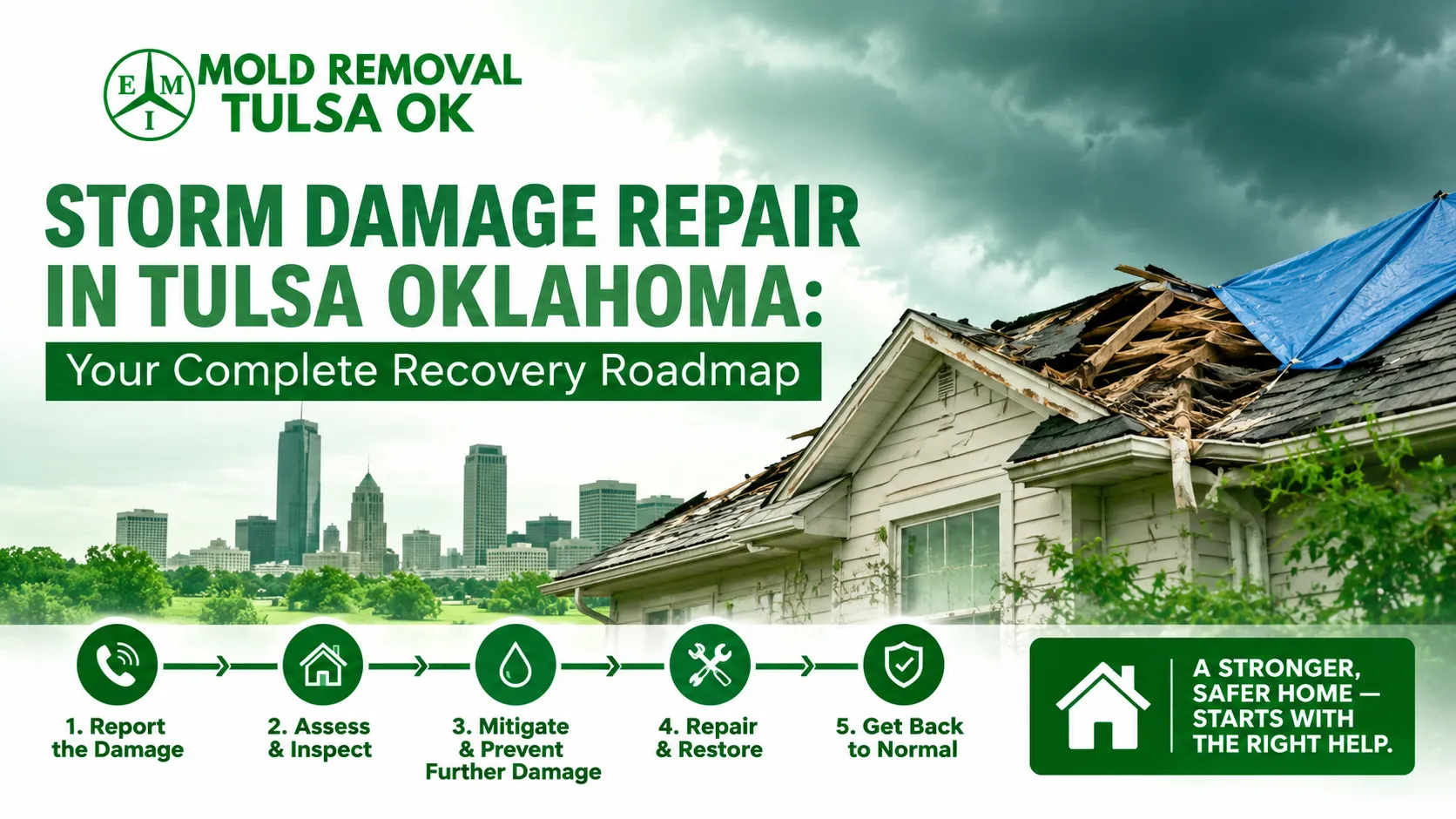
Tulsa sits squarely in Tornado Alley, making it a hotspot for specific types of property destruction. Understanding what you are up against helps you communicate effectively with adjusters and repair crews. Consequently, you avoid missing hidden issues that cause leaks months later.
Hail Impact on Roofing and Siding
Hailstones in Northeast Oklahoma frequently exceed golf ball size. Asphalt shingles lose protective granules instantly, exposing the fiberglass mat to UV degradation. Furthermore, vinyl siding cracks or chips, while aluminum dents permanently. Even if leaks aren’t visible today, the lifespan of your exterior has been drastically shortened.
Straight-Line Winds and Tornadic Activity
Straight-line winds often exceed 80 mph during spring squall lines. These gusts peel back roof decking, tear off gutters, and turn patio furniture into projectiles. Tornadoes, while less frequent, cause catastrophic structural failure. Therefore, a thorough inspection must check roof-to-wall connections and garage door integrity, not just surface shingles.
Water Intrusion and Secondary Damage
Wind-driven rain exploits the smallest vulnerabilities. Water travels along rafters, soaking insulation and drywall far from the entry point. Mold colonization begins within 48 hours. As a result, mitigation—tarping, extraction, and drying—must happen before any reconstruction begins.
Immediate Steps After the Storm Passes
The first 24 hours determine the speed and success of your recovery. However, panic leads to poor decisions. Follow this sequence to protect your family and your claim.
Secure the Property Safely
Do not climb on a wet, debris-covered roof. Call a licensed local roofer for emergency tarping. Board up broken windows and doors to prevent further weather entry and deter vandalism. If the power is down, use generators outdoors only to avoid carbon monoxide poisoning.
Create a Detailed Damage Inventory
Walk the perimeter with a timestamped camera. Capture wide shots of the whole roof elevation and close-ups of hail dents on vents, flashing, and AC units. Open the attic hatch; look for daylight through decking or wet insulation. Consequently, this visual record becomes indispensable if your insurer disputes the scope of loss.
Contact Your Insurance Carrier Promptly
File the claim immediately. Provide the date of loss and a general description. Do not give a recorded statement until you understand your policy coverage. Request a copy of your full policy, specifically the declarations page and the “Duties After Loss” section.
Navigating the Insurance Claim Process Like a Pro
Insurance companies aim to indemnify you, but adjusters handle dozens of claims weekly. You must advocate for a full scope of work. Transitioning from homeowner to project manager requires organization.
Understanding RCV vs. ACV Policies
Replacement Cost Value (RCV) pays what it costs to replace damaged items today, minus your deductible. Actual Cash Value (ACV) depreciates the item based on age. Most Tulsa policies are RCV for the dwelling, but older roofs sometimes carry ACV endorsements. Verify this before signing any paperwork.
The Adjuster Meeting: Be Present
Never let the adjuster inspect alone. Have your chosen contractor walk the roof with them. Your contractor speaks the language of Xactimate (the estimating software) and ensures code-required items—like drip edge, ice and water shield, and step flashing—are included in the estimate. Therefore, you avoid paying out-of-pocket for code upgrades later.
Supplementing the Claim
The first estimate is rarely final. Hidden damage appears during tear-off. Your contractor submits a supplement with photos and manufacturer specs. Insurers typically approve legitimate supplements quickly if documentation is solid. Persistence here pays for the quality materials your home deserves.
Selecting the Right Tulsa Restoration Contractor
This decision defines your repair quality for decades. Tulsa has excellent local firms, but “storm chasers” flood the area after major events. Distinguishing them saves you from warranty nightmares.
Verify Licensing, Insurance, and Local Presence
Oklahoma requires roofing contractors to register with the Construction Industries Board. Ask for their CIB number and verify it online. Confirm General Liability and Workers’ Comp certificates are current. A physical office in Tulsa, Broken Arrow, Owasso, or Bixby means they will honor a 5-year workmanship warranty.
Check Manufacturer Certifications
GAF Master Elite, Owens Corning Preferred, and CertainTeed SELECT Shingle Master certifications matter. They unlock enhanced material warranties (up to 50 years non-prorated) that only factory-trained installers can offer. Consequently, your roof system—not just shingles—is covered.
Red Flags to Avoid
- Door-to-door solicitors claiming “we’re in the neighborhood.”
- Pressure to sign a “Contingency Agreement” or “Direction to Pay” before you see an estimate.
- Offers to pay, waive, or absorb your deductible (insurance fraud in Oklahoma).
- No local references or a PO Box as the only address.
Breaking Down Repair Costs in the Tulsa Market
Pricing varies by material, pitch, complexity, and current labor demand. After a widespread event, prices surge due to material shortages. However, insurance estimates based on Xactimate pricing usually reflect real-time local rates.
Roof Replacement Estimates
For a standard 2,500 sq. ft. ranch home in Tulsa, a complete architectural shingle tear-off and replacement typically ranges from $12,000 to $18,000. Premium impact-resistant (Class 4) shingles add 15-20% but often qualify for insurance premium discounts. Steep pitches, multiple layers, or decking replacement increase the total.
Siding, Gutters, and Windows
Vinyl siding replacement averages $5-$9 per sq. ft. installed. Seamless aluminum gutters run $8-$12 per linear foot with guards. Window replacement varies wildly ($400-$1,200 per unit) based on brand and energy ratings. Ensure your claim separates these line items clearly.
Deductible Reality Check
Oklahoma policies often use a percentage deductible (1% or 2% of Dwelling Coverage A) for wind/hail. On a $300,000 home, a 1% deductible is $3,000. Budget this cash upfront; legitimate contractors cannot legally finance it for you.
Building Back Stronger: Code Upgrades and Resilience
Repairing to pre-storm condition is the baseline. Building to current code is the law. Upgrading for resilience is the smart investment.
Tulsa Building Code Essentials
The City of Tulsa adopts the International Residential Code (IRC). Current code requires ice and water shield at eaves, valleys, and penetrations. It mandates synthetic underlayment over felt on slopes under 4:12. Ring-shank nails are required for high-wind zones. Permits are mandatory for structural repairs; pulling them protects you during resale.
Impact-Resistant Roofing (Class 4)
Upgrading to Class 4 shingles (tested via UL 2218) withstands 2-inch steel balls dropped from 20 feet. Many carriers offer 5-15% premium reductions for these roofs. Over a 20-year policy, the savings often exceed the upgrade cost. Therefore, discuss this with your agent before ordering materials.
Secondary Water Barriers and Attic Ventilation
Sealing the roof deck with peel-and-stick tape or full-coverage membrane stops water entry even if shingles blow off. Balanced intake (soffit) and exhaust (ridge vent) ventilation prevents heat buildup that ages shingles prematurely. These details separate a “roof job” from a “roof system.”
Preventative Maintenance for Future Oklahoma Springs
You cannot stop the weather, but you can harden the target. Annual maintenance extends roof life and provides documentation of condition for future claims.
Seasonal Inspection Checklist
- Spring: Check for granule loss, lifted shingles, and gutter granules after hail season.
- Summer: Trim overhanging branches; inspect attic for ventilation flow.
- Fall: Clean gutters completely; ensure downspouts discharge 5+ feet from foundation.
- Winter: Look for ice dam patterns; verify attic insulation R-value (R-38 minimum in Tulsa).
Gutter Guards and Drainage Management
Clogged gutters back water under the drip edge, rotting fascia and decking. Micro-mesh guards keep pine needles and oak tassels out while handling Tulsa’s torrential downpours. Extend downspouts and grade soil away from the foundation to prevent basement or crawlspace moisture.
Frequently Asked Questions
How long do I have to file a storm damage claim in Tulsa?
Most Oklahoma homeowners policies require “prompt” notice, but the statute of limitations for breach of contract is typically five years. However, waiting risks claim denial due to “late reporting” or further deterioration. File within days of the event for the strongest position.
Can I choose my own contractor or must I use the insurance company’s preferred vendor?
You have the absolute right to choose any licensed contractor in Oklahoma. Insurers may suggest vendors, but they cannot require you to use them. A local contractor you vet yourself often provides better accountability than a national preferred vendor program.
What if the insurance estimate is lower than my contractor’s bid?
This is common. Your contractor should submit a detailed supplement with photos, measurements, and code references. Adjusters expect supplements. If a gap remains, invoke the “Appraisal Clause” in your policy—each side hires an appraiser, and an umpire decides the binding amount.
Are impact-resistant shingles worth the extra cost in Tulsa?
Yes. Tulsa averages multiple hail events annually. Class 4 shingles resist cracking that standard shingles suffer. The upfront premium (15-20%) is often offset by insurance discounts of 5-15% per year, plus you avoid the hassle of frequent claims and deductible payments.
Do I need a permit for roof repair in the City of Tulsa?
Yes. The City of Tulsa requires a permit for any roof deck replacement or full re-roof. Simple shingle-over-shingle overlays (often prohibited now) or minor flashing repairs may not. Your contractor should pull the permit; never pull a “homeowner permit” for a hired contractor—it voids their liability.
Don’t Let Storm Damage Linger
Every day you wait, water penetrates deeper and mold spreads further. Secure a free, no-obligation inspection from a certified Tulsa restoration specialist today.
Call Now for Emergency Tarping & Inspection
Licensed • Insured • Locally Owned Since 2005
Helpful resources: For more information, see EPA guidelines on mold and FEMA disaster recovery resources.