
Mold after fall storms in Tulsa grows fast in water-damaged areas, and the key recovery steps are: dry the space within 24 to 48 hours, remove soaked materials, disinfect, and keep humidity low. Oklahoma fall storms bring heavy rain, hail, and strong wind that push water into roofs, basements, and crawl spaces. Mold does not wait for you to finish the insurance claim. It starts growing within two days of water intrusion. This guide covers mold after fall storms tulsa in detail.
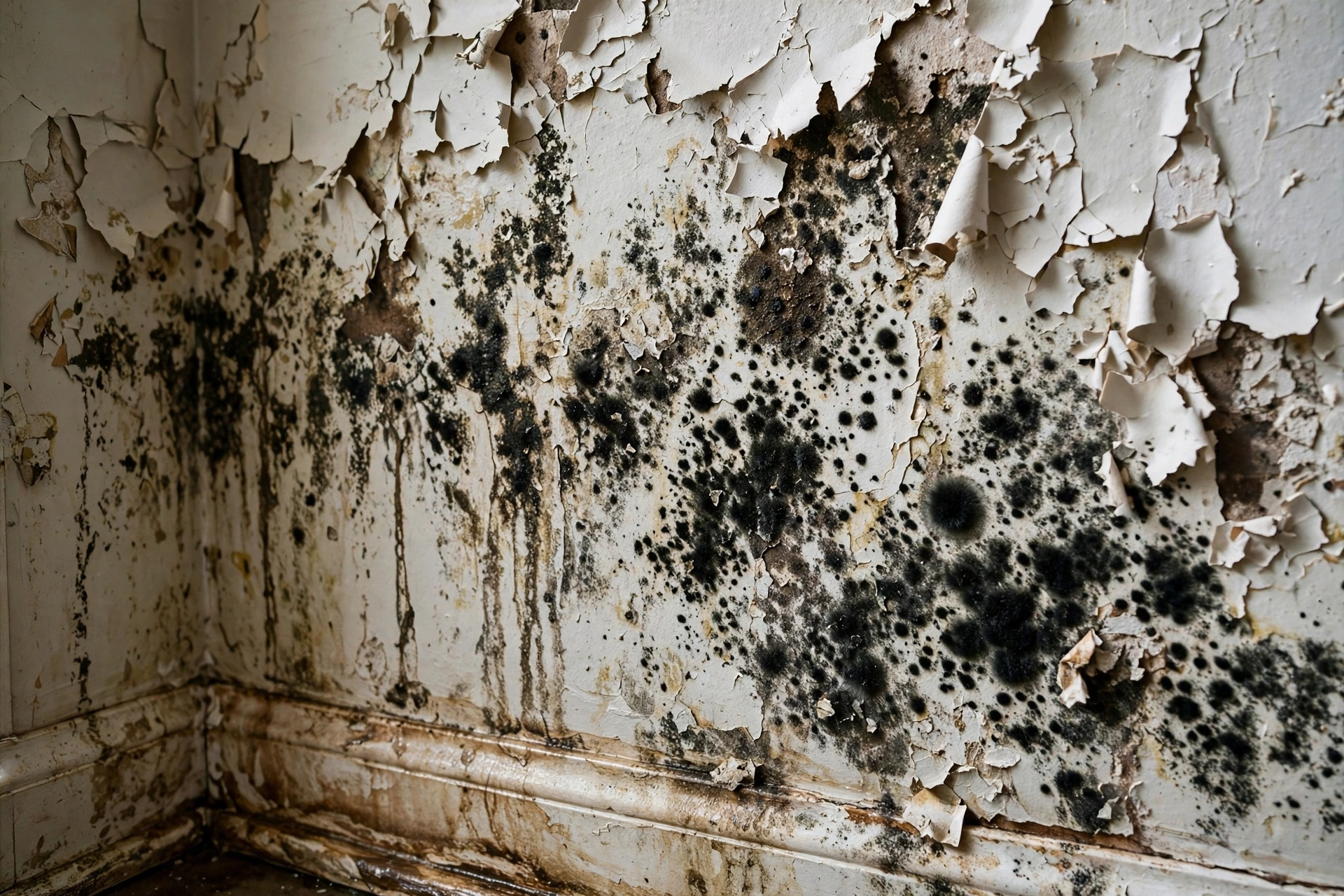
1. Act Fast: The First 24 to 48 Hours Matter Most
The single most important fact about mold after fall storms in Tulsa is the timeline. Mold spores are always in the air. They need one thing to grow: moisture. Once storm water soaks drywall, carpet, or wood, the clock starts.
- 0 to 24 hours: water sits, materials absorb it
- 24 to 48 hours: mold begins to grow on wet surfaces
- 48 to 72 hours: visible mold can appear, odors start
- After a week: mold spreads behind walls and under floors
If your home took on water during a fall storm, do not wait for everything to “dry on its own.” Start drying immediately.
2. Make the Home Safe Before You Start
Storm damage can hide dangers. Before you enter a flooded or damaged room:
- Turn off electricity to wet areas if water reached outlets
- Wear boots, gloves, and an N95 mask
- Watch for sagging ceilings and warped floors
- Open windows for fresh air if it is safe to do so
If the roof is damaged, cover it with a tarp as soon as the storm passes. Every extra rain makes the mold problem worse.
When dealing with mold after fall storms tulsa, professional help makes the process faster and safer.
3. Remove Standing Water and Wet Materials
Pump or mop out standing water first. Then pull up soaked carpet and padding, which almost never dry fully and are prime mold food. Cut out drywall at least 12 inches above the waterline. Remove wet insulation, because it traps moisture against framing.
Move furniture and belongings out of wet rooms. Wipe down hard surfaces and let them air dry. Set up fans and a dehumidifier to pull moisture out of the air and materials.
| Material | Keep or Remove | Why |
|---|---|---|
| Carpet and padding | Remove | Rarely dries fully; mold grows underneath |
| Drywall below waterline | Remove | Porous; mold grows inside it |
| Fiberglass insulation | Remove | Holds moisture against wood framing |
| Solid wood framing | Keep if dried | Can be dried and treated if caught early |
| Tile and concrete | Keep if cleaned | Non-porous; clean and dry thoroughly |
| Upholstered furniture | Often remove | Foam and fabric trap water and spores |
4. Dry Everything Completely
Drying is the step people rush, and rushing it causes the mold to return. Run dehumidifiers and fans for several days, not just a few hours. Use a moisture meter on wood framing if you can. Wood should read below 16 percent moisture before you rebuild.
Pay special attention to:
- Behind baseboards and inside wall cavities
- Under appliances that sat in water
- Crawl spaces and basements, which stay damp longest
- HVAC ducts that pulled in storm humidity
5. Clean Up Mold After Fall Storms Tulsa the Safe Way
Small areas of surface mold on hard materials can be scrubbed with detergent and water, then dried completely. Porous materials with visible mold, like drywall and carpet, should be removed and thrown out rather than cleaned.
Do not use bleach on wood or drywall. It lightens the color but leaves the mold roots and adds moisture. After cleaning, treat remaining surfaces with an antimicrobial product made for mold remediation.
Many Tulsa homeowners searching for mold after fall storms tulsa want to know what to expect.
6. Watch for Hidden Mold in the Following Weeks
Mold after fall storms in Tulsa often hides. Storm water gets behind walls through roof leaks and window frames, and mold grows there quietly. In the weeks after a storm, check for:
- Musty smells that come and go
- Paint bubbling or peeling on ceilings and walls
- Stains that keep spreading even after drying
- Allergy symptoms that are worse at home
If you find any of these, the water went deeper than you thought. A professional inspection with moisture meters and, if needed, wall cavity checks will find it.
When to Call a Professional After Storm Damage
Call a mold remediation professional when water sat for more than 48 hours, when mold covers more than about 10 square feet, when it is inside walls or the HVAC system, or when anyone in the home has breathing problems. Storm damage mold is often worse than it looks because the water traveled far.
EMI Mold Removal Tulsa OK serves Tulsa and the surrounding metro with service open 24 hours and emergency help 24/7. Storm damage does not keep office hours, so neither do they. Prices are given by phone only. Call (918) 268-5526 for a quote.
Documenting Storm Damage for Insurance
After a fall storm, good documentation helps your insurance claim and helps your mold remediation company plan the work. Start before cleanup begins if it is safe to do so.
Take photos and video of every damaged area: the roof, water lines on walls, soaked floors, damaged belongings. Photograph the outside too, including fallen branches, damaged shingles, and water pooling near the foundation. Keep a simple written log with dates: when the storm hit, when you found the water, and when drying started.
Save receipts for everything you spend on emergency repairs, tarps, fans, and dehumidifier rentals. Most homeowners policies cover sudden storm damage but not long-term neglect, so the timeline matters. Acting fast and documenting it shows the damage was sudden and that you did your part to limit it.
One caution: do not wait for the insurance adjuster before drying. Most policies require you to prevent further damage. Start drying right away and document as you go. Your adjuster can review photos later.
Helpful resources: For more information, see EPA guidelines on mold and FEMA disaster recovery resources.
Understanding mold after fall storms tulsa helps you make better decisions for your home.
Conclusion
Handling mold after fall storms Tulsa homeowners face each season is preventable when you move fast. Dry the space within 48 hours, remove materials that cannot be saved, disinfect what remains, and fix the water entry point. Watch for hidden mold in the weeks after the storm, because that is when it does its quiet damage. If the job is bigger than you can handle safely, call EMI Mold Removal Tulsa OK. Open 24 hours with 24/7 emergency service at (918) 268-5526, prices given by phone only.