
Fall feels like a safe season, but mold does not take the autumn off. Many Oklahoma homeowners are surprised to learn that fall is one of the busiest times for mold growth. So why does mold grow in fall in Oklahoma? The answer comes down to temperature swings, fall storms, trapped indoor moisture, and leaves and debris piling up around the home. Understanding these five reasons helps you protect your house before small moisture problems turn into mold colonies. This guide covers why does mold grow in fall oklahoma in detail.
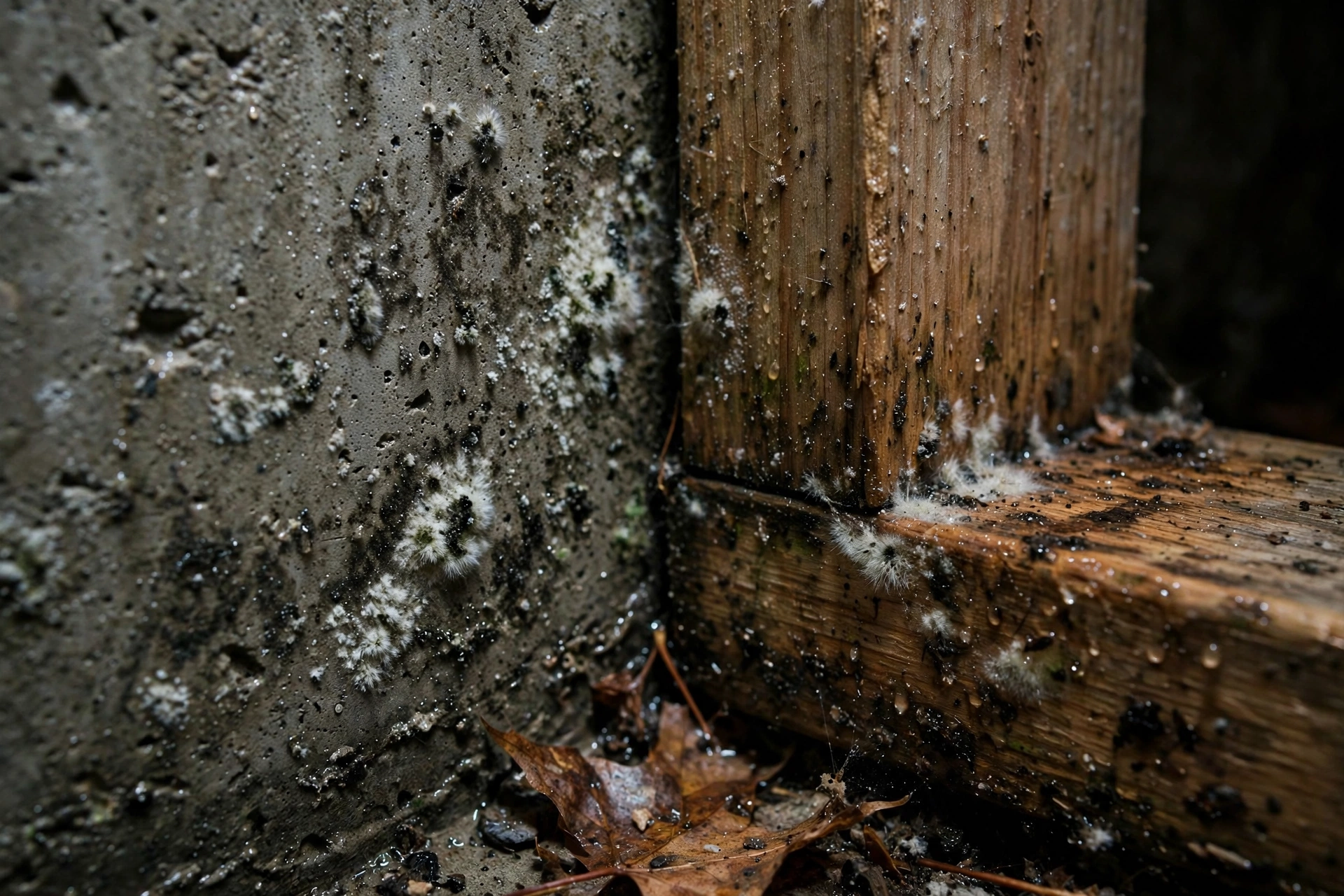
Reason 1: Fall Storms Bring Water Inside
Oklahoma fall weather is unpredictable. Warm days collide with cold fronts, and the result is heavy rain, strong wind, and sometimes hail. Wind-driven rain forces water under shingles, through worn window seals, and into small cracks in siding. A roof that survived summer may start leaking after the first big fall storm.
Even small leaks matter. A slow drip inside a wall cavity can soak insulation and drywall for weeks before anyone notices. By then, mold is well established. After every major fall storm, do a quick check of your attic, ceilings, and exterior walls for new stains or damp spots.
Reason 2: Temperature Swings Create Condensation
Fall in Oklahoma means hot afternoons and chilly nights. When warm indoor air meets cold surfaces like windows, exterior walls, and metal ductwork, condensation forms. Those tiny water droplets are enough to feed mold on window frames, sills, and inside wall cavities.
This is most common in homes with single-pane windows or poor insulation. You may notice foggy windows in the morning or damp spots along baseboards on exterior walls. Wiping windows dry and improving insulation helps, but persistent condensation is a sign to look deeper.
When dealing with why does mold grow in fall oklahoma, professional help makes the process faster and safer.
Reason 3: Heating Systems Stir Up Moisture and Spores
When you fire up the furnace for the first time in fall, two things happen. First, dust and mold spores that settled in the ductwork over summer get blown through the house. Second, heating dries the air, which sounds good, but it can also drive hidden moisture out of walls and into living spaces where it condenses on cooler surfaces.
Dirty HVAC systems are a known mold source. Condensation pans under air handlers stay damp, and dust buildup on coils feeds growth. A fall HVAC checkup with a clean filter and inspected drain lines goes a long way toward prevention.
| Fall Mold Cause | Where It Happens | Warning Sign | Prevention |
|---|---|---|---|
| Storm leaks | Attic, ceilings, exterior walls | New stains after rain | Inspect roof and seals after storms |
| Condensation | Windows, baseboards, ducts | Foggy glass, damp sills | Improve insulation, wipe moisture |
| HVAC startup | Ducts, vents, drain pans | Musty smell when heat runs | Change filter, service the system |
| Leaf debris | Gutters, foundation, crawl space | Overflowing gutters | Clean gutters and downspouts |
| Closed-up house | Bathrooms, basement, closets | Stale damp odor | Ventilate, run exhaust fans |
Reason 4: Leaves and Debris Trap Water Against the House
Falling leaves look pretty, but they cause real moisture problems. Leaves clog gutters, and clogged gutters overflow. Instead of flowing away from the house, rainwater pours down beside the foundation. It seeps into basements and crawl spaces, where it feeds mold for months.
Leaf piles against siding hold moisture against the wood too. Wet mulch and leaf beds near the foundation raise soil moisture, which wicks into concrete and framing. Clean your gutters at least twice each fall, and keep leaves and mulch pulled back from the foundation walls.
Reason 5: Homes Get Sealed Up and Ventilation Drops
As temperatures fall, we close windows and stop airing out the house. Cooking, showering, and even breathing add moisture to indoor air. Without ventilation, that moisture builds up. Bathrooms without working exhaust fans become mold factories in fall. Closets on exterior walls develop mildew on clothes and shoes.
The fix is simple but easy to forget. Run exhaust fans during and after showers. Crack a window when cooking. If your home feels stuffy and smells stale, indoor humidity is probably too high. A small hygrometer costs little and tells you exactly where you stand. Aim for 30 to 50 percent.
Many Tulsa homeowners searching for why does mold grow in fall oklahoma want to know what to expect.
What Is the Ideal Indoor Humidity in Fall?
Keep indoor humidity between 30 and 50 percent. Below 30 percent, air feels dry and uncomfortable. Above 50 percent, mold risk climbs fast. In fall, many Oklahoma homes drift above 60 percent when windows stay closed and the air conditioner runs less. A dehumidifier in damp areas like basements and crawl spaces keeps levels in the safe zone.
Why Does Mold Grow in Fall Oklahoma Homes? Prevention Checklist
- Clean gutters and downspouts; make sure water flows away from the foundation.
- Inspect the roof and attic after fall storms for leaks or stains.
- Service the HVAC system: new filter, clean drain lines, check the pan.
- Run bathroom and kitchen exhaust fans every time you cook or shower.
- Keep indoor humidity between 30 and 50 percent.
- Pull leaves and mulch back from siding and foundation walls.
- Check windows and exterior seals for gaps; recaulk where needed.
- Look inside closets on exterior walls for early mildew spots.
When Should You Call a Professional in Fall?
Some fall mold is a weekend project. A small mildew patch on a window frame can be wiped away and watched. But call a professional when mold keeps returning, covers a large area, hides inside walls or ducts, or follows storm damage. Musty smells with no visible source also deserve an inspection, since the colony may be inside the structure.
At EMI Mold Removal Tulsa OK, we help Oklahoma homeowners deal with fall mold every year. Our team finds hidden moisture, removes mold safely, and helps you stop it from coming back. We are open 24 hours with emergency service 24/7.
Understanding why does mold grow in fall oklahoma helps you make better decisions for your home.
Key Takeaways
- Fall storms, condensation, HVAC startup, leaf debris, and sealed-up homes all drive autumn mold growth in Oklahoma.
- Keep indoor humidity between 30 and 50 percent as temperatures swing.
- Clean gutters and inspect the roof after every major storm.
- Ventilate bathrooms and kitchens even when it is chilly outside.
- Persistent or hidden mold needs professional help. Call (918) 268-5526 any time.
So why does mold grow in fall Oklahoma homes? Because the season stacks moisture sources while we seal our homes shut. The good news is that a little fall maintenance prevents most problems. And when mold does appear, fast professional help keeps a small issue from becoming a big one. EMI Mold Removal Tulsa OK is open 24 hours at 5610 S Columbia Ave, Tulsa, OK 74105. Call (918) 268-5526 for emergency service 24/7 and ask for a quote by phone.
Helpful resources: For more information, see EPA guidelines on mold.