
Mold in air ducts is one of the most concerning mold problems a Tulsa homeowner can face, because your HVAC system can carry spores to every room in the house. If you smell something musty when the air conditioner or heater kicks on, or if family members feel worse at home than outside, mold in air ducts in Tulsa homes may be the reason. This guide explains the five main health risks, how duct mold starts, and what to do about it. This guide covers mold in air ducts tulsa in detail.
How Does Mold Get Into Air Ducts?
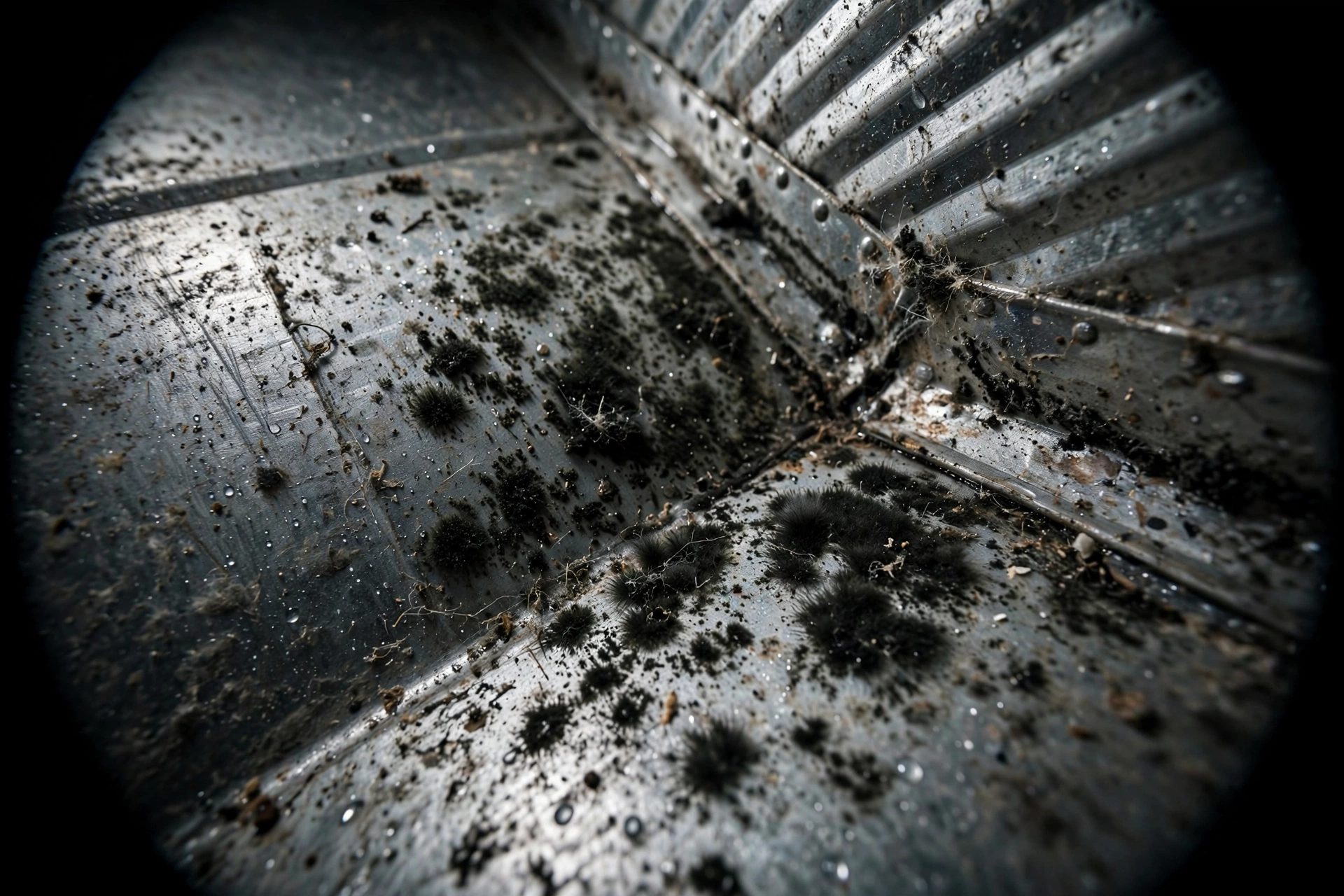
Air ducts are dark, and they often collect dust. Add moisture, and you have everything mold needs. Moisture gets in several ways. Condensation forms on cold duct surfaces when warm humid air passes through, especially in Tulsa summers. Clogged condensate drain lines let water back up into the system. Roof or plumbing leaks can drip into ductwork. Dirty filters and dusty coils give mold spores a food source.
Once mold starts growing inside ducts, the blower spreads spores through every vent each time the system runs. That is what makes duct mold different from a patch on a bathroom wall. It does not stay in one place.
Health Risk 1: Allergy Symptoms
Mold spores are a common allergen. When ducts blow spores into living spaces, sensitive people may develop sneezing, runny nose, itchy eyes, and skin irritation. These symptoms often follow a pattern: they get worse when the HVAC runs and improve when you leave the house. If your allergies flare every time the air kicks on, duct mold is worth checking.
When dealing with mold in air ducts tulsa, professional help makes the process faster and safer.
Health Risk 2: Asthma Flare-Ups
For people with asthma, mold exposure may trigger flare-ups including coughing, wheezing, and shortness of breath. Because duct mold delivers spores continuously while the system runs, it can be harder to avoid than mold in a single room. Anyone in the home with asthma should take duct mold seriously and talk to their doctor about symptoms.
Health Risk 3: Respiratory Irritation
Even people without allergies or asthma may notice throat irritation, coughing, or a stuffy nose from ongoing mold exposure. The tiny particles irritate airways, especially during long heating or cooling seasons when the system runs for hours each day. Children and older adults tend to be more sensitive.
Health Risk 4: Sinus Problems
Repeated exposure to airborne mold may contribute to sinus congestion and sinus headaches in sensitive individuals. If your household deals with constant stuffiness that clears up on vacation or outdoors, indoor air quality deserves a look. Duct mold is one possible source among several, which is why professional testing helps pinpoint the cause.
Many Tulsa homeowners searching for mold in air ducts tulsa want to know what to expect.
Health Risk 5: Ongoing Exposure for Sensitive Groups
Infants, older adults, and people with weakened immune systems may be more affected by mold exposure. Because duct mold spreads through the whole home, these groups cannot simply avoid one room. That whole-house reach is the core danger of mold in air ducts and the main reason it should be handled promptly.
| Health Concern | Who Is Most Affected | Typical Pattern |
|---|---|---|
| Allergy symptoms | People with mold or dust allergies | Worse when HVAC runs, better outdoors |
| Asthma flare-ups | People with asthma | Coughing or wheezing tied to system cycles |
| Respiratory irritation | Children, older adults, everyone with long exposure | Throat irritation, stuffy nose at home |
| Sinus problems | People prone to sinus issues | Congestion that eases away from home |
| Ongoing whole-house exposure | Infants, elderly, immune-compromised | Symptoms across the home, not one room |
Note: This information is general and educational. It is not medical advice. If you have health concerns, talk to your doctor.
What Are the Signs of Mold in Air Ducts?
- Musty smell from vents: The most common clue. If the odor appears when the system starts, mold may be inside.
- Visible growth near vents: Dark spots or fuzzy patches around vent covers deserve attention.
- Symptoms tied to the HVAC: Feeling worse when heating or cooling runs is a strong hint.
- Excess dust: Mold colonies release spores that add to household dust.
- Past water events: A history of drain backups, coil freezing, or leaks near the air handler raises the odds.
Can You Clean Air Duct Mold Yourself?
Basic maintenance is fine for homeowners. Change filters regularly, keep the condensate drain line clear, and wipe vent covers. But cleaning inside ductwork is not a DIY job. Scrubbing ducts without proper equipment and containment can release large amounts of spores into the home. Professionals use HEPA-filtered vacuums, rotary brushes, and containment practices designed for duct systems. If you suspect mold inside the ducts, call a pro rather than opening panels yourself.
Understanding mold in air ducts tulsa helps you make better decisions for your home.
How Do Professionals Handle Mold in Air Ducts Tulsa?
A professional starts with inspection, sometimes using cameras to see inside the ductwork. If mold is confirmed, the process usually includes:
- Sealing vents and setting up containment so spores do not spread during cleaning
- HEPA vacuuming and mechanical brushing of duct interiors
- Cleaning the coils, blower, and drain pan, which are common growth sites
- Applying antimicrobial treatment where appropriate
- Fixing the moisture source, such as a clogged drain or duct leak
- Replacing filters and advising on maintenance
Fixing the moisture source is essential. Cleaned ducts will grow mold again if condensation or leaks continue.
How Can Tulsa Homeowners Prevent Duct Mold?
- Change HVAC filters every 1 to 3 months.
- Keep the condensate drain line clear; pour a cup of vinegar through it a few times a year.
- Schedule yearly HVAC maintenance to catch coil and drainage problems early.
- Seal duct leaks so humid attic or crawl space air does not enter the system.
- Keep indoor humidity between 30 and 50 percent.
- Consider a UV light at the coil if your technician recommends it for your system.
Key Takeaways
- Mold in air ducts can spread spores to every room, making it a whole-house problem.
- The five main health risks include allergies, asthma flare-ups, respiratory irritation, sinus problems, and ongoing exposure for sensitive groups.
- A musty smell when the HVAC runs is the top warning sign.
- Duct cleaning needs professional equipment; DIY scrubbing can make it worse.
- Prevention comes down to filters, drainage, sealed ducts, and humidity control.
Mold in air ducts Tulsa homes is fixable, but it needs prompt professional attention because of how far spores can travel. If your vents smell musty or your family feels worse when the system runs, do not ignore it. EMI Mold Removal Tulsa OK serves the full Tulsa metro from 5610 S Columbia Ave, Tulsa, OK 74105. We are open 24 hours with emergency service 24/7. Call (918) 268-5526 today for a quote and breathe easier knowing your air is clean.
Helpful resources: For more information, see EPA guidelines on mold.