
Mold remediation vs mold removal. What is the real difference? Many Tulsa homeowners use these two terms like they mean the same thing. They do not. Mold removal means getting rid of the mold you can see. Mold remediation means fixing the whole problem, including the moisture that caused it. If you are searching for mold remediation vs mold removal, this guide explains the five key differences in plain English so you can choose the right service for your home.
What Is Mold Removal?
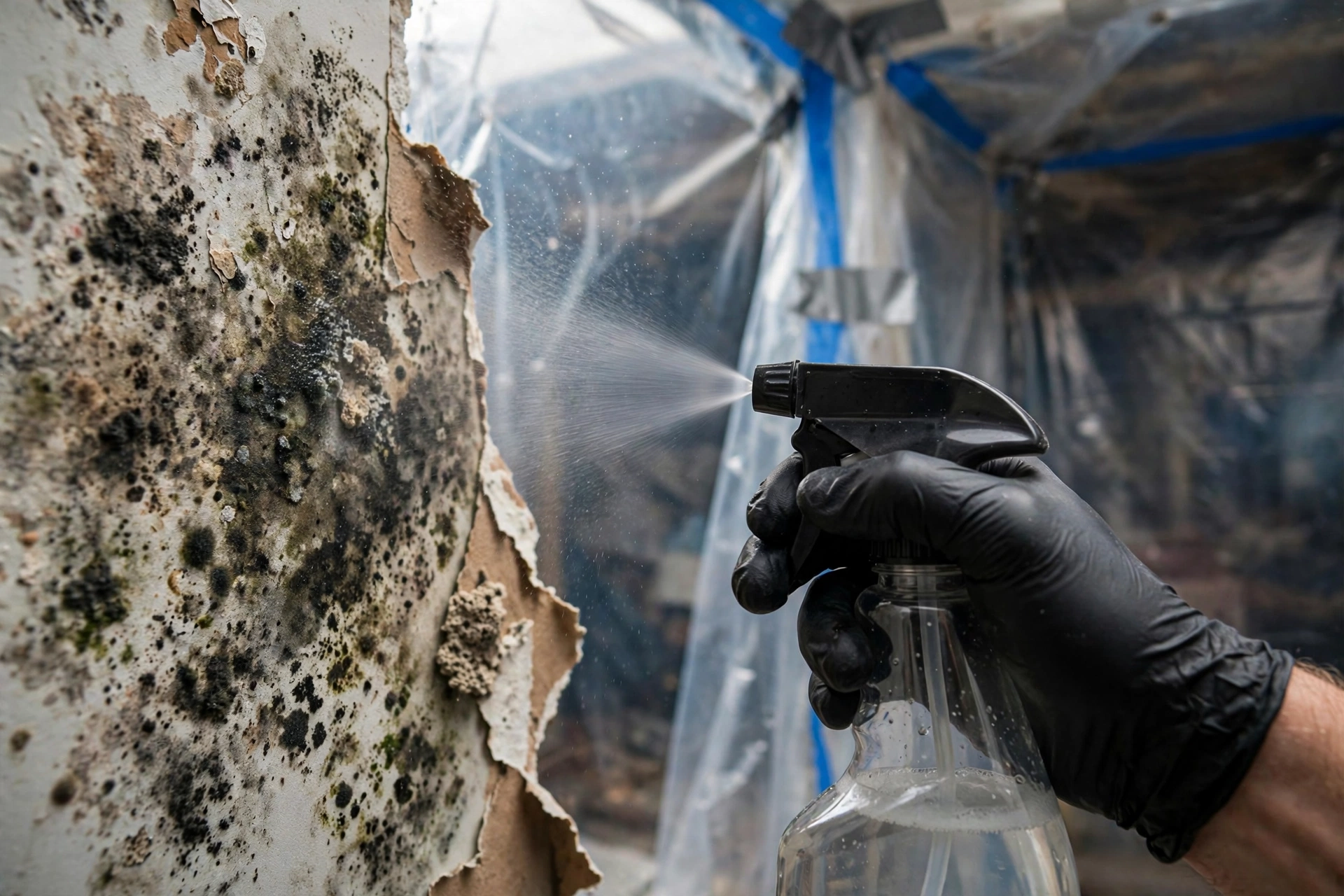
Mold removal is the physical act of cleaning mold off a surface. You scrub it, wipe it, or cut out the affected material and throw it away. When the visible mold is gone, the job is done. There is no deeper investigation and no follow-up.
For a small patch of surface mold on bathroom tile or a windowsill, removal may be all you need. These hard, non-porous surfaces do not let mold roots dig in deep, so a good cleaning can solve the problem. But removal alone never asks why the mold grew there in the first place. If the moisture source stays in place, the mold will come back, often within weeks. That is the biggest limit of simple mold removal, and it is the reason so many homeowners end up cleaning the same spot over and over.
What Is Mold Remediation?
Mold remediation is a full process, not just a cleaning. It starts with an inspection to find every mold colony, including hidden ones behind drywall, under flooring, or inside wall cavities. Then the crew seals off the work area with plastic containment so spores do not drift through the rest of your home. They remove or clean the affected materials, repair the moisture problem, dry everything with professional equipment, and take steps to prevent future growth.
Think of it this way. Removal treats the symptom. Remediation treats the cause. Professional remediation follows accepted industry practices, such as negative air pressure containment and HEPA air filtration during the work. The goal is not just a clean-looking wall. The goal is normal, healthy indoor air and a home that stays mold-free because the water issue is gone.
When dealing with mold remediation vs mold removal, professional help makes the process faster and safer.
5 Key Differences Between Mold Remediation and Mold Removal
Here are the five differences that matter most when you decide what your Tulsa home needs.
1. Scope of the Work
Mold removal covers only the visible mold you can point at. Mold remediation covers the visible mold plus hidden colonies, moisture sources, and prevention measures. Remediation is the larger, more complete job. If mold is growing inside a wall cavity, wiping the surface does nothing. Remediation opens the wall, removes the affected drywall, and treats the framing.
2. Moisture Control
Simple removal does nothing about water. Remediation always includes finding and fixing the leak, condensation issue, or humidity problem that fed the mold. This step is the heart of remediation. A roof leak, a sweating pipe, or indoor humidity above 60 percent will keep feeding mold no matter how often you clean. Fix the water, and you starve the mold.
3. Containment and Safety Steps
Scrubbing a moldy wall can release thousands of spores into the air in minutes. Remediation uses containment barriers, sealed doorways, and air scrubbers to protect the rest of your home while the work happens. Workers also wear respirators and protective suits. Basic removal usually skips all of these protections, which means spores can settle in other rooms and start new colonies.
4. Testing and Verification
A real remediation job often includes testing before the work starts and after it finishes. Air or surface samples confirm that mold levels are back to normal. This gives you proof the job worked. Removal rarely includes any testing, so you never truly know whether the problem is solved or just hidden for a while.
5. Long-Term Results
Removal gives you a clean surface today. Remediation gives you a dry, healthy home for the long term. Remediation costs more up front, but it saves money over time by stopping the cycle of regrowth, repeat cleanings, and spreading damage. Homeowners who choose cheap removal for a serious problem often pay twice when the mold returns.
Mold Remediation vs Mold Removal: Side-by-Side Comparison
This table puts the two services next to each other so you can see the trade-offs at a glance.
| Factor | Mold Removal | Mold Remediation |
|---|---|---|
| Main goal | Clean visible mold | Solve the full mold problem |
| Hidden mold | Not addressed | Found and treated |
| Moisture source | Not fixed | Found and repaired |
| Containment | Usually none | Barriers plus air filtration |
| Testing | Rarely included | Often done before and after |
| Prevention steps | None | Humidity control guidance |
| Best for | Tiny surface spots | Any real mold problem |
Which One Does Your Tulsa Home Need?
Use these simple rules to decide between mold remediation and mold removal for your situation.
- Simple removal may be enough when: the mold patch is smaller than about 10 square feet, it sits on a hard non-porous surface like tile, glass, or metal, and you are sure there is no hidden moisture behind or under it.
- Full remediation is the safer choice when: the mold covers a large area, it keeps coming back after cleaning, you smell a musty odor but cannot see mold, your home had a leak or flooding, or anyone in the household has breathing problems or allergies.
- When you are not sure, get an inspection. A trained technician with a moisture meter can tell within minutes whether you face a surface issue or a deeper one. Guessing wrong costs more in the long run.
Many Tulsa homeowners searching for mold remediation vs mold removal want to know what to expect.
Why the Difference Matters So Much in Tulsa
Tulsa weather makes this choice especially important. Humid summers, heavy spring storms, and winter condensation give mold plenty of chances to grow. A quick wipe-down feels like progress, but Oklahoma humidity will bring the mold right back if the moisture stays. Many local homes also have crawl spaces and older plumbing, both of which hide slow leaks for months.
There is a health angle too. Mold exposure may cause allergy-like symptoms in sensitive people, such as sneezing, coughing, itchy eyes, or skin irritation. People with asthma or weak immune systems can be more affected. Proper remediation with containment keeps spores from spreading through your air ducts during cleanup. That protection matters most for children, older adults, and anyone with breathing trouble. If anyone in your home feels sick, see a doctor as well as fixing the house.
One honest warning: some companies sell “remediation” but only do surface cleaning. Ask what their process includes before you hire anyone. A real remediation job should mention inspection, containment, moisture repair, drying, and prevention. If a quote skips those words, you are likely looking at simple removal dressed up with a fancier name.
Helpful resources: For more information, see EPA guidelines on mold.
Conclusion: Choose the Right Fix the First Time
Now you know the answer to mold remediation vs mold removal. Removal cleans what you can see. Remediation finds the cause, fixes the moisture, and keeps mold from returning. For most Tulsa homes with a real mold problem, remediation is the smarter choice because it solves the issue at its root instead of hiding it.
If you are still deciding between mold remediation vs mold removal for your home, talk to the local team at EMI Mold Removal Tulsa OK. We inspect first, explain what we find in plain words, and recommend only what your home truly needs. Call (918) 268-5526 any time. We are open 24 hours with emergency service 24/7 across the Tulsa area.