
Discovering fuzzy patches on drywall or a persistent musty smell in your basement is more than a nuisance; it signals a potential health hazard demanding immediate action. For residents in Green Country, professional Mold Removal Tulsa Ok services are not a luxury but a necessity for maintaining structural integrity and indoor air quality. Our humid subtropical climate creates a perfect breeding ground for spores, turning minor leaks into major infestations rapidly. Consequently, understanding the remediation process empowers you to protect your family and your investment effectively.
Key Takeaways
- Speed is critical: Colonies can establish themselves within 24 to 48 hours of water intrusion.
- Health risks vary: Exposure triggers allergies, asthma attacks, and severe respiratory issues in sensitive individuals.
- DIY has limits: Surface cleaning fails to address root causes like hidden moisture or airborne spores.
- Training matters: Hire trained firms following EPA guidelines for safe, thorough remediation.
- Prevention saves money: Controlling humidity below 60% stops recurrence before it starts.
Why Tulsa Homes Face Unique Fungal Challenges
Climate Factors Driving Growth
Tulsa sits in a transition zone where humid air from the Gulf clashes with drier continental fronts. Furthermore, the region averages over 40 inches of annual rainfall. Consequently, high ambient humidity levels often exceed the 60% threshold required for spore germination. Summers bring intense heat and moisture, while winters trap condensation inside tight building envelopes. Therefore, homes here fight a year-round battle against moisture intrusion that drier climates rarely experience.
Common Hidden Spots in Local Architecture
Many Tulsa properties feature crawl spaces, slab foundations, and aging HVAC systems prone to leakage. In addition, older neighborhoods like Brookside or Maple Ridge often have plaster walls and inadequate vapor barriers. These structural quirks create concealed pockets where colonies thrive unnoticed. For instance, a slow leak behind a shower surround can saturate insulation for months before visible evidence appears. As a result, professionals must use thermal imaging and moisture meters to map the full extent of contamination.
Recognizing the Warning Signs Early
Visual Clues and Musty Odors
Discoloration is the most obvious indicator. You might see black, green, white, or even orange patches spreading across surfaces. However, color alone does not identify the species; Stachybotrys chartarum (often called “black mold”) requires lab testing for confirmation. Furthermore, a persistent earthy smell often precedes visible growth. This odor signals active microbial volatile organic compounds (MVOCs) off-gassing. Therefore, never ignore a smell you cannot source, especially after heavy rains or plumbing work.
Health Symptoms You Shouldn’t Ignore
Occupants often experience symptoms that improve when they leave the building. Common reactions include chronic sinus congestion, throat irritation, coughing, and skin rashes. In addition, individuals with asthma or compromised immune systems may suffer severe flare-ups. Mycotoxins produced by certain species can cause neurological issues like headaches and memory lapses over long exposure. Consequently, if multiple family members share unexplained respiratory issues, an environmental inspection is warranted immediately.
The Professional Mold Removal Tulsa OK Process Explained
Inspection and Containment Protocols
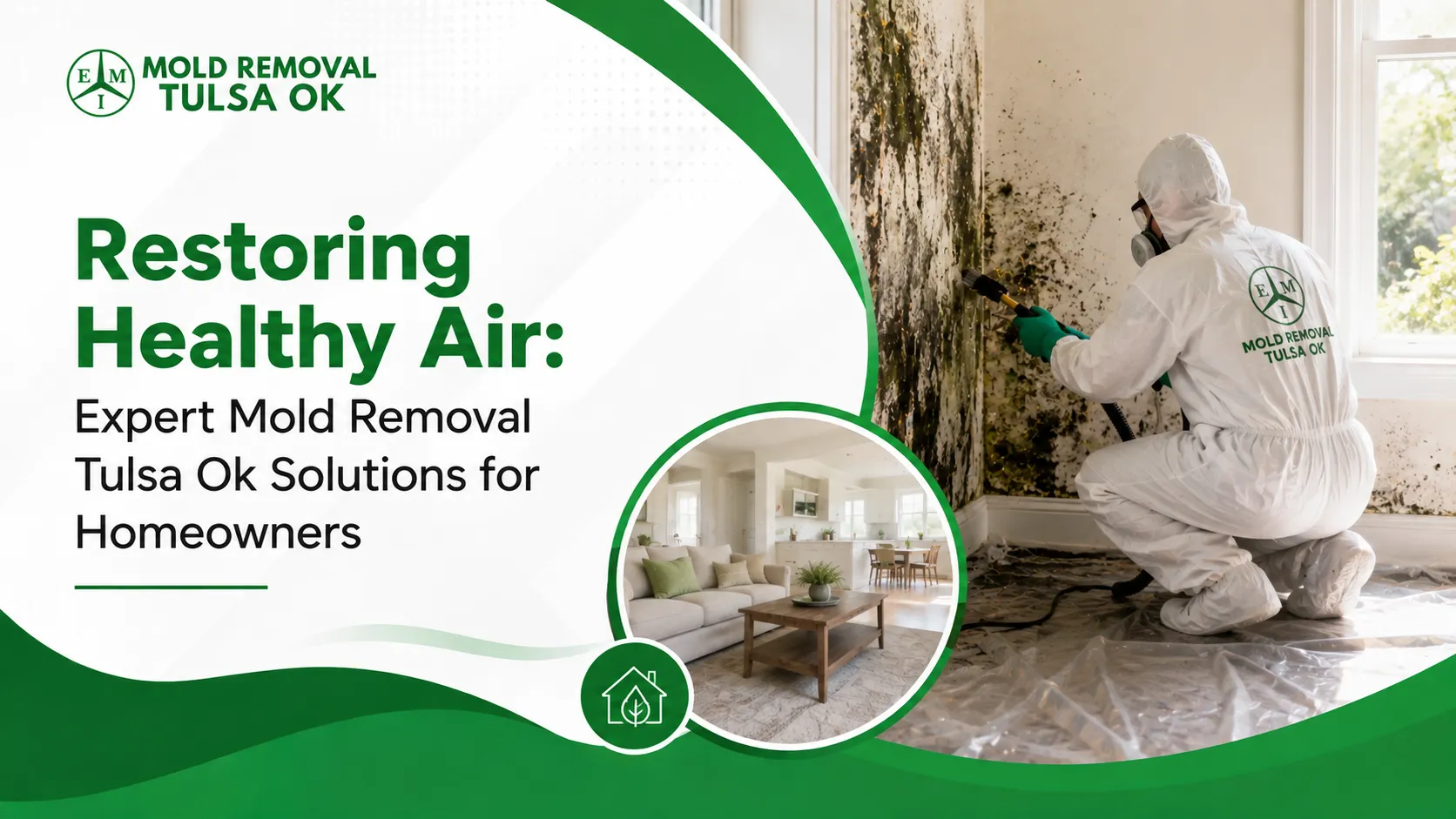
Reputable firms begin with a comprehensive assessment using moisture mapping and air sampling. Subsequently, they establish containment barriers using polyethylene sheeting and negative air pressure machines. This step prevents cross-contamination to clean areas during demolition. Furthermore, technicians don personal protective equipment (PPE), including N95 or P100 respirators and full-body suits. Without these controls, disturbing colonies releases millions of spores into the ventilation system.
Air Filtration and Physical Removal
High-Efficiency Particulate Air (HEPA) scrubbers run continuously to capture airborne particulates. Meanwhile, porous materials like drywall, carpet, and insulation are removed and bagged for disposal. Non-porous surfaces undergo HEPA vacuuming followed by damp wiping with antimicrobial solutions. However, simply spraying bleach is ineffective on porous wood framing; the hyphae (roots) penetrate deep below the surface. Therefore, wire brushing or soda blasting structural elements is often necessary for complete eradication.
Restoration and Prevention Measures
Once clearance testing confirms spore counts match outdoor levels, reconstruction begins. This phase involves replacing removed building materials with mold-resistant alternatives. In addition, the underlying moisture source,whether a roof leak, foundation crack, or HVAC condensation,must be permanently resolved. Consequently, a warranty or post-remediation verification report provides peace of mind that the job meets industry standards like industry S520.
Choosing the Right Mold Removal Tulsa OK Specialist
Certifications That Matter
Look for Institute of Inspection, Cleaning and Restoration Certification (industry) credentials, specifically Applied Microbial Remediation Technician (AMRT) or Water Damage Restoration Technician (WRT). Furthermore, Oklahoma does not license mold remediators specifically, making third-party certification your best quality filter. Companies should also carry pollution liability insurance, which covers mold-related claims standard general liability policies exclude. Therefore, always request proof of current certifications and insurance before signing a contract.
Questions to Ask Before Hiring
Ask for a detailed written scope of work including containment setup, air filtration specs, and disposal methods. In addition, inquire about their protocol for post-remediation verification (PRV) by an independent third-party assessor. A conflict of interest arises if the remediator tests their own work. Furthermore, request references from recent Tulsa-area projects similar in scope to yours. Transparency regarding timeline, cost, and potential complications separates professionals from opportunists.
Long-Term Prevention Strategies for Oklahoma Residents
Humidity Control Essentials
Maintaining indoor relative humidity between 30% and 50% is the single most effective deterrent. Whole-house dehumidifiers integrated into the HVAC system outperform portable units for consistent control. Furthermore, ensure bathrooms and kitchens have exhaust fans vented outdoors,not into the attic. Run these fans for 20 minutes after showers or cooking. In addition, monitor hygrometers in problem areas like basements and crawl spaces. Consequently, data-driven adjustments prevent the microclimates spores love.
Maintenance Routines That Work
Inspect roof flashing, gutters, and downspouts quarterly. Ensure downspouts extend at least six feet from the foundation. Furthermore, grade soil away from the slab to direct stormwater runoff. Check washing machine hoses, water heater connections, and ice maker lines annually for slow drips. Meanwhile, schedule professional HVAC maintenance to clean coils and drain pans, preventing condensation overflow. A proactive maintenance calendar costs pennies compared to a full-scale remediation project.
Frequently Asked Questions
How much does professional mold remediation cost in Tulsa?
Costs vary significantly based on the affected square footage, location (attic vs. crawl space), and material types. Costs vary by home size and damage extent. EMI gives clear quotes by phone. Always get three detailed estimates; be wary of prices far below market rate, as they often skip critical containment or clearance testing steps.
Will my homeowner’s insurance cover the removal?
Coverage depends entirely on the moisture source. Sudden, accidental events like a burst pipe or storm damage are typically covered. However, gradual damage from long-term humidity, neglected maintenance, or construction defects is almost always excluded. Review your policy’s “fungi” or “mold” endorsement limits, which often have payout caps unless you purchased a rider.
Can I stay in my home during the remediation process?
For small, contained jobs (under 10 square feet), occupancy is usually safe if the work area is sealed. However, larger projects involving aggressive demolition or negative air pressure create noise, dust, and chemical odors. Furthermore, sensitive individuals (infants, elderly, immunocompromised) should relocate temporarily. Your project manager will advise based on the specific containment strategy deployed.
What is the difference between mold removal and mold remediation?
“Removal” implies total elimination, which is biologically impossible since spores exist naturally everywhere outdoors and indoors. “Remediation” is the industry-standard term meaning the reduction of fungal ecology to normal levels (Condition 1) per industry S520. It involves fixing the moisture source, removing damaged materials, cleaning salvageable items, and verifying results. Beware companies promising “total removal” as a marketing tactic.
How fast does mold grow after a water leak in Tulsa humidity?
Under optimal conditions,temperatures between 70-90°F and humidity above 60%,germination begins in 24 to 48 hours. Visible colonies appear in 3 to 12 days. Tulsa’s summer climate accelerates this timeline drastically. Consequently, emergency water extraction and structural drying within the first 24 hours is your best defense against a full-blown infestation requiring professional intervention.
Protect Your Home & Health Today
Don’t let hidden moisture compromise your air quality or property value. Our specialists provide thorough inspections, safe remediation, and lasting moisture solutions tailored to Tulsa’s unique climate.
Available 24/7 for Emergency Water Damage Response
Get Help From EMI Mold Removal Tulsa OK
Do not let mold threaten your home or health. EMI Mold Removal Tulsa OK is open 24 hours with 24/7 emergency service. Call (918) 268-5526 today for honest help and a clear quote by phone. We are at 5610 S Columbia Ave, Tulsa, OK 74105.
Helpful resources: For more information, see EPA guidelines on mold.