
A fire extinguishes, but the damage lingers in walls, ventilation, and belongings long after the flames die out. Hiring a qualified smoke restoration company is the single most critical decision a property owner makes during the recovery phase. The difference between a thorough remediation and a superficial cleanup dictates whether your home remains a safe haven or becomes a source of chronic respiratory issues and persistent odors. This guide breaks down the science, the process, and the selection criteria that separate elite contractors from average crews.
Key Takeaways
- Speed is science: Acidic soot begins etching glass and corroding metal within hours, not days.
- Hidden migration: Smoke penetrates HVAC systems, insulation, and sealed cavities requiring specialized detection.
- Certification matters: IICRC credentials (FSRT, OCT) validate technical competence beyond basic cleaning.
- Content vs. Structure: Top firms restore personal items off-site while stabilizing the building envelope simultaneously.
- Insurance alignment: The best partners document everything to streamline claim approval and maximize coverage.
The Invisible Threat: Understanding Smoke Behavior
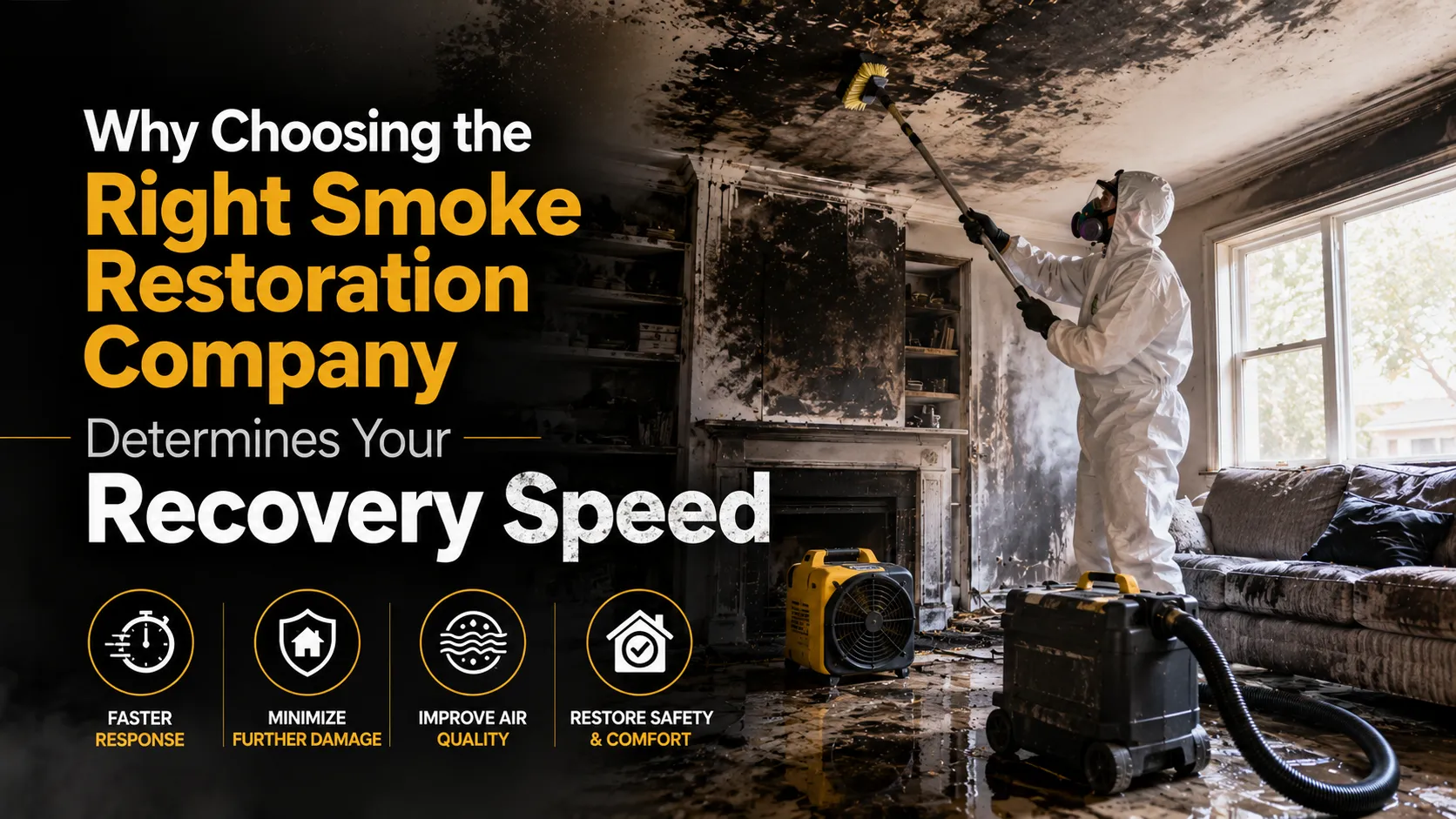
Smoke is not merely a discoloration; it is a complex aerosol of carbon, tar, acids, and synthetic polymers. Consequently, it behaves differently than water or wind damage. Heat drives pressurized smoke into microscopic pores of substrates. Furthermore, convection currents carry residue to cooler areas—often far from the fire origin—such as closets, upper cabinets, and attic spaces. Therefore, a visual inspection alone misses 40 to 60 percent of the actual contamination.
Different fuel sources create distinct residue profiles. Protein fires from kitchen grease leave a nearly invisible, pungent film that adheres tenaciously to paint. Conversely, synthetic materials like plastics and foam produce thick, black, smeary soot that requires solvent-based cleaning. Natural wood or paper fires generate dry, powdery residue that vacuums easily but infiltrates deep into grain. A competent technician identifies the fuel type immediately to select the correct chemistry.
Core Phases of Professional Remediation
Emergency Corrosion Control
The first 24 to 48 hours define the project scope. Technicians deploy hydroxyl generators or ozone chambers to neutralize airborne volatiles. Simultaneously, they apply corrosion inhibitors to chrome fixtures, appliances, and electronics. This step prevents irreversible pitting on high-value items. Without it, replacement costs escalate dramatically.
Structural Cleaning Protocols
Walls and ceilings demand a systematic approach. Dry sponge cleaning removes loose carbon before wet cleaning begins. Subsequently, technicians use alkaline detergents to saponify acidic oils. Sealers lock in residual staining and odor on porous framing before new drywall or paint is applied. Skipping the sealing step guarantees odor return during humidity spikes.
HVAC and Ductwork Decontamination
The ventilation system acts as the building’s circulatory system. If contaminated, it redistributes particulates every time the blower runs. Professionals isolate the air handler, HEPA-vacuum supply and return trunks, and sanitize coils. Duct liner that cannot be cleaned must be removed and replaced. This phase is non-negotiable for indoor air quality.
Contents Processing and Restoration
Personal property divides into three streams: clean on-site, pack-out for ultrasonic cleaning, and total loss inventory. Ultrasonic cavitation tanks restore intricate items—jewelry, electronics, blinds—without abrasion. Ozone chambers treat soft goods like clothing and upholstery. A detailed chain-of-custody inventory protects both homeowner and insurer.
Advanced Technologies That Define Quality
Modern remediation relies on physics, not just elbow grease. Thermal fogging replicates the fire’s heat-driven penetration, carrying deodorant into the same pathways smoke traveled. Hydroxyl radicals (OH) oxidize odor molecules at the molecular level without the safety hazards of ozone. Consequently, occupants can often remain on-site during treatment. Additionally, infrared cameras reveal moisture from firefighting efforts hidden behind walls, preventing mold colonization.
Air scrubbers with HEPA filtration maintain negative pressure in work zones. This containment prevents cross-contamination to clean rooms. Real-time particulate monitors verify air quality clearance before reconstruction begins. Firms investing in this instrumentation deliver measurable, verifiable results.
Red Flags When Vetting Contractors
Beware companies arriving without personal protective equipment (PPE) or a written scope of work. Furthermore, avoid contractors who quote a flat price per square foot without testing. Smoke damage is heterogeneous; pricing must reflect actual conditions. Another warning sign: pressure to sign an “Assignment of Benefits” form before the adjuster inspects. This legal document transfers your claim rights and often leads to inflated invoices and litigation.
Check for a physical local address, not just a PO box. Verify IICRC firm registration on the official registry. Ask for references from the last three smoke jobs completed. Legitimate firms welcome scrutiny; fly-by-night operators deflect questions.
Insurance Claims: Documentation as Leverage
Your restoration partner functions as a technical advocate. They produce hygienist reports, photometric logs, and line-item estimates in Xactimate format. Adjusters rely on this data to authorize funds. Incomplete documentation leads to supplemental requests, delaying payment and repairs. A seasoned project manager speaks the carrier’s language, negotiating code upgrades and matching materials that policies often exclude.
Policyholders should understand “actual cash value” versus “replacement cost” provisions. The restoration estimator bridges this gap by depreciating only legitimate wear, not fire-related deterioration. This distinction recovers thousands in withheld depreciation.
Health Implications of Incomplete Cleanup
Residual polycyclic aromatic hydrocarbons (PAHs) and volatile organic compounds (VOCs) off-gas for years. Children, elderly occupants, and immunocompromised individuals face elevated risks. Persistent cough, eye irritation, and exacerbated asthma signal incomplete remediation. Third-party clearance testing—air sampling and surface wipes—provides objective proof of safety. Never accept a contractor’s visual sign-off as final verification.
Commercial vs. Residential Complexity
Commercial losses introduce business interruption calculations. Downtime costs often exceed property damage. Therefore, phased restoration allows critical operations to resume in clean zones while work continues elsewhere. Data centers, healthcare facilities, and food processing plants require validated sterile protocols. Specialty certifications like IICRC AMRT (Applied Microbial Remediation Technician) become essential for these environments.
Sustainable Practices in Modern Restoration
Green chemistry has matured. Plant-based surfactants now match petrochemical performance for soot removal. Low-VOC sealers reduce occupant exposure. Waste diversion programs recycle charred lumber, metal, and concrete, reducing landfill fees. Forward-thinking firms track carbon footprint per project, appealing to ESG-focused insurers and property managers.
Post-Restoration Verification Checklist
- No visible soot or staining on structural surfaces.
- Zero odor detection after 72 hours of HVAC operation at normal humidity.
- Air sample results below baseline particulate thresholds.
- Surface pH readings neutral (6.5–7.5) on cleaned substrates.
- Complete inventory reconciliation with signed delivery receipts.
- Warranty documentation for workmanship and materials.
Cost Drivers and Budget Planning
Project cost correlates with three variables: penetration depth, square footage affected, and content volume. Protein fires cost more per square foot due to labor-intensive wet cleaning. High-ceiling atriums require scaffolding, increasing labor hours. Pack-out services add logistics, storage, and transportation line items. Transparent contractors provide a phased estimate: stabilization, cleaning, sealing, and reconstruction. This transparency prevents sticker shock at substantial completion.
Choosing Your Recovery Partner
Interview three firms minimum. Ask specific technical questions: “How do you treat smoke-damaged insulation in knee walls?” “What is your protocol for electronics exposed to acidic soot?” “Show me your hydroxyl generator maintenance logs.” Evaluate responsiveness—do they answer directly or deflect to sales scripts? Trust the team that educates you during the estimate, not the one that pressures a signature.
Recovery is a marathon, not a sprint. The right partner walks the entire distance, from emergency board-up to final certificate of occupancy. Your health, asset value, and peace of mind depend on that choice.
Frequently Asked Questions
How quickly should mitigation begin after the fire department leaves?
Mitigation must start within hours. Acidic soot residues begin etching glass, tarnishing metals, and yellowing plastics within 24 to 48 hours. Emergency corrosion control and ventilation stabilization prevent irreversible damage to high-value contents and structural components.
Can I stay in my home during the restoration process?
It depends on the severity and the methods used. Hydroxyl technology allows safe occupancy during deodorization, unlike ozone which requires evacuation. However, structural demolition, heavy chemical cleaning, or asbestos/lead abatement usually necessitate temporary relocation for safety.
What certifications prove a firm is qualified for fire and smoke damage?
Look for IICRC firm registration plus individual technician certifications: Fire & Smoke Restoration Technician (FSRT), Odor Control Technician (OCT), and Health & Safety Technician (HST). For complex commercial jobs, Applied Structural Drying (ASD) and Applied Microbial Remediation Technician (AMRT) credentials indicate advanced capability.
Will my insurance cover the full cost of professional smoke remediation?
Most standard homeowner and commercial policies cover sudden and accidental smoke damage. Coverage limits, depreciation clauses, and code upgrade endorsements affect the final payout. A restoration contractor experienced in insurance negotiation ensures the scope aligns with policy language, maximizing your entitled recovery.
How is smoke odor permanently eliminated rather than masked?
Permanent removal requires source removal (cleaning or discarding charred materials), molecular oxidation (hydroxyls or ozone), and encapsulation (sealing porous framing). Masking agents or fragrances only hide odor temporarily; they fail when humidity rises or temperatures fluctuate.
Ready to Reclaim Your Property?
Don’t let lingering smoke compromise your health or asset value. Our IICRC-certified team provides 24/7 emergency response, advanced hydroxyl deodorization, and full reconstruction management.
Call Now for Rapid Dispatch: 1-918-268-5526
Free damage assessment • Direct insurance billing • 5-year workmanship warranty
Helpful resources: For more information, see EPA guidelines on mold and FEMA disaster recovery resources.