
Attic mold removal Tulsa homeowners need starts with understanding why attics are the number one hiding place for mold in local homes. Poor ventilation, roof leaks, and bathroom fans venting into the attic instead of outside create the perfect damp environment. This guide explains the seven proven steps for safe attic mold removal in Tulsa, plus how to keep it from coming back.
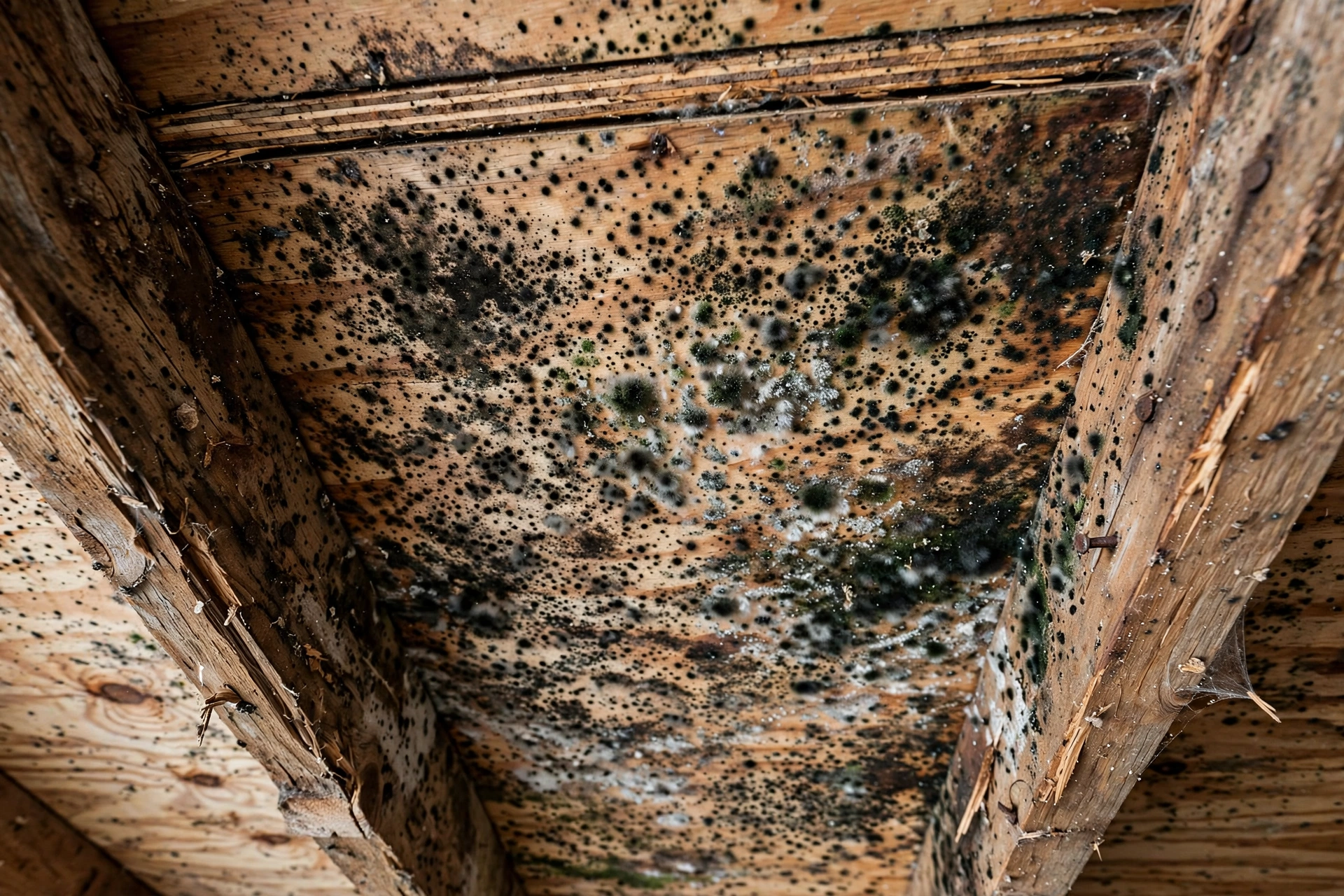
Why Tulsa Attics Grow Mold
Attics sit right under the roof, where heat and moisture collect. In Tulsa, several local factors make attics especially vulnerable. Summer humidity pushes moisture into every gap. Winter creates condensation when warm indoor air hits cold roof decking. Spring hailstorms damage shingles and let rainwater in. And many homes have bathroom exhaust fans that blow moist air straight into the attic instead of through the roof, which is like running a humidifier in a closed box.
The result is often mold on roof sheathing, rafters, and insulation. Because homeowners rarely visit their attics, the mold can grow for years before anyone notices. By the time dark staining appears on the underside of the roof deck, the colony is usually well established.
Attic Mold Removal Tulsa: 7 Proven Steps
Step 1: Attic Inspection and Moisture Mapping
A technician enters the attic and inspects the roof decking, rafters, insulation, and ventilation. Moisture meters check wood moisture content, and the inspector looks for the water source: roof leaks, condensation patterns, or misdirected exhaust fans. Photos document everything. You should never approve attic work without this inspection, because treating mold without finding the moisture source is wasted money.
Step 2: Fix the Moisture Source First
Before any mold is touched, the water problem gets fixed. That may mean repairing roof flashing or shingles, rerouting a bathroom fan to vent through the roof, sealing air leaks from the living space, or improving attic ventilation. This step comes first on purpose. Removing mold from a still-wet attic guarantees it will return.
Step 3: Containment and Protection
The attic access is sealed with plastic sheeting to keep spores from dropping into living areas during the work. Vents and openings are covered. In many attic jobs, the whole attic becomes the containment zone. Workers wear respirators and protective suits because attics concentrate spores in a tight space.
Step 4: Remove Contaminated Insulation
Moldy insulation cannot be cleaned. Insulation is porous, and mold roots grow through it completely. Affected insulation is bagged and removed from the attic. This step also removes the musty smell trapped in the material. New insulation goes in only after the mold is gone and the attic is dry.
Step 5: Clean Structural Wood
Unlike insulation, rafters and roof decking can usually be saved. Technicians HEPA-vacuum all wood surfaces, then scrub with antimicrobial cleaners. For heavy staining, media blasting with dry ice or soda gently strips mold from wood without damaging it. After cleaning, an antimicrobial encapsulant may be applied to seal the wood and discourage regrowth.
Step 6: HEPA Air Scrubbing
HEPA air scrubbers run during and after the cleaning to capture airborne spores stirred up by the work. The attic air gets filtered until spore counts drop to normal. This step protects both the workers and your home when containment comes down.
Step 7: Ventilation Improvements and Final Check
The job finishes with ventilation fixes that prevent recurrence: balanced soffit and ridge vents, properly routed exhaust fans, and sealed air leaks from below. A final inspection confirms the wood is clean, moisture readings are normal, and airflow is correct. You get photos of the finished work and guidance on what to monitor.
Attic Mold: What Each Step Fixes
| Step | Problem it solves | Skip it and… |
|---|---|---|
| Inspection | Unknown extent and source | You treat the wrong area |
| Moisture repair | Active water feeding mold | Mold returns within months |
| Containment | Spore spread to living areas | Whole house gets contaminated |
| Insulation removal | Mold rooted in porous material | Smell and spores remain |
| Wood cleaning | Surface and embedded mold | Staining and regrowth continue |
| Air scrubbing | Airborne spores | High spore counts linger |
| Ventilation fix | Future moisture buildup | The cycle repeats next year |
5 Warning Signs of Attic Mold
- Musty smell in upstairs rooms or hallways, especially in summer.
- Dark staining on the underside of roof decking, visible from the attic hatch.
- Frost or condensation on nails and roof sheathing in winter.
- Damp or compressed insulation, which loses its insulating value when wet.
- Allergy symptoms that worsen at home, since attic spores can drift down through ceiling gaps.
Can You Clean Attic Mold Yourself?
Attics are a poor DIY environment. They are hot, cramped, and full of concentrated spores. Without containment, scrubbing moldy rafters rains spores down into your living space through every ceiling gap. Without fixing ventilation, the mold returns. And walking on joists without proper footing risks falling through the ceiling. For anything beyond a tiny surface spot near the hatch, professional attic mold removal in Tulsa is the safer and smarter choice.
What Attic Mold Removal Costs Depend On
Pricing varies with the size of the affected area, how much insulation must be replaced, whether roof repairs are needed, and how bad the ventilation problems are. A small contained section and a full attic with rotten decking are very different projects. We give exact quotes by phone after understanding your attic’s condition, never as a guess on a website. Call for a quote and get honest numbers for your specific situation.
Helpful resources: For more information, see EPA guidelines on mold.
Conclusion: Fix the Attic Right, Once
Attic mold removal in Tulsa works when all seven steps are followed: inspect, fix the moisture, contain, remove bad insulation, clean the wood, scrub the air, and fix ventilation. Skip the moisture repair or the ventilation, and you will be doing it again next year.
For attic mold removal Tulsa homeowners can count on, EMI Mold Removal Tulsa OK specializes in attic jobs across the metro. We find the real water source, clean your attic safely with proper containment, and fix the ventilation so mold stays gone for good. Call (918) 268-5526 any time. We are open 24 hours with emergency service 24/7.