Discovering dark, fuzzy patches spreading across your drywall or a persistent musty odor lingering in the basement is a homeowner’s nightmare. In the humid subtropical climate of Green Country, moisture intrusion is a constant battle, making professional remediation a necessity rather than a luxury. This guide walks you through the critical steps of identifying, vetting, and hiring the right specialists to restore your indoor air quality and protect your property value.
Key Takeaways
- Certification is non-negotiable: Verify IICRC certification and Oklahoma state licensing before signing any contract.
- Testing vs. Remediation: Reputable firms separate inspection from removal to avoid conflicts of interest.
- Containment is key: Proper negative air pressure and HEPA filtration prevent cross-contamination during the project.
- Local experience matters: Companies familiar with Tulsa’s specific housing stock and climate patterns diagnose root causes faster.
- Post-remediation verification: Always demand third-party clearance testing before reconstruction begins.
Why Tulsa Homes Are Prime Targets for Toxic Growth
Tulsa sits in a unique climatic zone where hot, humid summers collide with damp, chilly winters. Consequently, condensation forms inside wall cavities, attics, and crawl spaces with alarming regularity. Furthermore, the region’s expansive clay soil shifts dramatically with moisture changes, cracking foundations and creating hidden entry points for groundwater. Older neighborhoods like Maple Ridge or Swan Lake feature beautiful vintage architecture, yet their aging plumbing and original building envelopes often lack modern vapor barriers. Therefore, microbial growth finds ample opportunity to colonize cellulose-based materials like wood framing and paper-faced drywall.
Storms add another layer of risk. Severe weather events, including hail and straight-line winds, frequently damage roofing systems. Even a minor leak left unattended for 48 hours can spawn a colony requiring extensive intervention. Insurance claims data from the Oklahoma Insurance Department consistently ranks water damage among the top causes of loss in Tulsa County. As a result, proactive moisture management and rapid response to leaks are your first line of defense.
Identifying the Enemy: Beyond Visual Confirmation
Not every dark stain signals a toxic hazard. However, Stachybotrys chartarum, the species commonly associated with severe health risks, thrives on high-cellulose, low-nitrogen materials that stay wet for extended periods. It typically appears greenish-black and slimy when active, turning powdery when dry. Nevertheless, visual identification alone is unreliable. Many harmless molds look similar, while dangerous varieties can hide behind baseboards, inside HVAC plenums, or under carpet padding.
Professional inspectors use moisture meters, thermal imaging cameras, and air sampling cassettes to map the extent of contamination. Air sampling compares indoor spore counts against outdoor baselines. Surface sampling via tape lifts or swabs identifies specific genus and species. Consequently, a thorough inspection report provides the roadmap for remediation scope, preventing both under-treatment and unnecessary demolition.
Critical Credentials: Separating Pros from Pretenders
The restoration industry attracts many contractors, yet few hold the specialized credentials required for safe microbial remediation. The Institute of Inspection, Cleaning and Restoration Certification (IICRC) sets the global standard. Specifically, look for the Applied Microbial Remediation Technician (AMRT) designation. Additionally, the National Organization of Remediators and Mold Inspectors (NORMI) offers credible certification pathways.
Oklahoma does not currently mandate a specific state license solely for mold remediation. However, legitimate companies carry a general contractor license or a specialty trade license through the Oklahoma Construction Industries Board. Furthermore, they must carry pollution liability insurance—standard general liability policies typically exclude fungal coverage. Always request a Certificate of Insurance naming you as the certificate holder. This protects you if spores spread to unaffected areas during the job.
The Remediation Process: What to Expect Step-by-Step
1. Containment and Negative Air Pressure
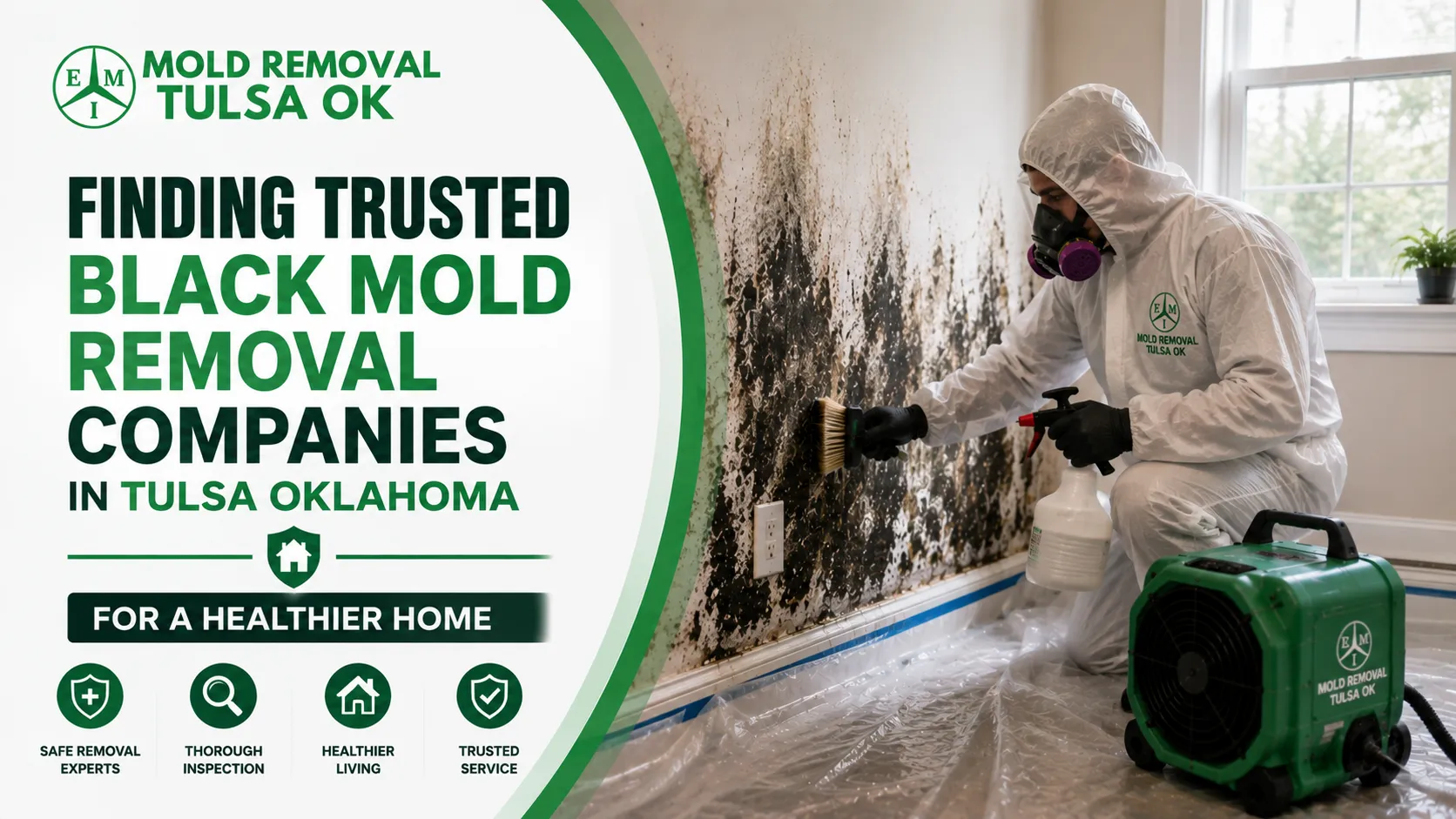
Technicians isolate the work area using 6-mil polyethylene sheeting. They establish negative pressure with HEPA-filtered air scrubbers, exhausting air outside the structure. This prevents spores from migrating to clean rooms. Transition corridors with airlocks allow crew entry without breaking containment.
2. Removal of Porous Materials
Drywall, insulation, carpet, and ceiling tiles with visible growth are bagged and disposed of as regular construction debris (unless local regulations dictate otherwise). Semi-porous materials like structural wood framing remain but undergo aggressive HEPA vacuuming, wire brushing, and damp wiping with EPA-registered antimicrobial solutions.
3. HEPA Vacuuming and Detailed Cleaning
Every surface inside the containment undergoes meticulous HEPA vacuuming. Technicians then damp-wipe surfaces with detergent solutions. This two-step mechanical removal is far more effective than “spray and pray” fogging methods, which leave dead spores—toxic all the same—in place.
4. Clearance Testing
Before containment comes down, an independent third-party inspector performs clearance testing. Visual inspection confirms no visible dust or debris. Air sampling verifies spore counts match or fall below outdoor levels. Only after passing clearance should reconstruction begin.
Red Flags When Hiring a Contractor
Beware of companies offering “free mold testing” that also perform the removal. This inherent conflict of interest incentivizes finding problems that may not exist. Similarly, avoid contractors who use fear tactics, claiming “toxic black mold” without lab confirmation. Legitimate professionals educate; they do not terrorize.
Low-ball estimates often signal cut corners. Proper containment, PPE, HEPA equipment, and disposal costs money. A quote significantly below market rate likely omits critical steps like negative air pressure or post-remediation verification. Moreover, be wary of firms demanding full payment upfront. Industry standard is a deposit (10–30%) with balance due upon clearance.
Cost Factors Specific to the Tulsa Market
Remediation costs in the Tulsa metro area vary widely based on project scope. Small, isolated bathroom projects may start around $1,500 to $3,000. Whole-house systemic issues involving HVAC contamination and structural framing can exceed $25,000. Factors influencing price include:
- Accessibility: Crawl spaces and tight attics increase labor hours.
- Material Type: Plaster remediation costs more than drywall due to labor intensity.
- HVAC Involvement: Duct cleaning or replacement adds significant expense.
- Clearance Testing: Third-party fees typically range $300–$800 per round.
Homeowners insurance may cover remediation if the moisture source is a “sudden and accidental” covered peril, like a burst pipe. Long-term humidity or maintenance neglect is almost universally excluded. Review your policy’s “fungi” endorsement carefully. Some carriers offer optional riders for limited fungal coverage.
Preventing Recurrence: Moisture Control Strategies
Remediation without moisture correction is a temporary fix. Tulsa’s climate demands vigilant humidity management. Maintain indoor relative humidity between 35% and 50% using whole-house dehumidifiers integrated with your HVAC system. Ensure bathrooms and kitchens have exhaust fans vented outdoors—not into the attic. Grade soil away from the foundation at a 5% slope for at least six feet.
Inspect roof penetrations, flashing, and gutters semi-annually. In older homes, consider encapsulating crawl spaces with a heavy-duty vapor barrier and conditioning the space. This stops the “stack effect” from pulling damp, moldy air up into living areas. Finally, address plumbing leaks immediately. A slow drip under a sink can saturate a subfloor in weeks, reigniting the cycle.
Local Regulations and Disclosure Obligations
Oklahoma’s Residential Property Condition Disclosure Act requires sellers to disclose known material defects, including past or present mold issues. Failure to disclose can lead to rescission of the contract or damages. If you remediate, retain all documentation: inspection reports, protocols, invoices, and clearance certificates. This “chain of custody” paperwork reassures future buyers and protects you legally.
The City of Tulsa follows the 2018 International Property Maintenance Code. Section 305.3 requires interior structures be kept free from dampness and mold. While code enforcement typically targets landlords, owner-occupants benefit from the same standards. Rental property owners should note that Oklahoma law implies a warranty of habitability; unaddressed microbial growth can constitute a breach.
Choosing Between National Franchises and Local Independents
National brands like Servpro or Paul Davis offer standardized training, 24/7 dispatch, and deep resources for catastrophic losses. Their protocols are consistent across locations. However, local independent firms often provide more personalized service, direct access to the owner, and deeper knowledge of Tulsa’s specific housing stock—think pier-and-beam foundations in Brookside or slab-on-grade in Broken Arrow suburbs.
Local companies rely heavily on reputation within the community. Check reviews on Google Business Profile, Angi, and the Better Business Bureau serving Northeast Oklahoma. Ask for references from jobs completed in your specific neighborhood. A contractor familiar with your home’s vintage and construction type will anticipate hidden challenges better than an out-of-town crew following a generic script.
Questions to Ask During the Estimate
Prepare a checklist before the estimator arrives. Ask: “Who writes the remediation protocol—you or an independent industrial hygienist?” “What engineering controls (negative pressure, air scrubbers) will you deploy?” “Can I see your pollution liability insurance certificate?” “Do you guarantee clearance testing passage?” “What is your timeline for containment setup, removal, and clearance?”
Listen for clear, jargon-free answers. A professional welcomes scrutiny. They should explain the difference between “removal” (physical extraction) and “treatment” (chemical application). The IICRC S520 standard prioritizes removal. Chemicals are adjuncts, not substitutes. If the estimator suggests fogging the whole house as a primary strategy, keep looking.
Post-Remediation: Rebuilding Safely
Once clearance is achieved, reconstruction begins. Use mold-resistant materials: paperless drywall (fiberglass mat facing), mold-inhibiting primers, and closed-cell spray foam insulation in moisture-prone areas. Ensure new bathroom fans have humidity sensors or timers. Install a pan alarm under the water heater and washing machine.
Consider a whole-house IAQ monitor tracking humidity, VOCs, and particulate matter. These devices alert you to anomalies before they become visible problems. Schedule annual HVAC maintenance including coil cleaning and drain line flushing. A clean, dry system is your best long-term insurance policy.
How long does professional mold remediation take in a typical Tulsa home?
Most residential projects range from one to five days. A single-room containment usually takes 1–2 days for removal and cleaning, plus a day for clearance testing. Whole-house systemic projects involving HVAC and multiple containment zones can extend to a week or more. Reconstruction adds additional time depending on material lead times.
Is it safe to stay in the house during remediation?
If containment is properly established with negative pressure, occupants can often remain in unaffected areas. However, individuals with asthma, compromised immune systems, or severe allergies should relocate temporarily. The remediation contractor should provide a written safety plan outlining egress routes and containment integrity monitoring.
Does homeowners insurance cover black mold removal in Oklahoma?
Coverage depends entirely on the moisture source. Sudden, accidental events like a burst pipe or storm-created roof leak are typically covered subject to your deductible and policy limits. Gradual leaks, humidity issues, or maintenance neglect are excluded. Many policies cap fungal remediation at $5,000–$10,000 unless a specific endorsement was purchased.
What certifications should I verify before hiring a Tulsa remediation company?
Prioritize IICRC Applied Microbial Remediation Technician (AMRT) certification for the crew leads. Verify the company holds a current Oklahoma Construction Industries Board license (general or specialty). Confirm active Pollution Liability Insurance with a Certificate of Insurance. NORMI or ACAC certifications are strong secondary indicators of expertise.
Can I remediate black mold myself to save money?
The EPA suggests DIY only for areas under 10 square feet caused by clean water. Larger areas, sewage contamination, or HVAC involvement require professionals. Improper disturbance spreads spores exponentially, turning a small problem into a whole-house crisis. Without containment, negative air, and PPE, you risk health and property value.
Ready to Breathe Easier in Your Tulsa Home?
Don’t let hidden microbial growth compromise your family’s health or your home’s value. Connect with certified, insured professionals who understand Green Country’s unique climate challenges.