When pipes burst or storms strike, every minute of downtime chips away at your revenue and reputation. Professional Commercial Water Damage Restoration is not merely about drying carpets; it is a sophisticated science focused on structural integrity, microbial prevention, and rapid business continuity. Unlike residential projects, these scenarios involve complex HVAC systems, specialized flooring, sensitive inventory, and strict regulatory compliance. Consequently, the stakes are exponentially higher, demanding a response that is both immediate and technically precise.
Key Takeaways
- Speed is currency: Mitigation must begin within the first 24–48 hours to prevent secondary mold growth and structural compromise.
- Categorization dictates protocol: Water classification (Clean, Gray, Black) determines the required PPE, demolition extent, and sanitization standards.
- Science drives drying: Psychrometrics—the study of air and moisture properties—guides equipment placement for optimal evaporation rates.
- Documentation secures claims: Detailed moisture mapping and photographic evidence are essential for insurance reimbursement.
- Prevention beats recovery: Routine maintenance of plumbing, roofing, and drainage systems drastically reduces incident probability.
The Critical First 24 Hours: Why Immediate Action Wins
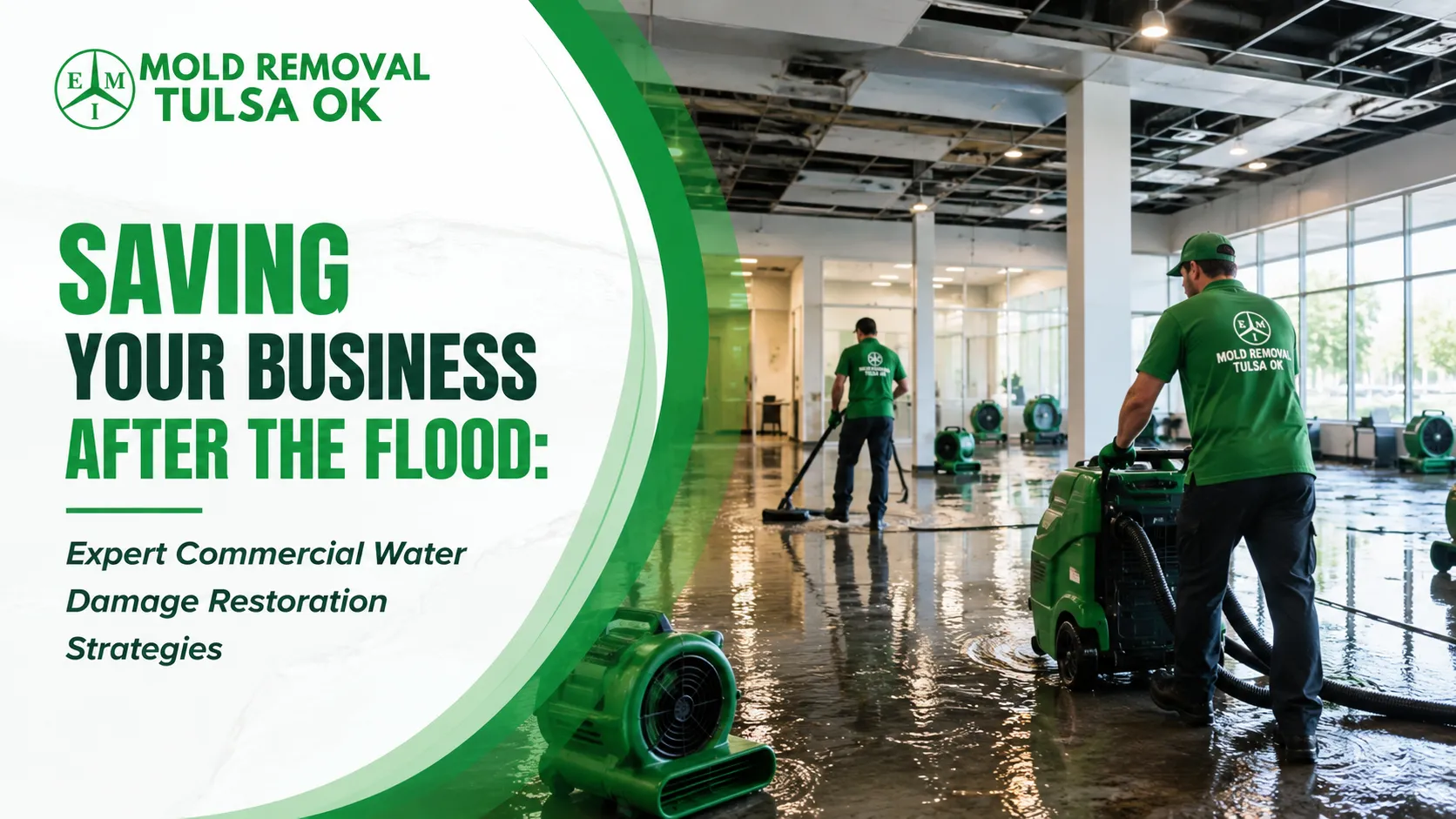
Water migration is aggressive and unforgiving. Within minutes, moisture wicks up drywall, delaminates carpet backing, and swells wood structures. Furthermore, the humidity spike creates a perfect incubator for mold spores, which can germinate in as little as 48 hours. Therefore, the initial emergency response focuses on three pillars: safety assurance, source stoppage, and bulk water extraction.
Technicians arrive equipped to handle electrical hazards and contaminated fluids immediately. They isolate the affected zones using containment barriers to protect unaffected areas. Consequently, this limits the scope of the project and preserves clean inventory. In addition, advanced thermal imaging cameras detect hidden moisture pockets behind walls and under subfloors that the naked eye misses. This data forms the baseline for the entire drying strategy.
Understanding Contamination Categories and Classes
Not all water events are created equal. The Institute of Inspection Cleaning and Restoration Certification (IICRC) S500 standard defines three categories of water, each demanding a distinct safety and cleanup protocol. Category 1 originates from a sanitary source like a broken supply line. However, it degrades rapidly once it contacts building materials.
Category 2, often called “gray water,” contains significant contamination from dishwasher overflows or sump pump failures. It poses a discomfort or sickness risk upon exposure. Category 3, or “black water,” is grossly unsanitary. It includes sewage backups, flooding from rivers, and toilet overflows originating from beyond the trap. Consequently, Category 3 events require full PPE, porous material disposal, and aggressive biocide application.
Beyond category, the “Class” of damage defines the evaporation load. Class 1 affects a small area with low porosity materials. Class 4 involves specialty drying situations—hardwood, plaster, concrete—where deep saturation requires very low specific humidity. Therefore, accurate classification ensures the right equipment sizing from day one.
Inside the Commercial Water Damage Restoration Workflow
The mitigation process follows a rigid, science-backed sequence. Skipping steps guarantees future failures like hidden mold or persistent odors. The workflow moves logically from removal to verification.
Extraction and Bulk Removal
Portable and truck-mounted extractors remove the vast majority of standing water. This physical removal is 1,200 times more efficient than evaporation alone. Technicians use weighted extraction tools for carpet and hard-surface squeegees for tile or concrete. Moreover, they evaluate pad and subfloor conditions to decide if in-place drying is viable or if removal is necessary.
Structural Drying Science (Psychrometrics)
Once bulk water is gone, the battle shifts to vapor. Air movers create high-velocity airflow across wet surfaces to break the boundary layer. Simultaneously, dehumidifiers pull moisture from the air. Refrigerant dehumidifiers work best in warm conditions, while desiccant units excel in cooler environments or when targeting low grain depression for Class 4 materials. Consequently, technicians monitor temperature, relative humidity, and specific humidity daily to adjust the drying chamber.
Sanitization and Odor Control
Antimicrobial agents are applied to salvageable framing and subfloors to inhibit fungal growth. For Category 2 and 3 losses, this step is non-negotiable. Furthermore, hydroxyl generators or ozone machines may be deployed for odor neutralization in occupied spaces, though safety protocols differ significantly between the two technologies. Verification via ATP testing or moisture meters confirms the environment has returned to a normal fungal ecology.
Advanced Equipment Makes the Difference
Commercial projects demand industrial-scale hardware. Standard shop vacs and household fans lack the capacity to dry a 10,000-square-foot warehouse or a multi-story office tower. High-capacity desiccant dehumidifiers can process thousands of cubic feet per minute, creating the vapor pressure differential needed to pull moisture from dense concrete or heavy timber.
In addition, remote monitoring systems allow project managers to track drying progress in real-time via cellular connectivity. Alerts trigger if humidity spikes or equipment loses power. This accountability reduces the risk of human error and provides auditable data for insurers. Moreover, specialized mat systems dry hardwood floors in place, often saving tens of thousands in replacement costs.
Minimizing Operational Downtime and Business Continuity
For a business, the restoration timeline equals the revenue loss timeline. Smart contractors phase work to keep critical operations running. They might erect temporary walls to isolate a damaged wing while the showroom stays open. Furthermore, they coordinate with facility managers to prioritize server rooms, clean rooms, or patient care areas.
Contents restoration is another critical track. Documents, electronics, and furniture are often packed out to a secure facility for specialized cleaning—freeze-drying for papers, ultrasonic cleaning for electronics. Consequently, the on-site footprint shrinks, accelerating structural repairs. This “pack-out” strategy is often the difference between a two-week closure and a two-month displacement.
Navigating the Insurance Claim Maze
Commercial policies are dense with endorsements, exclusions, and coinsurance clauses. A restoration partner fluent in “insurance language” becomes an advocate. They provide the adjuster with a detailed scope of loss, including line-item estimates in Xactimate or Symbility format. Furthermore, they distinguish between covered sudden damage and excluded long-term neglect.
Pre-loss condition documentation is vital. If a roof leaked due to deferred maintenance, coverage might be denied. However, if a tree limb punctured the membrane during a storm, the ensuing water intrusion is typically covered. Therefore, the initial inspection narrative must be precise. Many firms assign a dedicated project coordinator solely to manage the paperwork trail, ensuring no supplement is missed.
Proactive Prevention Strategies for Facility Managers
The most cost-effective mitigation is the one that never happens. A comprehensive water intrusion prevention plan includes quarterly roof inspections, especially after severe weather. Furthermore, automatic water shut-off valves tied to leak detection sensors can isolate a burst pipe in seconds. These systems integrate with building management systems (BMS) for instant alerts.
HVAC maintenance is equally critical. Clogged condensate lines are a leading cause of ceiling collapse in commercial buildings. Regular drain pan treatment and float switch testing prevent these silent destroyers. In addition, inspecting sprinkler system pressure gauges and valve supervision prevents accidental discharge. A small investment in predictive maintenance pays dividends in avoided deductibles and downtime.
Selecting the Right Recovery Partner
Not every restoration company handles commercial complexity. Verify IICRC firm certification and specific Commercial Drying Specialist (CDS) credentials. Ask for case studies involving similar square footage or industry verticals—healthcare, hospitality, manufacturing. Furthermore, confirm they carry adequate pollution liability and errors & omissions insurance.
Response time guarantees should be contractual. A four-hour arrival window is standard for top-tier providers. Moreover, assess their equipment inventory depth. Do they own desiccants, or do they rent? Rental delays can add days to the timeline. Finally, evaluate their communication cadence. Daily psychrometric reports and a single point of contact reduce administrative burden on your team.
Frequently Asked Questions
How quickly does mold start growing after a commercial water loss?
Mold spores can germinate and begin colonization within 24 to 48 hours in optimal conditions. High humidity (above 60% RH) and organic food sources like drywall paper or carpet backing accelerate this timeline. Consequently, professional drying targets a return to normal moisture equilibrium well before that 48-hour window closes to prevent amplification.
Can wet drywall always be dried in place, or must it be removed?
It depends on the water category and saturation depth. Category 1 water on standard drywall with intact vapor barriers can often be dried in place using intra-wall drying systems. However, Category 2 or 3 contamination, insulation saturation, or compromised structural integrity mandates removal. Furthermore, if drying cannot achieve target moisture content within 3–4 days, removal becomes necessary to prevent microbial risk.
What is the difference between a refrigerant and a desiccant dehumidifier?
Refrigerant dehumidifiers cool air to condense moisture, performing best in warm, humid conditions (above 70°F). Desiccant dehumidifiers use a silica gel wheel to adsorb moisture, functioning efficiently in cool temperatures and achieving much lower grain depression. Therefore, desiccants are essential for drying dense materials like concrete, hardwood gym floors, or unheated warehouses in winter.
Does business interruption insurance cover the restoration period?
Business interruption (BI) coverage typically reimburses lost net income and continuing operating expenses during the “period of restoration.” This period starts at the time of direct physical loss and ends when the property should be repaired with reasonable speed. However, policy definitions of “reasonable speed” and waiting period deductibles (often 24–72 hours) vary significantly. Accurate daily project logs from the restoration firm are critical for substantiating the BI claim timeline.
How are sensitive electronics and server rooms handled during mitigation?
Server rooms require a “cold site” strategy. Technicians prioritize climate stabilization—maintaining strict temperature and humidity bands—over aggressive structural drying in that specific zone. HEPA filtration and vapor barriers isolate the equipment from construction dust. Furthermore, specialized contractors perform corrosion mitigation on circuit boards using ultrasonic cleaning and conformal coating if exposure occurred. Power distribution units are inspected by licensed electricians before re-energizing.
Ready to Protect Your Asset?
Don’t let water damage dictate your operational future. Partner with certified experts who understand the complexity of commercial recovery.