
Does bleach kill mold? The honest answer is: sometimes, on some surfaces, but it is not the fix most people hope for. Bleach can remove mold stains on hard, non-porous surfaces like tile. But it does not work on porous materials like drywall and wood, and it never fixes the moisture that caused the mold. Many homeowners waste time and money bleaching mold that keeps coming back. Here are five honest answers that explain what bleach can and cannot do, plus safer ways to handle mold.
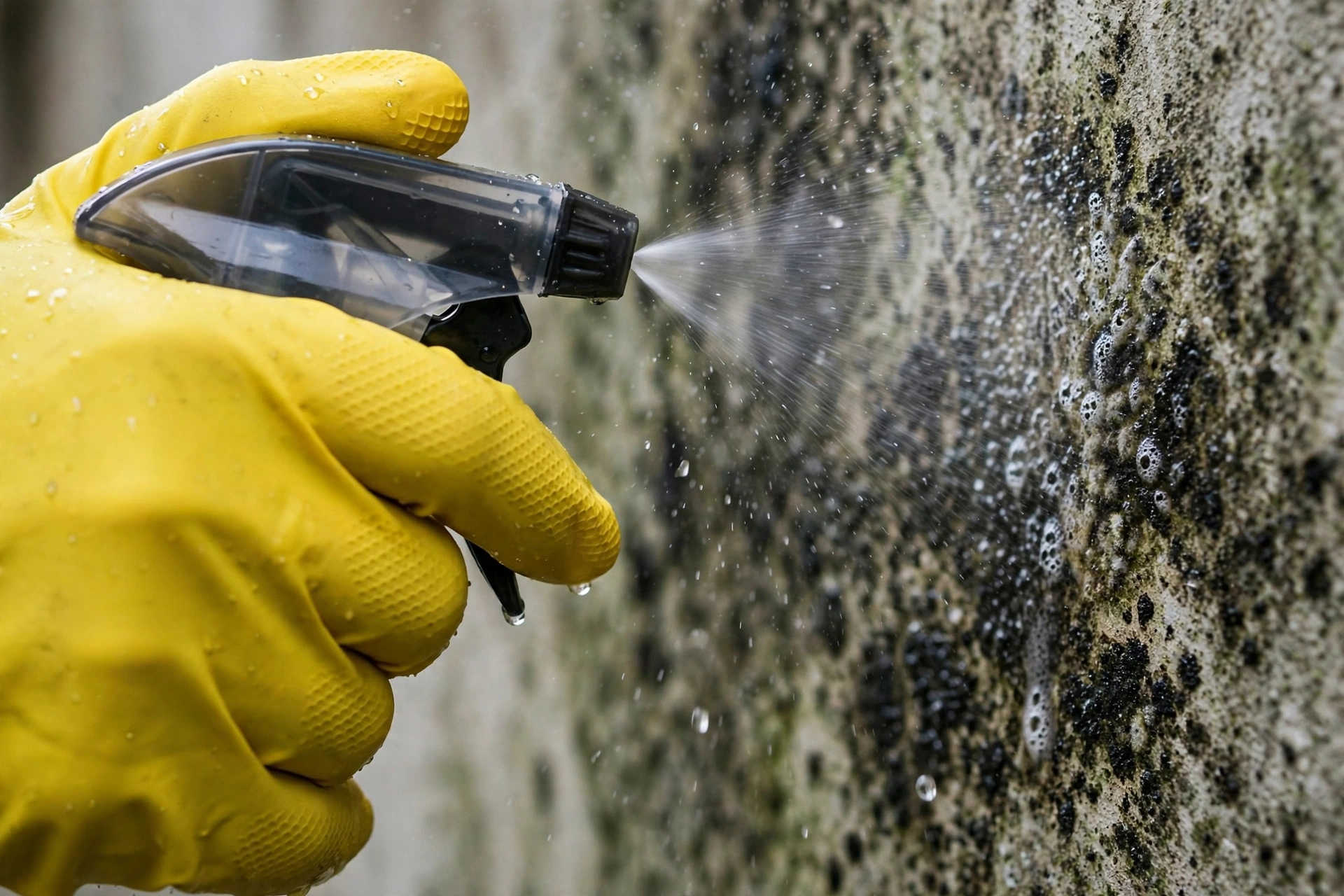
Answer 1: Bleach Can Remove Surface Mold on Hard, Non-Porous Surfaces
On hard surfaces like ceramic tile, glass, and sealed countertops, bleach can kill surface mold and lighten stains. The mold sits on top of these materials and cannot grow into them. A diluted bleach solution, scrubbing, and good rinsing can clean the spot. That said, soap and water often work just as well on these surfaces without the harsh fumes. Bleach is a cleaning option for hard surfaces, not a magic mold cure.
Answer 2: Bleach Does NOT Work on Drywall, Wood, or Other Porous Materials
This is the answer most people need to hear. Mold grows roots deep into porous materials like drywall, wood, and grout. Bleach only reaches the surface. The water in the bleach solution can even soak into the material and feed the mold roots underneath. The stain may look lighter for a while, but the mold comes back. Moldy drywall usually needs to be cut out and replaced. Moldy wood may need sanding or replacement. No amount of surface bleaching fixes mold inside porous materials.
Answer 3: Bleach Does Not Fix the Moisture Source
Every mold problem is a moisture problem. Mold grows where water is present. Bleach does nothing about the leak, condensation, or humidity that caused the mold. If you bleach the spot but the wall stays wet, the mold will return. The real fix is finding and stopping the moisture: repair the leak, improve ventilation, or lower humidity. Cleaning without fixing moisture is a short-term cover, not a solution.
Answer 4: Bleach Has Real Safety Risks
Bleach is a strong chemical and needs respect. Never mix bleach with ammonia or vinegar. That mix creates toxic gases that can seriously harm your lungs. Always use bleach in a well-ventilated area. Wear gloves and eye protection. Keep bleach away from children and pets. People with asthma or breathing problems should avoid bleach fumes. For most small mold cleanups, soap and water is safer and works fine on hard surfaces.
Answer 5: There Are Better Options for Most Mold Jobs
For small spots on hard surfaces, soap and water with good scrubbing and full drying works well. For porous materials, removal and replacement beats any cleaning product. For large areas, hidden mold, or mold that keeps returning, professional remediation is the right call. Professionals use moisture meters to find the source, remove affected materials safely, and dry the area fully. That is how you stop mold for good.
Does Bleach Kill Mold? Quick Comparison
| Method | Works On | Honest Verdict |
|---|---|---|
| Bleach solution | Tile, glass, sealed hard surfaces | Can clean surface mold, harsh fumes |
| Soap and water | Tile, glass, sealed hard surfaces | Safer, often just as effective |
| Bleach on drywall or wood | Porous materials | Does not reach mold roots, mold returns |
| Cut out and replace drywall | Porous materials | The reliable fix for moldy drywall |
| Professional remediation | Large, hidden, or returning mold | Finds moisture source and removes mold fully |
Bleach Safety Checklist
- Never mix bleach with ammonia or vinegar. The gases are dangerous.
- Use bleach only in well-ventilated rooms with windows open.
- Wear gloves, eye protection, and a mask.
- Keep children and pets out of the room while using bleach.
- Rinse surfaces well after bleaching and dry them fully.
- When in doubt, use soap and water instead.
Common Bleach Myths About Mold
Several myths keep homeowners reaching for bleach. Myth one: bleach kills all mold. It does not. It cannot reach mold roots in porous materials. Myth two: if the stain is gone, the mold is gone. The stain may fade while the mold keeps growing underneath. Myth three: more bleach works better. Stronger mixes create stronger fumes without better results. Myth four: bleach prevents mold from coming back. Only a dry surface prevents regrowth. Knowing these myths saves you time, money, and needless chemical exposure.
What About Vinegar or Baking Soda for Mold?
Some homeowners ask about vinegar or baking soda as gentler options. Vinegar can clean light surface mold on hard materials, much like soap and water. Baking soda helps with odors. But neither one works on mold inside drywall or wood, and neither fixes the moisture source. Think of these as light-duty cleaners for small surface spots, not as mold solutions. The same rule applies to every product: if the material is porous or the mold keeps returning, cleaning products are not the answer. Removal and moisture control are.
When to Skip DIY and Call a Professional
Skip the bleach bottle and call a professional when mold covers more than about 10 square feet, grows inside walls or under floors, keeps coming back after cleaning, or follows flooding. Mold exposure may cause allergy symptoms or irritation in sensitive people, so do not ignore stubborn growth. Professional remediation finds the moisture source, removes affected materials, and dries the area so mold does not return. EMI Mold Removal Tulsa OK is open 24 hours with 24/7 emergency service.
Helpful resources: For more information, see EPA guidelines on mold.
Conclusion
So, does bleach kill mold? It can clean surface mold on hard, non-porous surfaces, but it fails on drywall and wood, ignores the moisture source, and carries safety risks. The honest fix is simple: clean hard surfaces with soap and water, replace moldy porous materials, and stop the moisture that feeds the mold. For large or stubborn problems, professionals get it done right. Call EMI Mold Removal Tulsa OK at (918) 268-5526. We are open 24 hours, offer 24/7 emergency service, and give quotes by phone.