
Does vinegar kill mold? Yes, plain white vinegar can kill many common household molds on hard surfaces. It is cheap, non-toxic, and already in your kitchen. But vinegar is not a magic fix for every mold problem. This guide gives you six honest facts about using vinegar on mold: what it does well, where it fails, and when to call a professional instead.
The Short Answer
White distilled vinegar, with about 5 percent acidity, can kill around 80 percent of common mold species on non-porous surfaces like tile, glass, and metal. It works because the acid breaks down mold structure and creates an environment where mold cannot easily regrow. It is a solid choice for small surface mold in bathrooms and kitchens. It is not the right tool for mold inside drywall, wood, or insulation, or for large infestations.
Does Vinegar Kill Mold? 6 Facts That Work
1. Vinegar Works Best on Hard, Non-Porous Surfaces
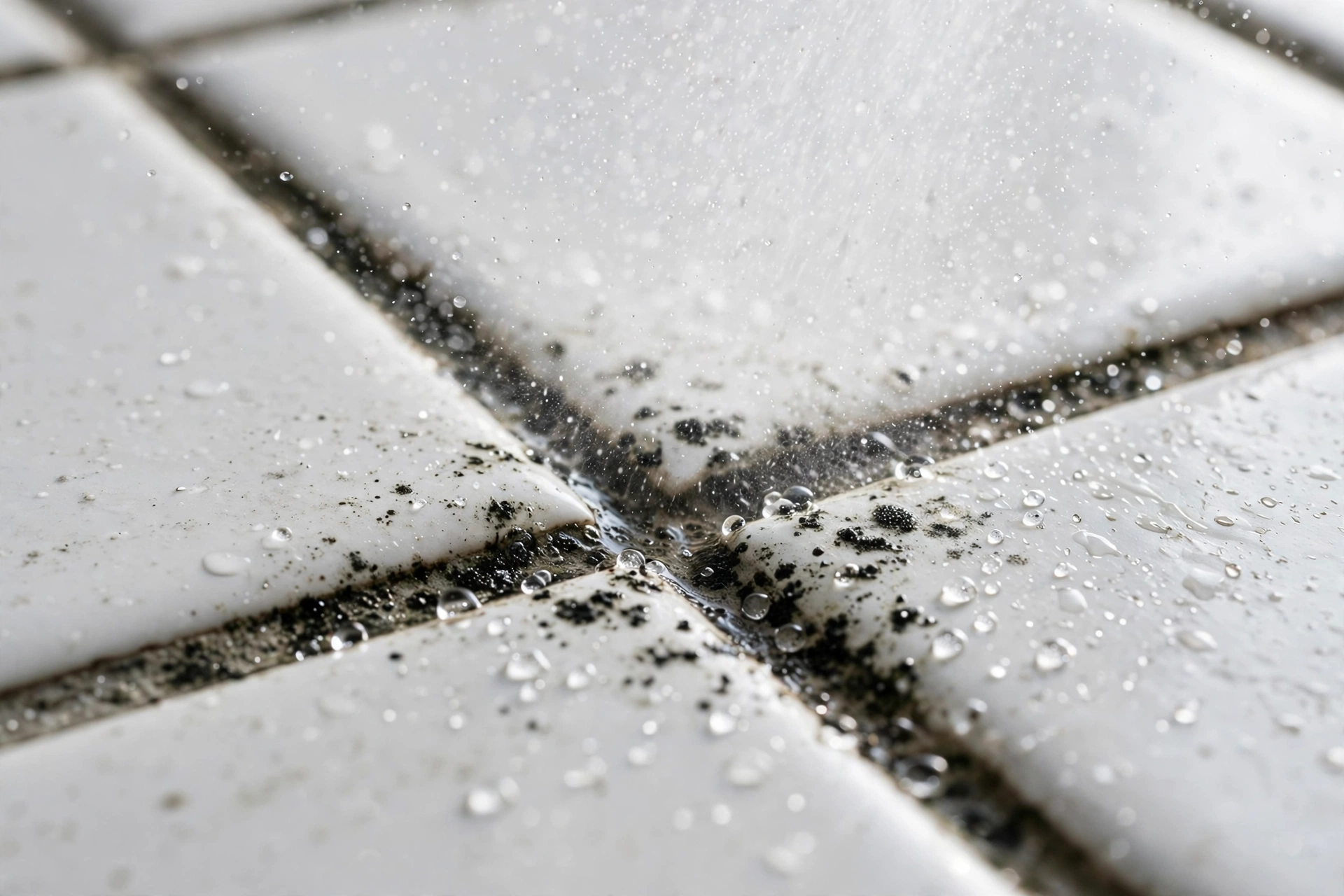
Tile grout, glass shower doors, metal fixtures, and sealed countertops are ideal. On these surfaces, mold sits on top and cannot send roots deep inside. Vinegar reaches the full colony and kills it. Wipe the area after treatment and the mold is gone. This is the sweet spot for vinegar.
2. Vinegar Cannot Fix Mold Inside Porous Materials
Drywall, wood, ceiling tiles, and fabrics absorb water and let mold roots grow deep inside. Vinegar only reaches the surface layer. The visible mold may disappear for a while, but the roots survive and regrow. Worse, the extra moisture from the vinegar can feed the hidden colony. If mold is in drywall or wood, the affected material usually needs to be removed, not sprayed.
3. Do Not Mix Vinegar With Bleach
This is a safety rule, not a suggestion. Mixing vinegar and bleach creates chlorine gas, which can cause coughing, breathing trouble, and eye burns. Use one product at a time. If you already used bleach on a spot, rinse it fully and let the area dry before trying vinegar, or better yet, just pick one method.
4. The Right Way to Use Vinegar on Mold
Pour undiluted white vinegar into a spray bottle. Spray the moldy area generously until it is visibly wet. Let it sit for at least one hour without scrubbing. This dwell time lets the acid work. Then scrub with a brush, wipe clean with water, and dry the area completely. Drying matters as much as the vinegar, because leftover moisture invites new mold.
5. Vinegar Does Not Prevent Mold Long-Term
Vinegar kills existing mold but leaves no lasting protective barrier. If the bathroom stays humid or the leak continues, mold will return within weeks. Real prevention means fixing moisture: run exhaust fans, fix leaks fast, and keep indoor humidity between 30 and 50 percent. No cleaner, natural or chemical, replaces dry conditions.
6. Some Molds Need Professional Treatment
Large areas, mold inside walls or ceilings, mold in HVAC systems, and any mold affecting people with asthma or weak immune systems call for professional remediation. Pros use containment so spores do not spread, HEPA filtration, and proper disposal of affected materials. Vinegar in a spray bottle cannot do any of that.
Vinegar vs Other Mold Cleaners
| Cleaner | Best for | Limitations |
|---|---|---|
| White vinegar | Small mold on hard surfaces | Weak on porous materials |
| Baking soda paste | Light surface mold, deodorizing | Mild action, needs scrubbing |
| Hydrogen peroxide (3%) | Stained grout, semi-porous spots | Can bleach fabrics, mild fumes |
| Bleach | Disinfecting hard non-porous surfaces | Does not kill roots in drywall |
| Professional remediation | Large, hidden, or recurring mold | Costs more than DIY |
Step-by-Step: Cleaning Small Mold With Vinegar
- Protect yourself: wear gloves, eye protection, and a dust mask. Open a window or run the exhaust fan for ventilation.
- Spray undiluted white vinegar directly onto the mold until the area is fully wet.
- Wait at least one hour. Do not scrub yet. Let the acid penetrate the mold.
- Scrub with a stiff brush, then wipe the area clean with water.
- Dry completely with a towel, then keep air moving with a fan until the surface is bone dry.
- Fix the moisture cause, such as a leaking seal or missing ventilation, or the mold will return.
A Common Mistake to Avoid With Vinegar
The biggest mistake people make is spraying vinegar on mold growing on drywall and assuming the problem is solved. The surface may look clean for a week or two, but the mold roots inside the drywall survive and regrow, often spreading further. Another mistake is using vinegar in a poorly ventilated room without a mask. Even natural cleaners can irritate your lungs when you breathe the fumes mixed with disturbed spores. Always ventilate, wear basic protection, and be honest about whether the mold is on the surface or inside the material.
When Vinegar Is Not Enough: Call a Professional
Stop the DIY approach and call for help when the mold covers more than about 10 square feet, when it keeps coming back after cleaning, when you smell mold but cannot see it, when it is inside walls, ceilings, or air ducts, or when anyone in the home has asthma, allergies, or a weak immune system. These situations need containment, proper removal, and moisture repair that no household cleaner can provide.
In Tulsa’s humid climate, recurring bathroom and kitchen mold is extremely common. If you have cleaned the same spot three times and it keeps returning, there is moisture behind or under the surface that you cannot reach. A professional inspection with a moisture meter finds it in minutes.
Helpful resources: For more information, see EPA guidelines on mold.
Conclusion: Vinegar Works, Within Its Limits
So does vinegar kill mold? Yes, on small areas of hard surfaces, when used correctly with enough dwell time. But it cannot reach mold inside porous materials, it offers no lasting protection, and it is no substitute for fixing moisture. Use it for what it is: a good first step for minor surface mold, not a cure for serious infestations.
Still asking does vinegar kill mold well enough for your situation? For bigger, hidden, or stubborn mold problems in the Tulsa area, EMI Mold Removal Tulsa OK is here to help. We find the moisture source, remove mold safely with proper containment, and make sure it stays gone. Call (918) 268-5526 any time. We are open 24 hours with emergency service 24/7.