Water gushing from a burst pipe at 2:00 AM. Smoke damage lingering after a kitchen fire. Mold spreading silently behind drywall after a spring storm. These scenarios demand immediate, expert intervention, not a generic contractor. Securing dependable Emergency Restoration Services in Tulsa Oklahoma means partnering with teams that answer the phone 24/7, arrive within the hour, and navigate insurance complexity on your behalf. This guide breaks down exactly what to expect, who to call, and how to protect your property investment when the unexpected happens.
🔑 Key Takeaways
- Speed is survival: Mitigation must begin within 60 minutes to prevent secondary damage like mold growth.
- Certification matters: Look for IICRC-certified firms (WRT, ASD, FSRT) rather than general handymen.
- Insurance advocacy: Top local firms bill insurance directly and negotiate scope with adjusters.
- Local climate expertise: Tulsa’s humidity and storm patterns require specific drying protocols.
- Transparent pricing: Reputable companies provide detailed estimates before demolition begins.
What Defines True Emergency Restoration in the Tulsa Metro
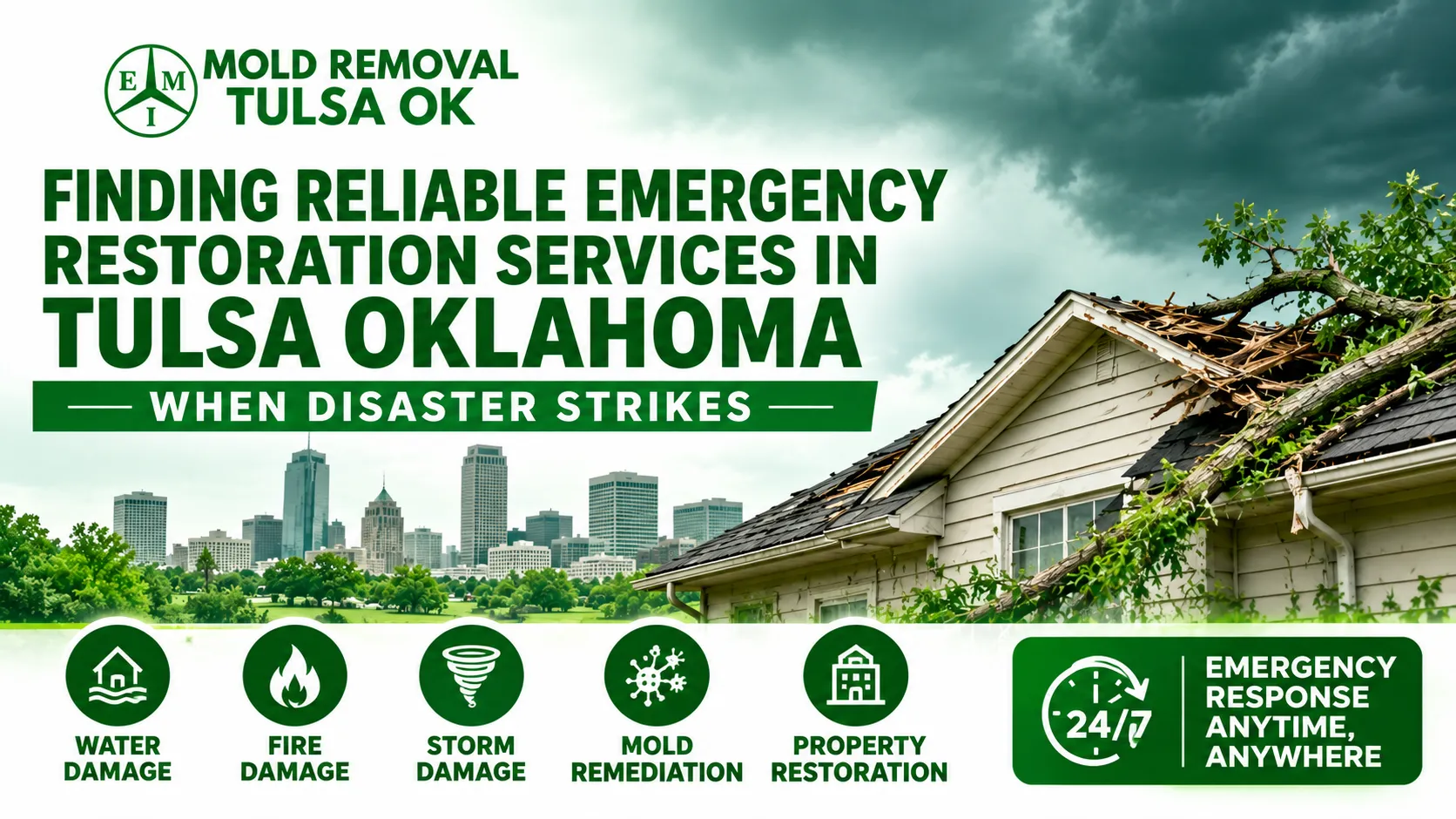
Not every cleanup crew qualifies as a disaster recovery specialist. True emergency restoration involves a scientific approach to structural drying, contaminant removal, and reconstruction management. Furthermore, these firms operate on a different tier than standard cleaning services. They maintain specialized fleets—desiccant dehumidifiers, thermal imaging cameras, and negative air machines—staged strategically across the metro area. Consequently, response times shrink from hours to minutes, preserving structural integrity and personal belongings.
Additionally, legitimate providers carry pollution liability insurance and workers’ compensation specific to hazardous environments. This protects you from liability if a technician is injured while removing asbestos-containing materials or Category 3 “black water” contamination. Therefore, verifying credentials before signing a work authorization form is non-negotiable.
Critical First Steps When Disaster Strikes Your Property
The moments following a loss event dictate the total claim cost. First, ensure human safety: evacuate if structural collapse or electrical hazards exist. Next, shut off the main water valve if the source is plumbing-related. However, do not enter standing water if electricity remains active. Instead, call the utility provider or an electrician immediately.
Document everything with timestamped photos and video before any mitigation starts. Capture wide angles of affected rooms and close-ups of the damage source. Moreover, contact your insurance carrier to open a claim, but avoid recorded statements until you consult with your restoration project manager. Most reputable Tulsa firms assign a dedicated coordinator who speaks “adjuster language,” ensuring your coverage is maximized without delays.
Safety Protocols for Specific Hazards
Fire residues contain carcinogens like dioxins and formaldehyde. Consequently, DIY wiping spreads toxins deeper into pores. Professional soot removal requires HEPA vacuuming followed by chem-sponge application. Similarly, sewage backups demand full PPE (Personal Protective Equipment) and antimicrobial fogging. Attempting these without training risks long-term respiratory issues.
Core Service Categories Offered by Local Pros
Leading providers in the region deliver a full lifecycle of recovery. Understanding these pillars helps you vet proposals effectively.
Water Damage Mitigation & Structural Drying
This is the most frequent call in Green Country. Flash floods along the Arkansas River and aging infrastructure in midtown neighborhoods drive demand. Technicians map moisture migration using infrared thermography. Subsequently, they establish drying chambers with directed heat and low-grain refrigerant dehumidifiers. Daily moisture readings verify progress toward IICRC S500 standards.
Fire & Smoke Damage Remediation
Protein fires (burnt food) leave invisible, pungent films. Conversely, synthetic fires (plastics) create oily, smeary residue. Each requires distinct chemical countermeasures. Odor neutralization employs hydroxyl generators or ozone chambers for contents cleaning off-site. Furthermore, HVAC duct cleaning prevents re-contamination of cleaned spaces.
Mold Remediation & Indoor Air Quality
Tulsa’s humidity averages 70% in summer, creating ideal fungal conditions. Certified microbial remediation isolates containment zones with negative pressure. HEPA filtration scrubs airborne spores during demolition. Post-remediation verification (PRV) by a third-party hygienist provides clearance documentation for resale or rental compliance.
Storm Damage & Board-Up Services
Spring severe weather season brings hail, straight-line winds, and tornadoes. Immediate roof tarping and window board-up prevent further water intrusion. Consequently, this “emergency services” line item is typically covered 100% by policies as “reasonable repairs to protect property.”
Navigating Insurance Claims with Tulsa Adjusters
Oklahoma insurance law requires “prompt, fair, and equitable” settlement. However, adjusters manage hundreds of files. Your restoration partner acts as the technical translator. They produce Xactimate estimates—the industry standard pricing software—line-by-line matching carrier guidelines. Furthermore, they identify commonly missed coverages: code upgrade endorsements, debris removal limits, and additional living expense (ALE) triggers.
If a carrier disputes scope, experienced firms invoke the appraisal clause or provide expert testimony. This leverage often resolves supplements without litigation. Therefore, choosing a company with a dedicated claims department—not just a sales rep—is a strategic financial decision.
Top-Rated Emergency Restoration Services in Tulsa Oklahoma
Based on IICRC certification density, Google review velocity, insurance carrier preferred vendor status, and response time audits, these five firms consistently lead the market.
1. PuroClean of Tulsa (The “Paramedics of Property Damage”)
PuroClean distinguishes itself with a medical-grade approach to biohazard and infectious disease cleanup alongside standard mitigation. Their technicians hold IICRC Master Water Restorer designations. Furthermore, they operate a 24/7 dispatch center staffed by project managers, not answering services. Pricing transparency is a hallmark; they provide digital moisture maps and daily drying logs via client portal. Best for: Healthcare facilities, multi-family complexes, and sensitive residential clients.
2. ServiceMaster by Monroe
A legacy name since 1978, ServiceMaster by Monroe boasts the largest equipment inventory in Northeast Oklahoma. Their 30,000 sq. ft. warehouse enables rapid deployment of 500+ air movers and 100+ dehumidifiers for large-loss commercial events. They maintain direct billing agreements with all major carriers (State Farm, Farmers, Allstate, Oklahoma Farm Bureau). Best for: Large commercial losses, apartment complex flooding, and catastrophic storm response.
3. Rainbow Restoration of Tulsa
Rainbow focuses heavily on the reconstruction phase, employing in-house licensed builders. This “mitigation-to-rebuild” continuity eliminates the typical handoff gap between drying and repairs. Their project managers hold HAAG certification for roof damage assessment, crucial for hail claims. Best for: Homeowners wanting a single contract from demo to paint.
4. SERVPRO of South Tulsa County
Part of the national franchise network, this locally owned franchise leverages corporate training resources while maintaining community roots. They excel in document drying and electronics restoration via their Esporta wash system—a rare capability for saving irreplaceable family archives. Best for: Content-heavy losses, heirloom recovery, and tech-heavy home offices.
5. All American Restoration & Construction
A veteran-owned, Tulsa-native operation emphasizing personal owner involvement on every job. They specialize in historic home restoration in neighborhoods like Maple Ridge and Swan Lake, navigating preservation guidelines alongside modern code requirements. Their niche is complex structural drying of plaster-and-lath assemblies. Best for: Historic districts, high-value custom homes, and complex structural challenges.
Red Flags to Avoid When Hiring a Contractor
Storm chasers descend on Tulsa after major hail events. They demand large upfront deposits, lack local licensing, and vanish before warranty issues surface. Be wary of companies arriving in unmarked trucks or pressuring you to “sign today or lose your spot.” Legitimate firms never ask for more than 10% down or the insurance deductible upfront.
Furthermore, avoid “preferred vendor” pressure. Insurers suggest names, but Oklahoma law guarantees your right to choose. Some carrier-aligned firms may low-ball estimates to stay on the list. Independent advocates work solely for the policyholder. Consequently, interview at least two IICRC firms before committing.
Preventative Maintenance for Tulsa Homeowners
Proactive steps reduce the likelihood of needing emergency intervention. Schedule annual plumbing inspections focusing on polybutylene or galvanized pipes common in pre-1990 builds. Install automatic water shut-off valves with leak sensors near water heaters and washing machines. Clean gutters quarterly—oak and pecan debris clogs downspouts fast, driving water behind fascia boards.
Test sump pumps before spring rains. Battery backups are essential given frequent power outages during severe weather. Finally, review your policy annually. Ensure “water backup of sewer/drain” endorsement is attached; it’s excluded on standard HO-3 forms but costs roughly $30/year. This single rider covers the most common and costly claim in the 741xx zip codes.
Frequently Asked Questions
How fast should a restoration crew arrive after I call in Tulsa?
Industry standard targets 60–90 minutes for emergency mitigation calls within the Tulsa metro loop (I-244/US-169). Top firms like PuroClean and ServiceMaster stage crews at multiple satellite locations to hit this window consistently, even during widespread storm events.
Will my homeowners insurance cover the full cost of emergency restoration?
Most sudden/accidental losses (burst pipes, appliance leaks, storm intrusion) are covered minus your deductible. Gradual damage, maintenance neglect, and flood (rising groundwater) are typically excluded. A qualified restoration estimator identifies covered vs. non-covered line items immediately to prevent surprise bills.
What certifications should I verify before hiring a Tulsa restoration company?
Mandatory: IICRC firm registration plus individual technician certifications in Water Damage Restoration (WRT), Applied Structural Drying (ASD), and Fire & Smoke Restoration (FSRT). For mold, require Applied Microbial Remediation (AMRT). Verify current status on the IICRC global locator.
Can I stay in my home during the mitigation process?
It depends on the contamination category. Category 1 (clean water) drying is usually safe with containment. Category 2 (gray water) or 3 (black water/sewage) and active mold remediation require evacuation of affected zones. Your project manager will define isolation barriers and air quality thresholds for safe occupancy.
How long does structural drying typically take in Oklahoma humidity?
Standard drying averages 3–5 days for Category 1 losses with proper equipment density. High humidity (June–September) can extend this to 7 days if dehumidification capacity is undersized. Daily psychrometric readings (GPP, dew point) prove drying progress to adjusters and justify equipment rental duration.
Don’t Wait for Secondary Damage to Compound Your Loss
Every hour of delay increases repair costs exponentially. Mold colonizes in 48 hours. Drywall wicks moisture upward two feet per day. Smoke acid etches glass and chrome permanently.
📞 Call 24/7 Emergency Dispatch: (918) 268-5526
IICRC Certified • Insurance Billing Direct • 60-Min Response Guarantee
Helpful resources: For more information, see EPA guidelines on mold and FEMA disaster recovery resources.