
Key Takeaways
- Immediate action within the first 24 to 48 hours prevents mold growth and structural deterioration.
- Professional extraction uses industrial-grade equipment far superior to consumer wet-vacs.
- Category 3 water (black water) requires specialized hazmat protocols for safe removal.
- Documentation is critical for insurance claims; photograph everything before disposal.
- Local Tulsa contractors understand regional clay soil expansion and flash flood patterns.
When the Arkansas River overflows or a sudden supercell dumps inches of rain in minutes, homeowners face a race against time. Flood Damage Restoration in Tulsa Oklahoma is not merely about drying carpets; it is a systematic science of mitigation, sanitation, and reconstruction. Delaying the response by even a few hours allows moisture to wick into drywall, warp subfloors, and activate dormant mold spores. Consequently, understanding the precise steps professionals take—and why DIY attempts often fail—protects both your property value and your family’s health.
The Unique Flood Risks Facing Tulsa Property Owners
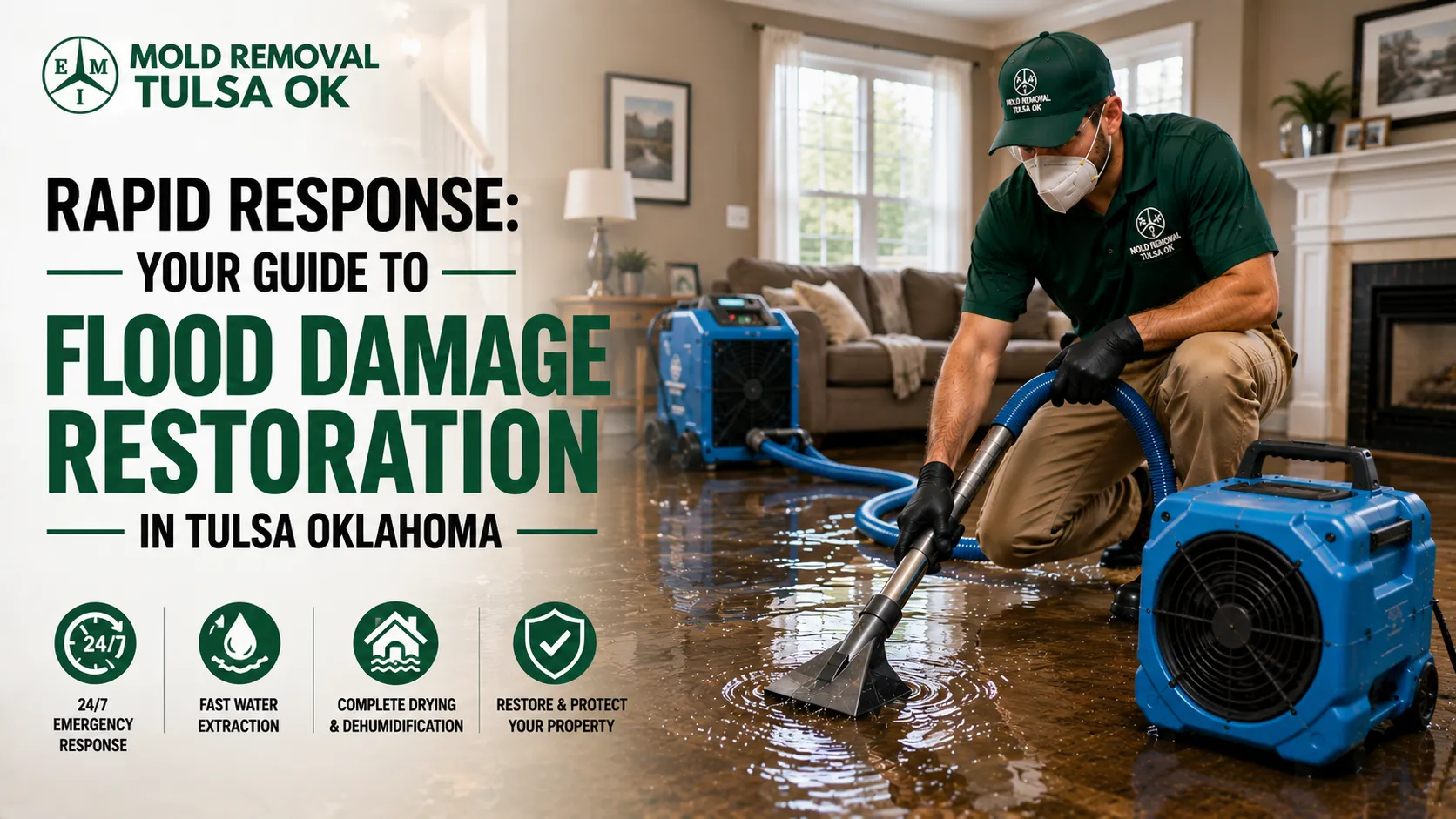
Tulsa sits in a distinctive geographical crossroads. The city’s proximity to the Arkansas River and its tributary creeks—like Mingo, Joe, and Haikey—creates a high baseline flood risk. Furthermore, the region’s expansive clay soil swells dramatically when saturated, exerting immense pressure on foundation walls. This hydrostatic pressure often causes cracks that allow groundwater intrusion long after surface water recedes.
Flash flooding is the most common threat. Unlike coastal surges, these events strike with little warning, overwhelming storm drains and backing up sewer lines. As a result, many incidents involve Category 2 (grey water) or Category 3 (black water) contamination. Sewage backup introduces pathogens, hepatitis viruses, and parasites that standard cleaning cannot address. Therefore, professional remediation is not a luxury; it is a biological necessity.
Seasonal Patterns and Historical Data
Spring brings the highest probability of severe weather. April through June typically sees the convergence of Gulf moisture and dry lines, spawning supercells capable of producing torrential rainfall rates exceeding three inches per hour. However, autumn remnants of tropical systems have historically caused catastrophic river flooding, such as the 1986 and 2019 Arkansas River crests. Consequently, year-round preparedness is essential for every homeowner in the metro area.
The Professional Restoration Timeline: Hour by Hour
Certified technicians follow the IICRC S500 Standard for Professional Water Damage Restoration. This globally recognized protocol ensures consistency and safety. The timeline below illustrates why immediate dispatch matters.
Emergency Contact and Rapid Dispatch (0–1 Hour)
Reputable local firms maintain 24/7 dispatch centers. When you call, the coordinator gathers critical data: source of water, affected square footage, flooring types, and electrical hazards. Crews are typically on-site within 60 to 90 minutes across the Tulsa metro, including Broken Arrow, Owasso, and Jenks. This speed limits the “wicking” effect where dry materials absorb moisture from wet ones.
Inspection and Damage Assessment (Hour 1–2)
Technicians use thermal imaging cameras and penetrating moisture meters to map the migration path. Water travels unpredictably—following plumbing chases, soaking into insulation, and pooling behind baseboards. A visual inspection misses 40% of hidden moisture. Therefore, mapping creates the drying blueprint and provides the documentation your insurance adjuster requires.
Water Extraction and Bulk Removal (Hour 2–4)
Submersible pumps and truck-mounted extraction units remove thousands of gallons per hour. Portable extractors handle upper floors or hard-to-reach areas. This phase removes 95% to 99% of free water. Skipping professional extraction leaves residual moisture that extends drying time by days, exponentially increasing secondary damage costs.
Controlled Demolition and Material Removal
Non-salvageable materials—saturated carpet padding, waterlogged drywall above the flood line, and compromised insulation—are removed. This “flood cut” typically occurs 12 to 24 inches above the visible water line to ensure hidden moisture is exposed. Hardwood floors may require specialized drying mats to attempt salvage; however, prolonged exposure often causes irreversible cupping and crowning.
Structural Drying and Dehumidification (Days 1–5)
High-velocity air movers create evaporation across wet surfaces. Low-grain refrigerant (LGR) dehumidifiers pull moisture from the air, maintaining a vapor pressure differential that pulls water from structural cavities. Technicians monitor humidity ratios and specific humidity daily, adjusting equipment placement to target stubborn pockets. This scientific approach prevents over-drying, which can crack wood trim and split furniture.
Sanitization and Antimicrobial Application
Once materials reach dry standards, EPA-registered antimicrobials are applied to framing, subfloors, and affected contents. This step is mandatory for Category 2 and 3 losses. Fogging systems ensure coverage in wall cavities and crawlspaces. Consequently, this prevents microbial amplification that causes odors and respiratory hazards.
Reconstruction and Final Verification
The final phase restores the property to pre-loss condition. This includes hanging new drywall, installing flooring, painting, and trim work. A final moisture survey and air quality test verify the environment is safe. Many Tulsa firms offer full-service reconstruction, eliminating the hassle of coordinating multiple contractors.
Why DIY Flood Cleanup Fails in the Tulsa Climate
Many homeowners attempt mitigation with shop vacuums and box fans. Unfortunately, Tulsa’s high ambient humidity—often exceeding 70% in spring and summer—cripples natural evaporation. Without mechanical dehumidification, the air reaches saturation quickly, halting the drying process. Meanwhile, moisture continues migrating into unaffected areas.
Consumer dehumidifiers lack the capacity to lower specific humidity sufficiently. They typically remove 30 to 70 pints per day at 80°F/60% RH. Commercial LGR units remove 150 to 250 pints under the same conditions. Furthermore, DIY efforts rarely address the “bound water” trapped inside wall cavities and under cabinets. Thermal imaging reveals these hidden reservoirs; without it, you are guessing.
Improper handling of contaminated water poses severe liability. If sewage pathogens remain, future occupants can fall ill. Insurance carriers frequently deny claims where unqualified work exacerbated the damage. Therefore, the perceived savings of DIY often vanish when claim denial letters arrive.
Navigating Insurance Claims for Water Intrusion
Standard homeowners policies (HO-3) cover sudden and accidental discharge—burst pipes, appliance leaks, or wind-driven rain. However, they explicitly exclude “flood” defined as rising surface water. For that, you need a separate NFIP policy or private flood endorsement. Tulsa participates in the Community Rating System (CRS), offering premium discounts for residents in compliant zones.
Documentation is your strongest leverage. Before crews arrive, photograph every angle: wide shots of rooms, close-ups of water lines on walls, and serial numbers of damaged appliances. Keep a detailed inventory of discarded items with estimated replacement costs. Do not dispose of expensive items (furniture, electronics) until the adjuster inspects them or provides written authorization.
Mitigation contractors often bill insurance directly. Ensure the scope of work aligns with Xactimate pricing standards used by adjusters. Disputes arise when contractors include “upgrade” charges or unnecessary demolition. A reputable local firm advocates for you, supplementing the claim with moisture data and IICRC justifications for every line item.
Selecting the Right Restoration Partner in Green Country
Not all water damage companies are equal. In Oklahoma, restoration contractors do not require a specific state trade license, making vetting essential. Look for these non-negotiable credentials:
- IICRC Certification: Firm and technician certifications in Water Damage Restoration (WRT) and Applied Structural Drying (ASD).
- Local Physical Address: Avoid storm-chasing companies with out-of-state plates. A local office means accountability and warranty honor.
- Insurance Liaison Experience: Ask for references from local adjusters. Familiarity with Oklahoma Farm Bureau, State Farm, and Farmers adjusters streamlines approval.
- Full-Service Capability: Mitigation through rebuild reduces timeline gaps and fingerprinting issues between trades.
- Emergency Response Time: Contractual guarantee of 90-minute arrival for the Tulsa metro area.
Check reviews on Google and Angi, but prioritize responses to negative reviews. A professional resolution pattern indicates integrity. Additionally, verify the company carries General Liability and Pollution Liability insurance—critical for mold and sewage projects.
Preventative Measures for Tulsa Homeowners
While you cannot stop the rain, you can harden your property. Install a battery-backup sump pump with a high-water alarm. Ensure grading slopes away from the foundation at a 5% grade for at least 10 feet. Extend downspouts 6 to 10 feet from the structure. Consider a whole-house generator to keep sump pumps and dehumidifiers running during the frequent power outages accompanying severe storms.
Seal foundation cracks with hydraulic cement or epoxy injection. Install backwater valves on sewer lines to prevent municipal backup—a common issue in older Tulsa neighborhoods like Brookside and Kendall-Whittier. Store valuables in waterproof totes on elevated shelving in basements and garages. Finally, review your flood zone designation annually via FEMA’s Map Service Center; boundaries shift with new development and updated hydrology models.
The Health Implications of Incomplete Drying
Mold colonization begins at 16% wood moisture content. Tulsa’s climate accelerates this timeline. Aspergillus, Penicillium, and Stachybotrys (black mold) produce mycotoxins linked to chronic inflammatory response syndrome (CIRS). Children, the elderly, and immunocompromised individuals face the highest risk.
Post-remediation verification (PRV) by an independent Indoor Environmental Professional (IEP) provides clearance testing. Air sampling and surface swabs confirm spore counts are at or below outdoor baseline levels. Skipping this step leaves liability blind spots. If you sell the home later, a buyer’s inspection will reveal past water damage, potentially derailing the transaction or reducing the offer significantly.
Commercial Property Considerations
Business interruption costs often exceed physical damage. Retail spaces on Cherry Street or warehouses near the Port of Catoosa face unique challenges: inventory loss, tenant displacement, and regulatory compliance (OSHA, health department). Commercial policies require detailed business income worksheets. Restoration firms experienced in commercial large-loss management set up containment barriers to allow partial operation during drying, preserving revenue streams.
Frequently Asked Questions
How quickly does mold start growing after a flood in Tulsa?
Mold germination can begin within 24 to 48 hours in Tulsa’s humid climate. Visible colonization typically appears in 3 to 12 days. This is why professional extraction and dehumidification must start immediately—waiting for an adjuster to arrive before calling a mitigation company is a costly mistake.
Does homeowners insurance cover sump pump failure?
Standard policies exclude water backup from sewers, drains, or sump pumps unless you have purchased a specific “Water Backup and Sump Discharge/Overflow” endorsement. This rider is inexpensive—often $30 to $70 annually—and covers the pump mechanism failure or power outage scenarios common during Oklahoma ice storms.
What is the average cost for flood damage restoration in the Tulsa area?
Mitigation-only costs (extraction, drying, sanitation) typically range from $3,000 to $10,000 for an average residential loss. Full reconstruction including drywall, flooring, and paint can range from $15,000 to $50,000+. Category 3 losses involving sewage add 30% to 50% due to hazmat protocols and PPE requirements.
Can I stay in my home during the drying process?
For Category 1 (clean water) losses affecting limited areas, yes—though equipment noise and dry air can be uncomfortable. For Category 2 or 3 losses, or if containment barriers isolate affected zones, temporary relocation is strongly advised. Insurance “Loss of Use” coverage typically pays for hotel and meal expenses during displacement.
How do I verify a contractor’s IICRC certification?
Visit the IICRC website and use their “Locate a Pro” tool. Search by company name or zip code (741xx). Verify the certification is current (renewed annually) and matches the services offered (WRT, ASD, AMRT for microbial). Ask the technician on-site for their wallet card; legitimate pros carry them proudly.
Act Now to Protect Your Investment
Water damage is progressive. Every minute of delay allows moisture to penetrate deeper into structural assemblies, exponentially increasing restoration complexity and cost. The science of psychrometrics dictates that controlling the environment immediately is the only way to arrest the damage trajectory. Tulsa homeowners who partner with certified, local professionals recover faster, spend less out-of-pocket, and avoid the long-term specter of mold litigation.
Don’t Let Water Win. Call Tulsa’s Trusted Mitigation Experts Today.
24/7 Emergency Response • IICRC Certified • Direct Insurance Billing
Call Emergency Hotline: (918) 268-5526
Serving Tulsa, Broken Arrow, Owasso, Jenks, Bixby & Surrounding Communities
Helpful resources: For more information, see EPA guidelines on mold and FEMA disaster recovery resources.