
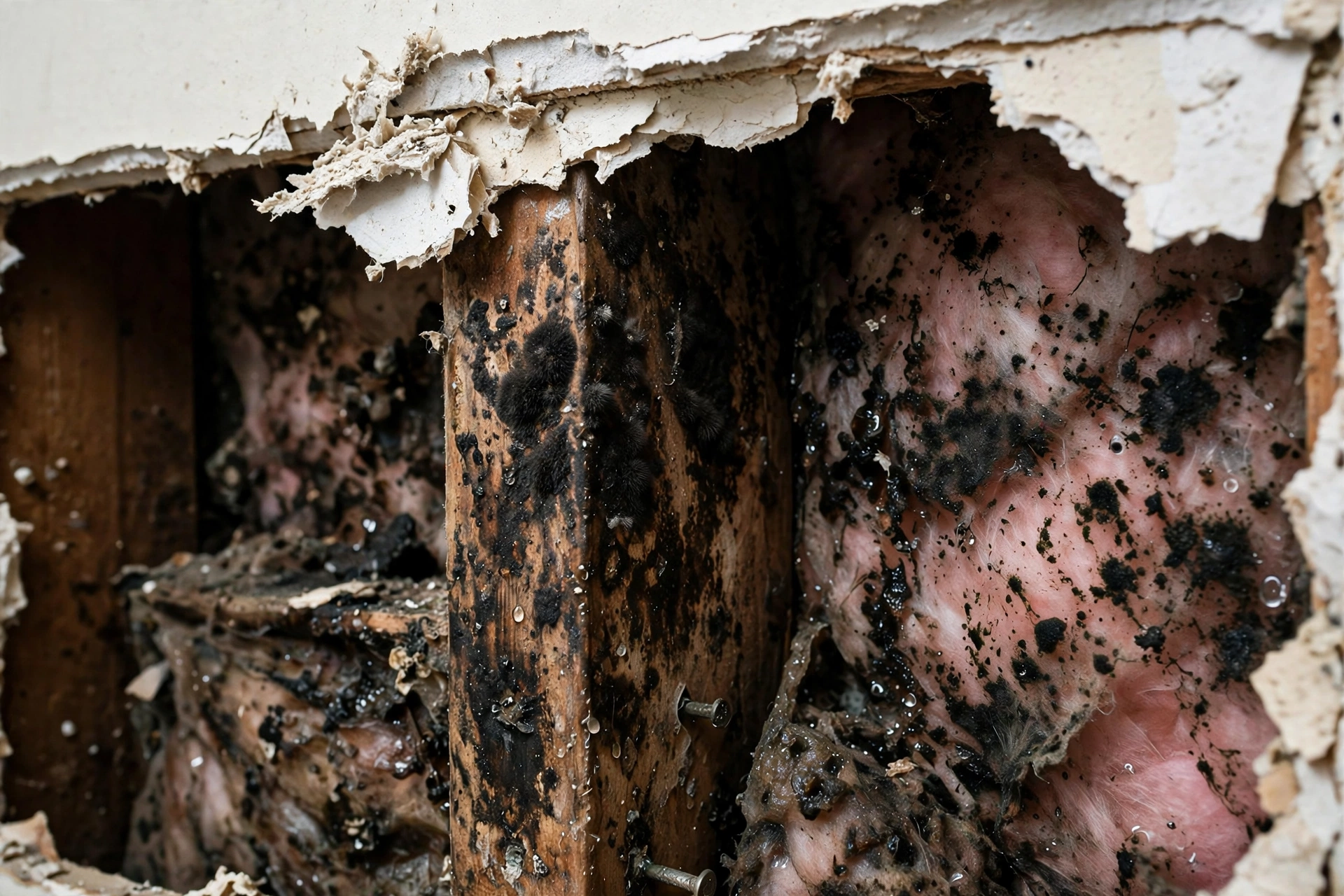
Hidden mold in home Tulsa inspections often starts with a smell, not a sight. Mold can grow for months inside walls, under floors, and above ceilings before you ever see a spot. Tulsa homes face extra risk from summer humidity, storm damage, and aging plumbing. This guide shows you the 7 places hidden mold loves, how to check each one, and when to bring in a professional.
What Is Hidden Mold and Why It Matters
Hidden mold is mold growing out of sight: behind drywall, under carpet, inside air ducts, or above ceiling tiles. You cannot see it, but you may smell it. A musty or earthy odor in one room is the most common clue.
Hidden mold matters because it grows unchecked. A small leak inside a wall can feed mold across several feet of drywall and wood framing. By the time it shows on the surface, the problem is bigger and costs more to fix. Finding it early saves money and protects the home’s structure.
7 Places Hidden Mold Loves to Hide
1. Behind bathroom walls and under tubs
Shower and tub plumbing runs inside walls. A slow drip at a pipe joint keeps the wall cavity damp for years. Check for soft spots on the wall, loose tiles, or a musty smell near the tub.
2. Under kitchen sinks
The cabinet under the sink is dark, rarely opened, and full of pipes. A tiny supply-line leak soaks the cabinet floor and back wall. Pull everything out once a month and look for stains, swelling, or odor.
3. Inside air ducts and around the HVAC unit
Tulsa air conditioners run hard all summer. Condensation on ducts and drain pans creates a damp home for mold. If your vents blow a musty smell when the system starts, the ducts or the unit may need attention.
4. Behind washing machines
Washing machine hoses fail quietly. Water pools behind the machine where nobody looks. Slide the machine out once or twice a year and check the wall and floor behind it.
5. In basements and crawl spaces
Below-grade spaces collect moisture from soil, especially after Oklahoma storms. Look for white or green fuzz on joists, musty air, and damp insulation. A flashlight check each season is cheap insurance.
6. Under carpet near exterior doors and windows
Rain can seep under doors and window frames and soak carpet padding. The carpet surface dries, but the pad below stays wet. Pull back a corner of carpet near suspect doors and check the pad.
7. In attics around roof leaks
A small roof leak drips onto attic insulation and wood. You rarely visit the attic, so mold grows freely. Check the attic after big storms for wet spots, stained wood, or a damp smell.
Hidden Mold in Home Tulsa: Clues for Each Spot
| Place to check | Signs of hidden mold | What it may mean |
|---|---|---|
| Behind bathroom walls | Soft drywall, loose tile, musty smell | Plumbing leak feeding mold in the wall cavity |
| Under kitchen sink | Stained or swollen cabinet wood, odor | Supply or drain line leak |
| Air ducts and HVAC | Musty air from vents, wet drain pan | Condensation or clogged condensate drain |
| Behind washing machine | Wet wall, warped baseboard, smell | Failing hose or loose connection |
| Basement or crawl space | Fuzzy growth on joists, damp air | Groundwater or poor drainage |
| Under carpet | Damp pad, discoloration, odor | Water entry at doors or windows |
| Attic | Stained wood, wet insulation, smell | Roof leak above the spot |
How to Check for Hidden Mold Yourself
You can do a solid first check with simple tools. Follow these steps:
- Use your nose first. Walk room to room and note any musty or earthy smells. Mold odor is strongest near the source.
- Bring a bright flashlight. Shine it at an angle across walls, baseboards, and joists. Shadows reveal texture changes and stains.
- Feel for softness. Press gently on drywall near plumbing and windows. Soft or spongy spots mean water damage.
- Look behind and under. Move the washer, pull out sink cabinets, and lift carpet corners in suspect areas.
- Check after rain. Storms expose leaks. Inspect the attic, basement, and window areas within a day or two of heavy rain.
- Watch your humidity. A cheap indoor hygrometer tells you if rooms stay above 60 percent humidity, which invites mold.
When DIY Checking Is Not Enough
Your own inspection finds surface clues. It cannot see inside wall cavities or measure moisture deep in materials. Call a professional mold removal company when:
- You smell mold but cannot find the source
- Water damage covers a large area
- You suspect mold inside walls, ducts, or under flooring
- Someone at home has asthma or allergies that flare indoors
- A recent flood or major leak soaked part of the house
Professionals use moisture meters and inspection cameras to find what eyes cannot. They also contain the work area so removal does not spread spores through your home.
Simple Ways to Prevent Hidden Mold
- Fix every leak fast, no matter how small it seems
- Keep indoor humidity between 30 and 50 percent
- Make sure the clothes dryer vents fully outside
- Clean HVAC drain lines each spring before cooling season
- Grade soil and gutters so water flows away from the foundation
- Inspect attics, basements, and crawl spaces twice a year
Key Takeaways
- Hidden mold grows where moisture hides: behind walls, under sinks, in ducts, and in attics
- Musty smell is the number one clue, even with no visible spots
- A flashlight and a careful nose find most early problems
- Large, hidden, or recurring mold needs professional equipment and containment
Hidden mold in home Tulsa searches start with worry, but a careful check brings answers. Walk your home with this list, trust your nose, and act on what you find. If the problem is bigger than you can reach, EMI Mold Removal Tulsa OK is open 24 hours with emergency service 24/7. Call (918) 268-5526 for a quote and get the full picture of what is hiding in your home.
Helpful resources: For more information, see EPA guidelines on mold.