
When disaster strikes your property, finding reliable Home Restoration in Tulsa Oklahoma becomes an immediate priority for protecting your investment and your family’s safety. The unique climate of Green Country—ranging from severe spring storms and flash flooding to winter freezes and scorching summers—creates a specific set of risks that generic advice simply cannot address. This guide walks you through the entire recovery lifecycle, from emergency mitigation to final reconstruction, ensuring you make informed decisions during a chaotic time.
Key Takeaways
- Speed is critical: Water damage mitigation must begin within 24–48 hours to prevent mold growth.
- Local expertise matters: Contractors familiar with Tulsa building codes and soil conditions deliver better long-term results.
- Document everything: Photos, videos, and written logs are your best leverage during insurance negotiations.
- Verify credentials: Always confirm IICRC certification, Oklahoma state licensing, and local references before signing.
- Mitigation vs. Reconstruction: Understand the difference; some firms handle both, while others specialize in only one phase.
Understanding the Scope of Property Recovery in Tulsa
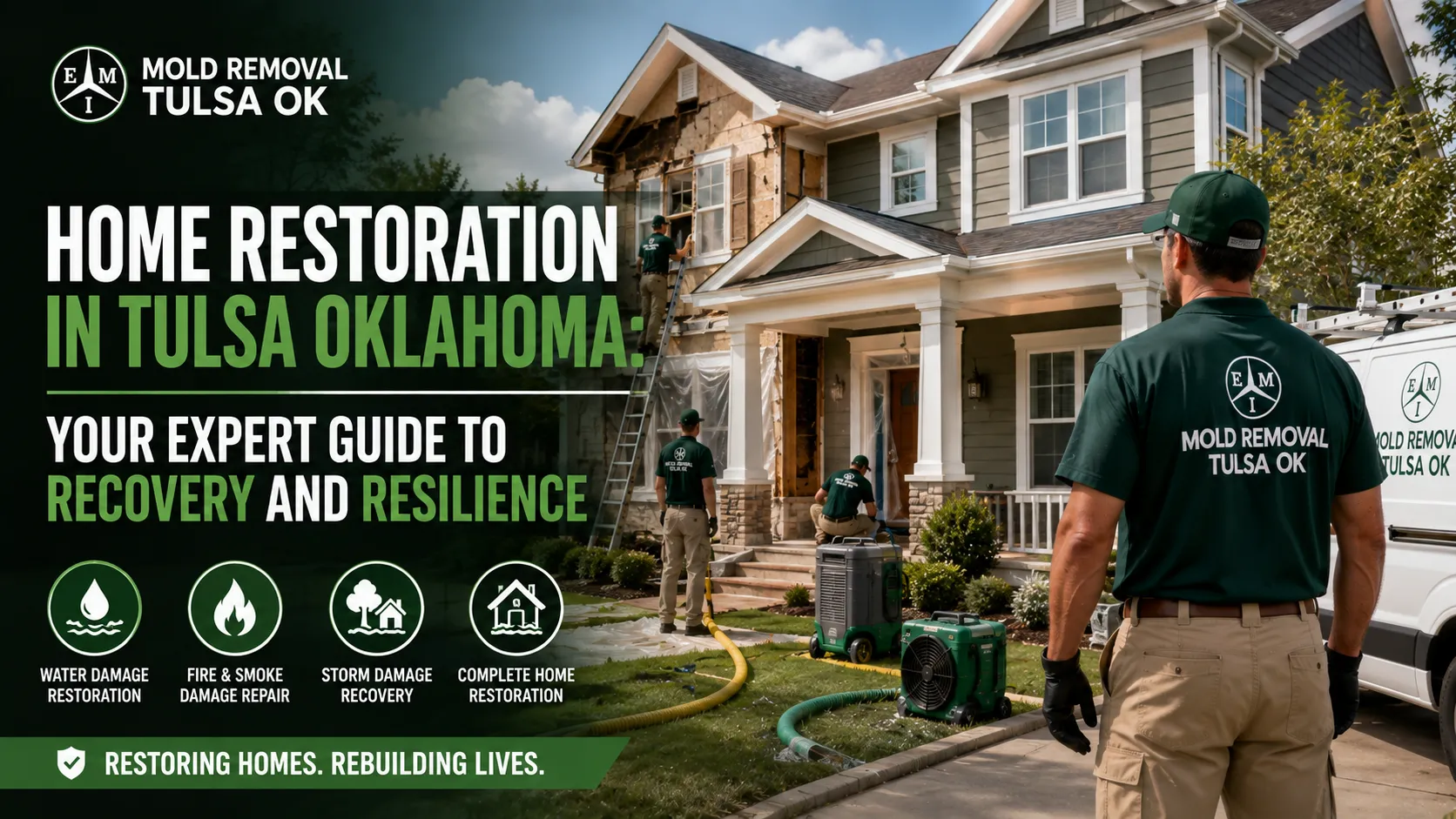
Property recovery is not a single service but a spectrum of specialized trades. In the Tulsa metro area, the scope typically divides into three distinct categories: mitigation, remediation, and reconstruction. Mitigation focuses on stopping further damage—think tarping a roof after a hailstorm or extracting standing water after a pipe burst. Remediation involves cleaning and treating the affected environment, such as mold removal or smoke odor neutralization. Finally, reconstruction rebuilds the structure to its pre-loss condition, requiring general contracting skills, permits, and inspections.
Furthermore, the geology of Northeast Oklahoma plays a hidden role. Expansive clay soils shift dramatically with moisture changes, meaning foundation cracks often accompany flood or plumbing events. A qualified local expert will inspect the slab or pier-and-beam structure during the initial assessment, whereas an out-of-town franchise might miss these subtle structural red flags. Consequently, choosing a provider with deep roots in Tulsa County, Rogers County, or Osage County offers a distinct technical advantage.
Common Disasters Requiring Professional Mitigation
Water Intrusion and Flash Flooding
Tulsa sits in a region prone to intense rainfall events, often dropping inches of water in mere hours. The Arkansas River watershed and numerous creeks—like Cherry Creek, Crow Creek, and Haikey Creek—create localized flood zones that FEMA maps sometimes underestimate. Category 1 (clean water) from a supply line break is the easiest to handle, yet Category 2 (gray water) from appliance overflows and Category 3 (black water) from sewage backups or river flooding require stringent PPE, antimicrobial treatments, and porous material disposal. Therefore, rapid extraction and structural drying using desiccant dehumidifiers and high-velocity air movers are non-negotiable first steps.
Fire, Smoke, and Soot Damage
Residential fires peak in winter months due to heating equipment and holiday cooking. However, the damage extends far beyond the flames. Smoke particles are acidic and penetrate porous materials—drywall, insulation, upholstery, and HVAC ductwork. If not neutralized properly, they cause eternal corrosion and persistent odors. Professional firms use hydroxyl generators, thermal fogging, and ozone treatments (in unoccupied spaces) to break down odor molecules at the chemical level. Additionally, firefighting efforts often saturate the structure, creating a dual water-fire loss scenario that complicates the drying strategy.
Severe Storms: Hail, Wind, and Tornadoes
Oklahoma sits squarely in Tornado Alley. High-velocity winds tear roofing membranes, shatter windows, and drive rain deep into wall cavities. Hailstorms, common in April and May, bruise shingles and dent soft metals, compromising the roof’s watershed capability. Immediate emergency board-up and roof tarping services prevent secondary water intrusion while the insurance claim is processed. Moreover, wind-driven rain often forces moisture behind brick veneer and stucco, requiring invasive moisture mapping using infrared thermography to locate hidden saturation pockets.
Mold Growth in Humid Subtropical Climates
Tulsa’s humidity averages 70% annually, creating a perfect incubator for microbial growth. Mold can colonize within 48 hours of a moisture event. It is not merely an aesthetic issue; certain species produce mycotoxins that impact indoor air quality and respiratory health. Proper remediation follows IICRC S520 standards: containment barriers, negative air pressure, HEPA filtration, and physical removal of contaminated materials. Encapsulation (painting over mold) is a failed strategy that liable contractors avoid.
The Step-by-Step Recovery Process
1. Emergency Contact and Rapid Response
The clock starts the moment you call. Reputable Tulsa firms offer 24/7/365 dispatch. A project manager should arrive on-site within 60–90 minutes for emergencies. They perform a safety assessment—checking for electrical hazards, structural instability, and asbestos/lead risks in homes built before 1978.
2. Detailed Inspection and Damage Documentation
Technicians use moisture meters (penetrating and non-penetrating), thermal imaging cameras, and hygrometers to map the loss. They create a room-by-room scope of loss with photos, moisture readings, and psychrometric data. This report becomes the backbone of your insurance claim. Consequently, never allow a contractor to start demolition without this baseline documentation.
3. Mitigation and Stabilization
Crews extract bulk water, remove wet carpet and pad, drill baseboard holes for wall cavity drying, and set drying equipment. Daily monitoring ensures the drying curve trends toward the goal (typically <16% moisture content for wood, <60% RH). If drying stalls, adjustments are made immediately. This phase usually lasts 3–5 days for water losses.
4. Remediation and Cleaning
Once dry, HEPA vacuuming, antimicrobial wiping, and content cleaning occur. Salvageable items (furniture, clothing, electronics) are packed out to a secure, climate-controlled facility for specialized restoration—ultrasonic cleaning for electronics, ozone chambers for textiles, freeze-drying for documents.
5. Reconstruction and Build-Back
This phase transitions from restoration trades to construction trades: framing, drywall, flooring, paint, cabinetry, and trim. A seamless handoff between the mitigation project manager and the reconstruction superintendent prevents scheduling gaps. Permits are pulled for structural, electrical, or plumbing work. Final inspections by the City of Tulsa or relevant municipality close the permit file.
Navigating Insurance Claims for Tulsa Homeowners
Insurance policies in Oklahoma often carry specific endorsements and exclusions. Standard HO-3 policies cover sudden and accidental discharge (burst pipes) but exclude gradual leaks, flood (rising water), and earth movement. Flood coverage requires a separate NFIP or private policy. Furthermore, Oklahoma law allows insurers to apply a “matching” exclusion for roofing and siding, meaning they may only pay to replace the damaged slope, not the entire roof for aesthetic uniformity.
Engage a restoration contractor who employs an in-house estimator fluent in Xactimate, the industry-standard pricing software. They supplement the carrier’s estimate with line items for code upgrades (e.g., AFCI/GFCI protection, ice-and-water shield, insulation R-value increases) mandated by the 2018 IRC adopted by Tulsa. A “supplement” is not a negotiation tactic; it is a correction of an incomplete scope. Therefore, never accept the first check without a professional review.
How to Vet a Qualified Contractor in Green Country
The barrier to entry for “restoration” marketing is low. To separate professionals from storm chasers, apply this vetting framework:
- IICRC Certification: Verify the firm holds current Water Damage Restoration (WRT), Fire & Smoke Restoration (FSRT), and Applied Structural Drying (ASD) certifications. Ask for the technician’s personal card numbers.
- Oklahoma Construction Industries Board (CIB) License: Required for reconstruction work over $2,000. Verify the license number on the CIB website.
- Local Physical Address: A Tulsa warehouse and office—not a PO Box or answering service—indicates accountability and parts inventory.
- Insurance Certificates: General Liability ($1M+), Workers’ Comp, and Pollution Liability (critical for mold/asbestos). Request a Certificate of Insurance (COI) naming you as additional insured.
- References and Reviews: Check Google, BBB, and Angi. Call three recent references with similar loss types. Ask about communication, timeline adherence, and subcontractor quality.
- Contract Clarity: The agreement must separate mitigation (T&M or per IICRC standards) from reconstruction (fixed price or cost-plus with cap). Avoid “assignment of benefits” clauses that sign your claim rights away entirely.
Additionally, membership in the Tulsa Regional Chamber or the Oklahoma Association of Builders signals community investment. Storm chasers vanish after the season; local employers stay to honor warranties.
Average Cost Factors and Timelines
Costs vary wildly based on loss category, affected square footage, and material selections. However, understanding the drivers helps you audit estimates.
- Water Mitigation: $3.50–$7.00 per sq. ft. for extraction, drying, and basic tear-out. Category 3 losses add 30–50% for hazmat protocols.
- Fire Restoration: $4.00–$12.00+ per sq. ft. depending on soot penetration, structural char, and content volume.
- Mold Remediation: $15–$30 per sq. ft. for contained removal; attic or crawlspace projects often run $5,000–$15,000 total.
- Reconstruction: $150–$350 per sq. ft. for standard finishes; luxury finishes exceed $400.
Timelines: Mitigation (3–7 days), Remediation (2–5 days), Reconstruction (4–16+ weeks). Supply chain lead times for custom cabinets, special-order flooring, or HVAC equipment frequently extend the build-back phase. A transparent contractor provides a critical-path schedule with weekly look-aheads.
Preventative Maintenance for Oklahoma Homes
Resilience starts before the loss. Tulsa homeowners should adopt a seasonal protocol:
- Spring: Test sump pumps and battery backups; clean gutters and extend downspouts 6+ feet from foundation; inspect roof for hail damage after every storm.
- Summer: Service HVAC condensate lines (primary cause of attic leaks); monitor indoor RH below 55% with whole-home dehumidification.
- Fall: Winterize hose bibs; insulate exposed pipes in crawlspaces; seal exterior penetrations to prevent wind-driven rain intrusion.
- Winter: Keep thermostat ≥55°F during travel; open cabinet doors on exterior walls during deep freezes; know your main water shut-off location.
Investing in a smart water leak detection system (e.g., Flo by Moen, Phyn Plus) provides automatic shutoff and real-time alerts, often earning insurance premium discounts of 5–10%.
Frequently Asked Questions
How quickly must water damage be addressed in Tulsa’s climate?
Mitigation should begin immediately—ideally within the first 24 hours. Tulsa’s high ambient humidity accelerates mold germination; spores can become viable colonies at 48–72 hours. Rapid structural drying arrests this cycle and drastically reduces claim severity.
Does homeowners insurance cover mold removal in Oklahoma?
Only if the mold resulted from a covered peril (e.g., sudden pipe burst) and was reported promptly. Long-term humidity issues, construction defects, or neglected maintenance are universally excluded. Most policies cap mold remediation at $5,000–$10,000 unless a specific endorsement was purchased.
Can I stay in my home during fire restoration?
Usually not during the mitigation and remediation phases. Airborne particulates, chemical residues, and noise from equipment create health and safety hazards. Most policies include Loss of Use (Coverage D) for hotel and meal expenses. Reconstruction phase occupancy depends on the isolation of the work zone.
What licenses are required for restoration contractors in Tulsa?
Oklahoma does not license “restoration” specifically. However, reconstruction requires a CIB Residential or Commercial Roofing/General Contractor license. Mold remediation requires compliance with the Oklahoma Mold Remediation Act (certified workers, supervisor, project notification). Always verify both CIB and IICRC credentials.
How do I handle a dispute with my insurance adjuster on scope?
Request a re-inspection with your contractor present. If unresolved, invoke the policy’s Appraisal Clause: each party hires an appraiser, they select an umpire, and the binding decision sets the loss amount. This is faster and cheaper than litigation. Public adjusters are another option but charge 10–15% of the settlement.
Ready to Restore Your Peace of Mind?
Don’t navigate the complexities of property damage alone. Partner with a Tulsa-based team that knows the local codes, the climate challenges, and the insurance landscape inside out.
Call for 24/7 Emergency Dispatch
Licensed • Insured • IICRC Certified • Locally Owned Since 1998
Helpful resources: For more information, see EPA guidelines on mold and FEMA disaster recovery resources.