
Learning how to remove mold from walls the right way keeps your home clean and your family safer. Mold on walls looks bad and may cause allergy symptoms or irritation in sensitive people. The safe approach depends on what your wall is made of. Hard surfaces like tile can be cleaned. Porous materials like drywall often need to be cut out and replaced. This guide walks you through seven safe steps, explains when DIY works, and tells you when to call a professional.
What Is Mold and Why Does It Grow on Walls?
Mold is a type of fungus that grows in damp places. It spreads through tiny spores that float in the air. Mold needs three things to grow: moisture, a food source, and time. Walls give it all three. Drywall paper, wood, and dust are food. Leaks, condensation, and high humidity supply moisture. Bathrooms, basements, and exterior walls are the most common spots. In Tulsa, humid summers and storm damage make wall mold a frequent problem.
Step 1: Identify the Moisture Source
Before you touch the mold, find out why it is there. Look for leaking pipes behind the wall, roof leaks above, or condensation from poor insulation. Check if the wall feels cold and damp, which can mean condensation is the cause. If you skip this step, the mold will come back. Fix leaks, improve drainage, or add ventilation first. A wall that stays dry is a wall that stays mold free.
Step 2: How to Remove Mold From Walls Depends on the Surface
This step decides everything. Non-porous surfaces like tile, glass, and painted concrete can be scrubbed clean. Porous materials like drywall, wallpaper, and unfinished wood absorb mold deep inside. Surface cleaning cannot reach the roots in porous materials. The mold will return. In most cases, moldy drywall should be cut out and replaced, not just wiped down. The table below shows what to do for each surface.
| Wall Surface | Can You Clean It? | Best Approach |
|---|---|---|
| Ceramic tile or glass | Yes | Scrub with soap and water, dry fully |
| Painted concrete or metal | Yes, if paint is intact | Clean and repaint if needed |
| Drywall or sheetrock | No, it is porous | Cut out and replace the section |
| Wallpaper | No, it traps moisture | Remove and replace |
| Unfinished wood | No, mold roots go deep | Sand heavily or replace the board |
Step 3: Protect Yourself Before You Start
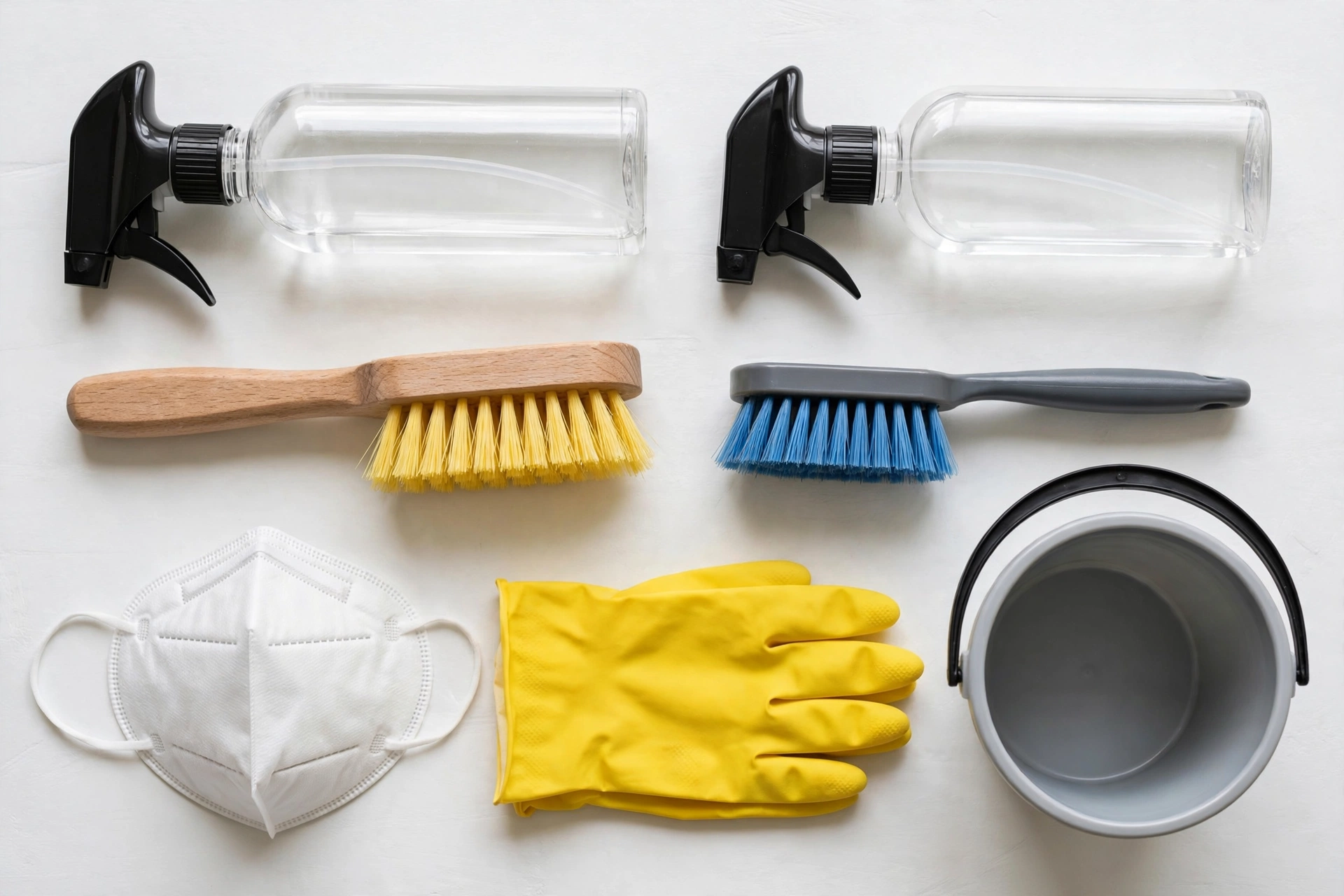
Mold cleanup can release spores into the air. Wear an N95 mask, gloves, and safety glasses. Cover your clothes or wear old ones you can wash in hot water. Open windows for fresh air, but close doors to other rooms so spores do not spread through the house. If anyone in the home has asthma, allergies, or a weak immune system, keep them away from the work area. For large jobs, a professional team uses containment barriers and air filters to protect the rest of the home.
Step 4: Clean Small Spots on Hard Surfaces
For small mold spots on tile, glass, or other hard surfaces, use soap and water. Scrub with a brush or sponge until the stain is gone. Rinse and dry the area completely with a towel, then let air circulate. Avoid using bleach on large areas indoors because the fumes are strong and it does not work on porous materials. Never mix bleach with ammonia or vinegar, since that creates dangerous gases. After cleaning, watch the spot for a few weeks to make sure it does not return.
Step 5: Cut Out and Replace Moldy Drywall
When mold grows on drywall, removal is safer than cleaning. Mark an area at least 12 inches beyond the visible mold. Cut out the damaged section with a utility knife. Bag the pieces in plastic so spores do not spread. Check the wood framing behind the drywall. If the framing is solid and only surface stained, it can be cleaned and dried. Let the open wall cavity dry fully for at least 24 to 48 hours. Then install new drywall, tape, mud, and paint. If the damage is large or the framing looks soft, call a professional.
Step 6: Dry Everything Completely
Drying is the step most people rush, and it is the most important. Mold needs moisture to grow. Use fans and a dehumidifier to dry the area fast. Aim for indoor humidity between 30 and 50 percent. Do not close up a wall until it is fully dry. Touch the surface. If it feels cool or damp, keep drying. A moisture meter can confirm the wall is dry. Rushing this step is the top reason mold comes back after cleanup.
Step 7: Prevent It From Coming Back
Prevention beats cleanup every time. Run bathroom fans during and after showers. Fix leaks the day you find them. Keep gutters clean so water drains away from walls. Use a dehumidifier in damp rooms. Check behind furniture on exterior walls once in a while, since trapped air there can condense. Small habits like these keep walls dry and mold free.
Key Safety Reminders
- Wear a mask, gloves, and eye protection during any mold cleanup.
- Never mix bleach with ammonia or vinegar. The fumes can be dangerous.
- Do not just paint over mold. It will grow through the paint.
- Porous materials like drywall usually need replacement, not cleaning.
- If the area is larger than 10 square feet, call a professional.
When to Call a Professional for Wall Mold
Call a professional when mold covers a large area, grows inside walls, keeps returning, or appears after flooding. Also get help if someone in the home has health concerns that seem linked to the mold. Mold exposure may cause irritation or allergy symptoms in sensitive people. Professional remediation includes moisture detection, safe removal, and drying, so the problem does not return. EMI Mold Removal Tulsa OK is open 24 hours with 24/7 emergency service.
Helpful resources: For more information, see EPA guidelines on mold.
Conclusion
Knowing how to remove mold from walls safely comes down to three rules. Find the moisture source first. Clean hard surfaces and replace porous ones like drywall. Dry everything completely so mold cannot return. Small jobs can be DIY with the right protection. Big, hidden, or stubborn mold needs a professional. If you need help in the Tulsa area, call EMI Mold Removal Tulsa OK at (918) 268-5526. We are open 24 hours, offer 24/7 emergency service, and will give you a quote by phone.