
Mold in bathroom Tulsa homes is one of the most common problems we see. Bathrooms stay warm and damp, and Tulsa summers add heavy humidity on top of daily showers. The good news is that most surface mold in a bathroom can be removed with simple tools and cleaners you already own. This guide gives you 7 practical tips to remove it, plus honest advice on when to call a professional.
Why Bathrooms in Tulsa Grow Mold So Fast
Mold needs three things to grow: moisture, warmth, and something to feed on. A bathroom offers all three. Steam from showers coats every surface. Towels stay damp. Soap scum and dust give mold food.
Tulsa weather makes it worse. Summer humidity often sits high for months. Many homes run the air conditioner hard, which cools the air but can leave bathrooms muggy. Older Tulsa homes may also have weak bathroom fans or none at all. The result is the same: a room that never fully dries out.
Is Bathroom Mold Dangerous?
Most bathroom mold is surface mold. It looks ugly and may cause a musty smell. For healthy people, small patches are usually more of a nuisance than a danger.
That said, mold can irritate eyes, nose, and throat in sensitive people. If anyone in your home has asthma or allergies and feels worse in the bathroom, take it seriously. We cannot give medical advice, so talk to your doctor if you have health concerns. From a home standpoint, any mold patch that keeps growing, spreads fast, or comes back after cleaning deserves a closer look.
7 Tips to Remove Mold in Your Bathroom
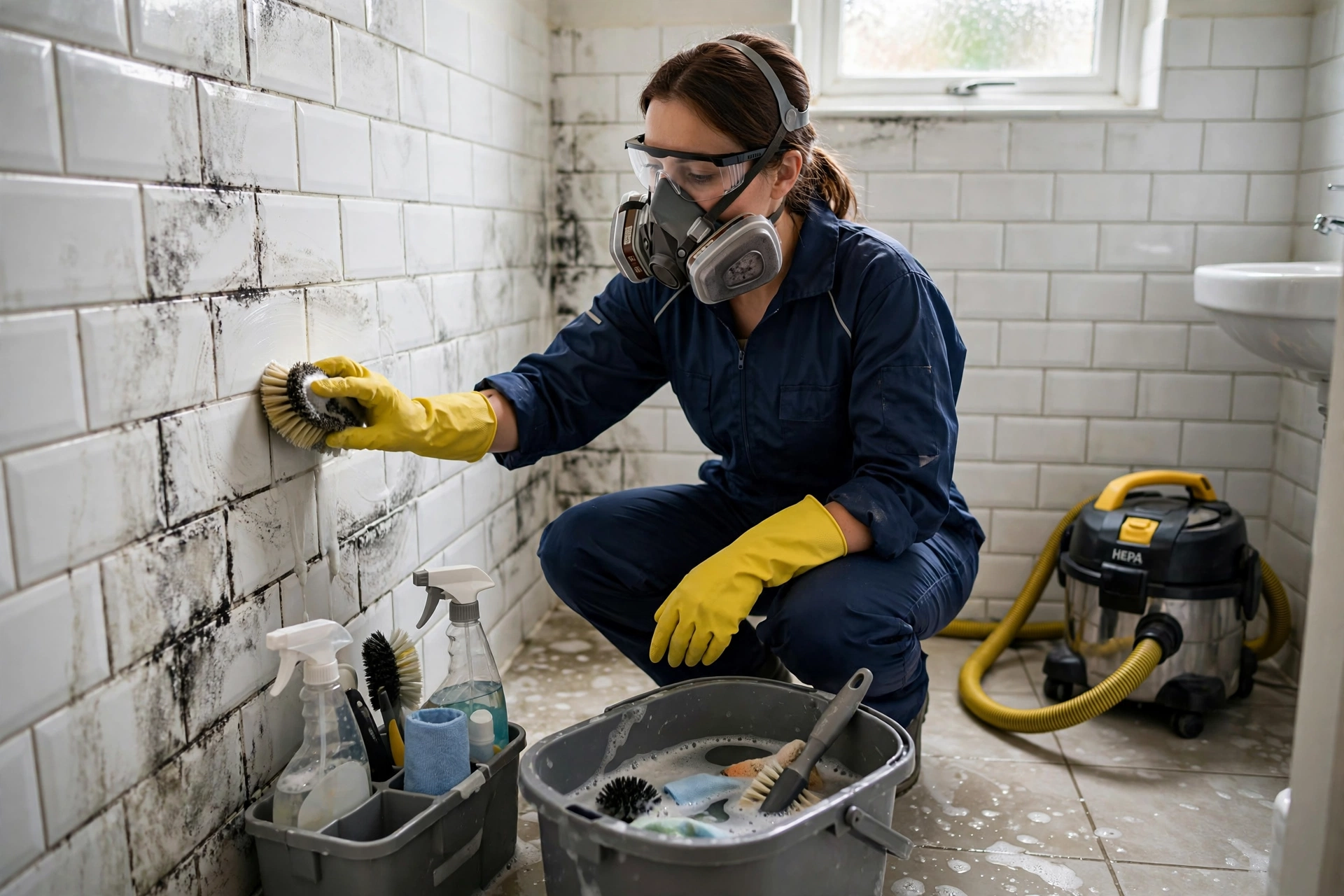
Tip 1: Gather the right supplies first
You do not need fancy products. Most jobs need only these basics:
- Rubber gloves and a mask
- A scrub brush or old toothbrush for grout lines
- White vinegar in a spray bottle
- Baking soda
- Clean rags or paper towels
- A bathroom-safe mold cleaner for stubborn spots
Tip 2: Ventilate before you start
Turn on the bathroom fan and open a window if you have one. Good airflow keeps spores from hanging in the air while you scrub. Leave the fan running for 30 minutes after you finish.
Tip 3: Spray vinegar and let it sit
Spray undiluted white vinegar directly on the moldy area. Let it sit for at least one hour. Vinegar kills most common bathroom molds and is safe on tile, grout, and tubs. Wipe the area clean with a damp rag.
Tip 4: Use baking soda paste for grout lines
Mix baking soda with a little water to form a thick paste. Spread it on stained grout and scrub with a toothbrush. Rinse well. This works well on the gray and pink films that grow along shower edges.
Tip 5: Dry everything completely
Mold removal fails when surfaces stay wet. After cleaning, dry the area with a clean towel or rag. Then leave the fan running or the door open until the room feels dry. This step matters more than the cleaner you use.
Tip 6: Recaulk when caulk is the problem
If mold grows under cracked or peeling caulk, cleaning will not fix it. Scrape out the old caulk, clean and dry the gap, then apply fresh bathroom caulk. New caulk seals out the moisture that feeds mold.
Tip 7: Fix the leak behind the mold
Mold that returns in the same spot within days usually means water is getting in from somewhere. Check for dripping faucets, loose shower heads, and slow drains. A small leak can feed a large mold patch. Fix the water problem first, then clean the mold.
Common Bathroom Mold Types: What Are You Looking At?
Not all bathroom mold looks the same. This quick table helps you identify what you are seeing:
| Color and look | Where it grows | What to do |
|---|---|---|
| Black or dark green spots | Shower grout, ceiling corners, behind toilets | Clean with vinegar or a mold cleaner. Call a pro if the patch is larger than 10 square feet. |
| Pink or orange film | Shower walls, soap dishes, drains | Usually soap-scum bacteria, not true mold. Scrub with baking soda paste and dry the area. |
| White or gray fuzz | Window sills, damp drywall, bath mats | Wipe with vinegar. Replace the mat or material if the fuzz goes deep into it. |
| Brown stains under paint | Ceilings, walls near showers | May signal mold behind the surface. This needs a professional check. |
When DIY Cleaning Is Enough and When to Call a Pro
DIY cleaning works well for surface mold on tile, grout, tubs, and glass. If you can see all of it and reach all of it, you can usually handle it yourself.
Call a professional mold removal company when:
- The mold patch is larger than about 10 square feet
- Mold keeps coming back after you clean it properly
- You smell mustiness but cannot find the source
- Mold is growing on drywall, ceiling, or under flooring
- Someone in the home has serious allergies or asthma and symptoms are getting worse
There is no shame in calling for help. Professionals have moisture meters and containment gear that keep the job safe and complete.
How to Keep Bathroom Mold From Coming Back
Removal is only half the battle. Prevention keeps your bathroom clean for good:
- Run the exhaust fan during every shower and for 20 to 30 minutes after
- Squeegee shower walls after each use to cut drying time
- Fix drips and leaks as soon as you spot them
- Wash shower curtains and bath mats often in hot water
- Keep the bathroom door open when not in use to improve airflow
- Replace old caulk before it cracks and traps water
Mold in Bathroom Tulsa: Questions Homeowners Ask
Can I just paint over bathroom mold? No. Paint seals mold inside the wall where it keeps growing. The stain will bleed back through, and the hidden growth gets worse. Remove the mold first, fix the moisture, then repaint.
Does bleach kill bathroom mold? Bleach can clean surface mold on hard, non-porous tile. But on grout and drywall it often fails, because bleach cannot reach mold roots in porous material. Vinegar or a dedicated mold cleaner usually works better on grout lines.
How fast can bathroom mold grow back? In a damp Tulsa bathroom with no ventilation fix, visible mold can return within one to two weeks. That is why drying and airflow matter more than the cleaner you pick.
Should I worry about mold on my shower curtain? Shower curtain mold is common and easy to handle. Wash the curtain in hot water with baking soda, or replace it. Then fix the ventilation so it does not come right back.
Key Takeaways
- Bathroom mold is common in Tulsa because of steam plus summer humidity
- Vinegar, baking soda, and thorough drying handle most surface mold
- Always fix leaks and ventilation problems or mold will return
- Large patches, hidden mold, and recurring growth need a professional
Mold in bathroom Tulsa homes does not have to be a losing battle. Clean it well, dry it fully, and fix the moisture behind it. If the job is bigger than a weekend scrub, EMI Mold Removal Tulsa OK is open 24 hours and offers emergency service 24/7. Call (918) 268-5526 for a quote and get your bathroom back to clean and healthy.
Helpful resources: For more information, see EPA guidelines on mold.