
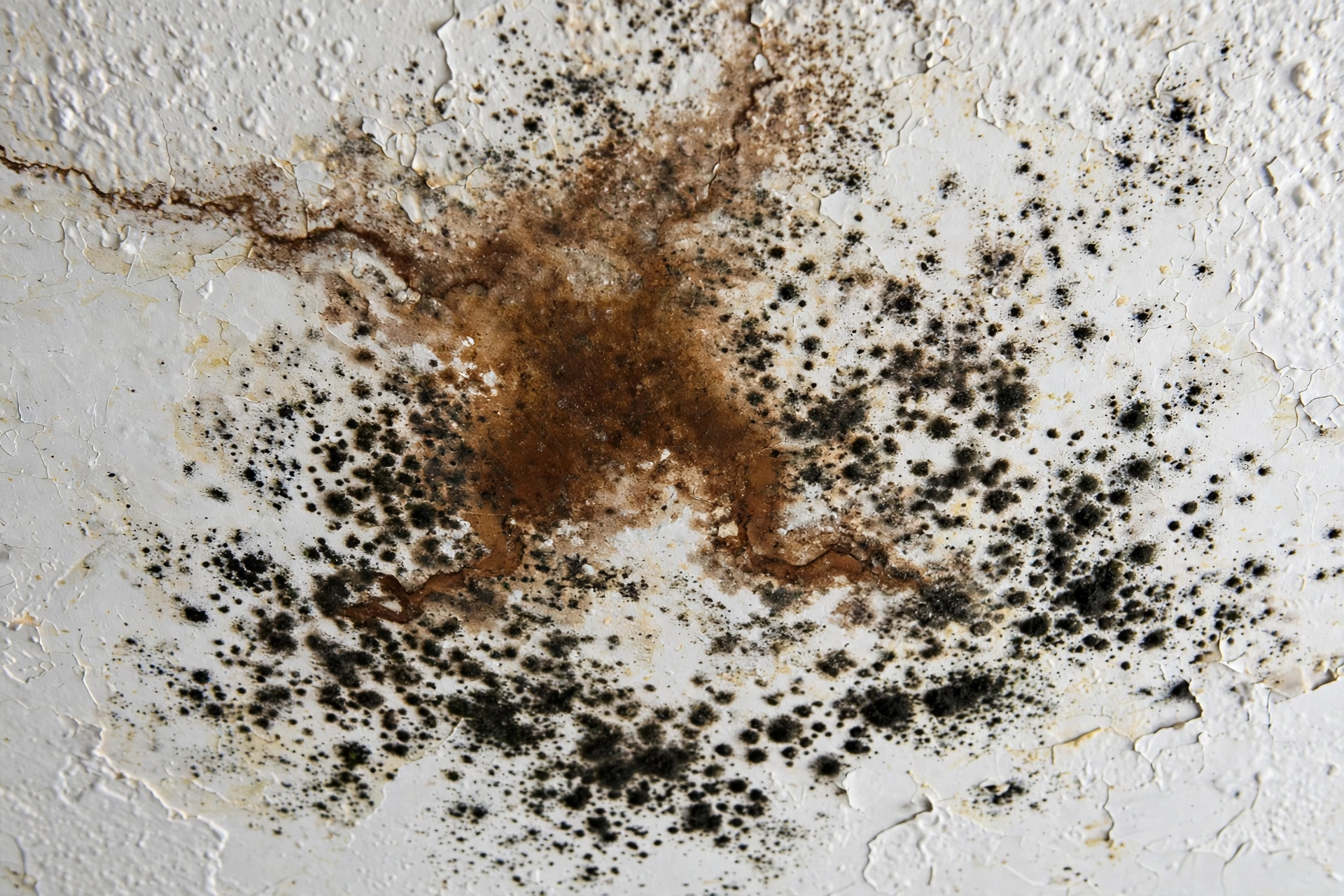
Mold on ceiling Tulsa homeowners discover is a warning sign you should not ignore. Ceilings do not get wet on their own, so mold up there means water is coming from above or condensing out of the air. This guide covers the five most common causes of ceiling mold in Tulsa, how to fix each one, and when the job needs a professional.
Why Ceiling Mold Deserves Fast Attention
Ceiling mold is different from a moldy shower corner. It signals an active or recent water problem in the roof, plumbing, or attic above. Gravity pulls that water down, so by the time mold appears on your ceiling, moisture has already soaked through drywall, insulation, or both. The longer you wait, the more material gets damaged and the larger the mold colony grows. In Tulsa, where storms and humidity are facts of life, ceiling mold often traces back to a roof issue that needs prompt repair.
Mold on Ceiling Tulsa: 5 Causes and Fixes
Cause 1: Roof Leaks
The number one cause. Damaged shingles, failed flashing around vents and chimneys, or hail damage lets rainwater drip into the attic and soak the ceiling drywall below. You may see a brown water stain first, then dark mold spots as the area stays damp. The fix is a roof repair by a qualified roofer, followed by replacing water-damaged drywall and insulation. Never just paint over a ceiling stain. The moisture and mold remain underneath, and the problem returns.
Cause 2: Plumbing Leaks From Above
In two-story homes, bathrooms and water lines run above first-floor ceilings. A leaking toilet seal, a cracked shower pan, or a pinhole in a supply line drips steadily onto the ceiling below. These leaks are sneaky because they are small and constant. The fix is a plumber repairing the source, then cutting out and replacing the affected ceiling section. Drying alone is not enough once drywall has been saturated.
Cause 3: Condensation in the Attic
Warm, moist indoor air rises into the attic and condenses on the cold underside of the roof deck. That moisture drips onto ceiling drywall or feeds mold on the attic side that eventually shows through. Poor attic ventilation and air leaks from the living space are the usual culprits. The fix involves sealing air leaks, improving soffit and ridge ventilation, and making sure bathroom fans vent outside, not into the attic.
Cause 4: HVAC Condensation and Drain Issues
Air handlers and ductwork in attics produce condensation, especially during Tulsa’s long cooling season. A clogged condensate drain line can overflow the drain pan and soak the ceiling below. The fix is clearing or repairing the drain line, ensuring the pan drains properly, and insulating cold ducts and pipes to reduce condensation. Annual HVAC maintenance catches these problems early.
Cause 5: High Indoor Humidity
Sometimes there is no leak at all. Indoor humidity above 60 percent lets moisture condense on the coolest surfaces, which are often ceilings, especially in bathrooms without exhaust fans. The fix is ventilation and dehumidification: run bathroom fans during and after showers, use kitchen range hoods when cooking, and keep indoor humidity between 30 and 50 percent with a hygrometer to verify.
Causes, Signs, and Fixes at a Glance
| Cause | Typical signs | The fix |
|---|---|---|
| Roof leak | Brown stain, then dark spots after rain | Roof repair plus drywall replacement |
| Plumbing leak | Steady damp spot under a bathroom | Plumber repair plus ceiling rebuild |
| Attic condensation | Mold near ceiling edges in winter | Ventilation and air sealing |
| HVAC drain clog | Wet ceiling under attic air handler | Clear drain, insulate ducts |
| High humidity | Surface mold in bathrooms | Fans, dehumidifier, humidity control |
What to Do When You Spot Ceiling Mold
- Do not just paint over it. Paint seals in moisture and mold, which continue growing underneath and return worse than before.
- Find the water source first. Check the attic above the spot during or right after rain, look for plumbing above, and note whether the spot grows after storms or steadily.
- Contain small areas. For a small patch, avoid scrubbing aggressively without a mask, since disturbing ceiling mold drops spores directly into your breathing zone.
- Document everything with photos and dates, which helps roofers, plumbers, and insurance discussions.
- Act within days, not weeks. Ceiling mold means ongoing moisture, and every week adds damage to drywall, insulation, and framing.
DIY vs Professional Ceiling Mold Removal
A small surface spot under about 10 square feet on a bathroom ceiling, caused by humidity and with no water damage, may be a DIY cleaning job with proper protection. But most ceiling mold involves saturated drywall, and wet drywall cannot be cleaned. It must be cut out and replaced. If the mold covers a large area, keeps returning, involves a roof or plumbing leak, or sits above living spaces where spores will rain down during work, call a professional. Ceiling work also means working overhead in a contained area, which is difficult and messy without experience and HEPA equipment.
Preventing Ceiling Mold in Tulsa Homes
Prevention targets the five causes. Have your roof inspected yearly, especially after hail season. Keep gutters clean so water does not back up under shingles. Run bathroom exhaust fans faithfully and confirm they vent outside. Service your HVAC annually, including the condensate drain. And keep indoor humidity in the 30 to 50 percent range. These habits cost little and prevent the most expensive mold jobs a Tulsa homeowner can face.
Helpful resources: For more information, see EPA guidelines on mold.
Conclusion: Find the Water, Fix the Ceiling
Mold on the ceiling in Tulsa almost always means water from above: a roof leak, a plumbing drip, attic condensation, an HVAC drain problem, or chronic high humidity. The five causes and fixes above give you a clear starting point. Remember the golden rule: fix the water first, then handle the mold, never the other way around.
If mold on ceiling Tulsa has appeared in your home, EMI Mold Removal Tulsa OK can help. We trace the moisture to its source, remove affected materials safely with proper containment, and make sure the repair lasts. Call (918) 268-5526 any time. We are open 24 hours with emergency service 24/7.