
Mold vs mildew Tulsa homeowners ask about often: what is the difference, and does it matter? Both are fungi that love damp places, and both show up in Tulsa bathrooms, basements, and attics. But they differ in appearance, depth of growth, and how seriously you should take them. This guide explains six clear differences so you can identify what you are dealing with and respond the right way.
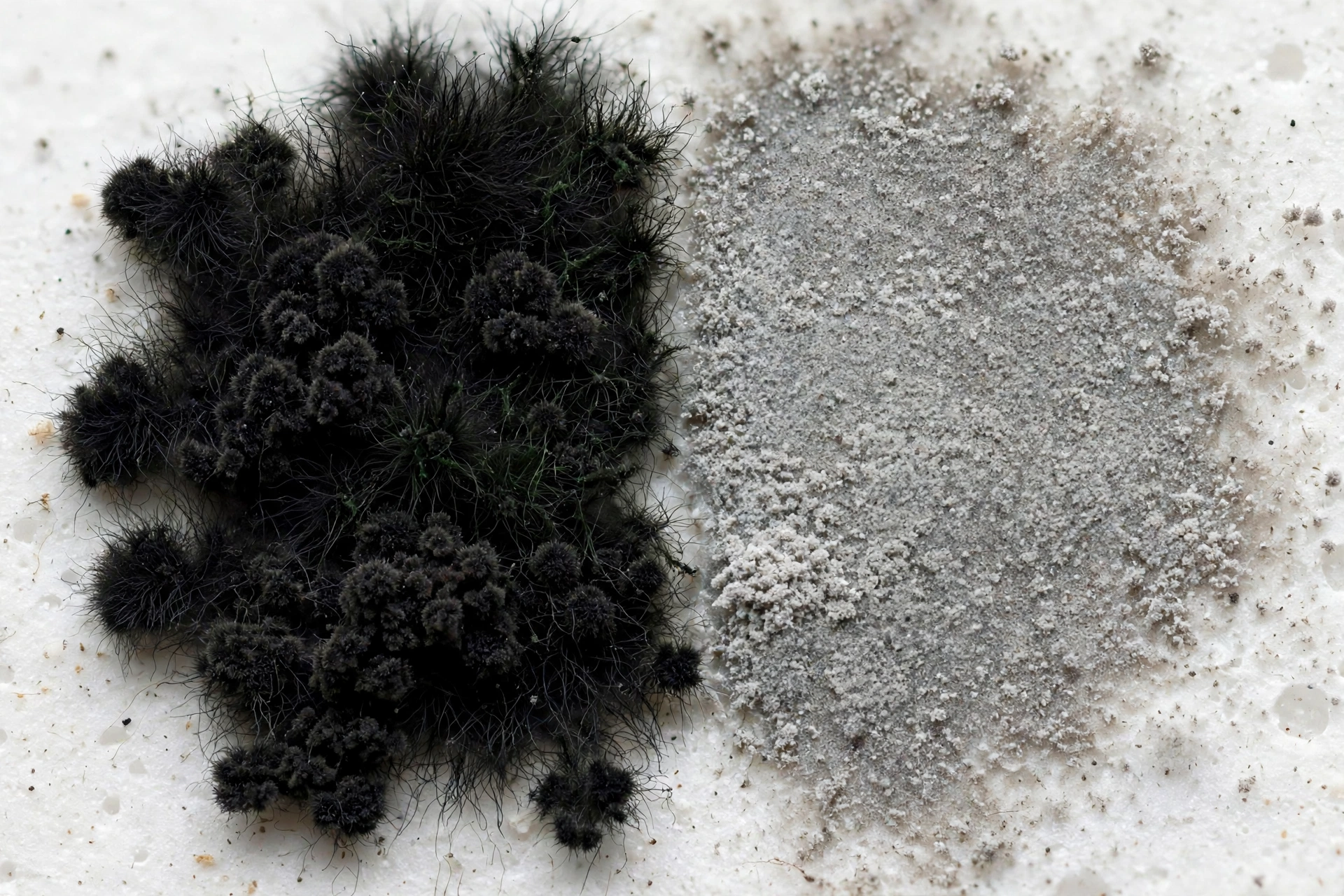
What Is Mildew?
Mildew is a type of surface fungus that grows flat on damp surfaces. It usually looks white, gray, or light yellow at first and may turn brown over time. You will find it on shower walls, windowsills, and damp fabrics. Mildew stays on the surface. It does not send roots deep into materials, which is why it wipes off relatively easily with household cleaners.
Think of mildew as the mild cousin in the fungus family. It is still a sign of excess moisture, and it can trigger mild allergy symptoms in sensitive people, but it rarely causes structural damage or serious health problems.
What Is Mold?
Mold is a broader group of fungi that grows in fuzzy or slimy patches, often black, green, blue, or red. Unlike mildew, mold sends tiny root-like structures deep into porous materials such as drywall, wood, and fabric. That is why mold stains often return after surface cleaning. The roots survive below.
Mold needs the same things mildew needs, moisture plus a food source, but it is more aggressive and harder to remove. It can damage building materials over time and is more likely to cause allergy symptoms, asthma flare-ups, and musty odors that fill a room.
When dealing with mold vs mildew tulsa, professional help makes the process faster and safer.
Mold vs Mildew Tulsa: 6 Differences
1. Appearance
Mildew looks flat, powdery, or filmy, usually white, gray, or pale yellow. Mold looks fuzzy, raised, or slimy, and comes in darker colors like black, green, or brown. If the spot has texture and depth, it is more likely mold. If it looks like a thin film, it is more likely mildew.
2. Depth of Growth
This is the most important difference. Mildew stays on the surface. Mold penetrates into the material. Press a fingernail into the spot. If the discoloration goes below the surface, especially in drywall or wood, you are dealing with mold, not mildew.
3. Where Each One Grows
Mildew favors damp surfaces with good air exposure: shower tiles, window frames, and houseplant soil. Mold grows in those places too, but also thrives in hidden, undisturbed spots: inside walls, under flooring, in attics, and in crawl spaces. If the growth is somewhere you rarely look, suspect mold.
4. Ease of Cleaning
Mildew usually wipes away with a household cleaner and some scrubbing. Mold on porous materials resists cleaning because the roots remain. If you have scrubbed the same spot twice and it keeps coming back, that persistence is a strong sign of mold with deep roots.
5. Smell
Both can smell musty, but mold produces a stronger, more penetrating earthy odor. A faint mustiness in a shower may be mildew. A strong musty smell filling a room or closet usually means a larger mold colony, possibly hidden.
6. Health and Damage Risk
Mildew may cause mild irritation in very sensitive people but is generally low risk. Mold is more likely to trigger allergies, worsen asthma, and damage drywall, wood, and insulation over time. Neither should be ignored, but mold deserves a faster and more thorough response.
Mold vs Mildew: Quick Comparison Table
| Feature | Mildew | Mold |
|---|---|---|
| Typical color | White, gray, pale yellow | Black, green, brown, blue |
| Texture | Flat, powdery, filmy | Fuzzy, raised, or slimy |
| Growth depth | Surface only | Penetrates porous materials |
| Common locations | Showers, windowsills, fabrics | Walls, attics, crawl spaces, HVAC |
| Cleaning difficulty | Wipes off easily | Often returns after cleaning |
| Damage risk | Low | Can rot drywall and wood |
| Health concern | Mild, in sensitive people | Allergies, asthma triggers |
How to Test Which One You Have
Try this simple check. Put a few drops of household bleach on the spot and wait five minutes. If the color fades significantly, it was likely mildew on the surface. If the color stays dark, the growth has depth and is likely mold. This is not a lab-grade test, but it is a useful first clue. For certainty, especially with large or recurring growth, professional testing identifies the exact species.
Many Tulsa homeowners searching for mold vs mildew tulsa want to know what to expect.
When Mildew Turns Into a Bigger Problem
Mildew itself is minor, but it is always a moisture warning. The same damp conditions that grow mildew on your shower wall can grow mold inside the wall cavity behind it. In Tulsa’s humid climate, that transition happens fast. If mildew keeps returning despite cleaning and ventilation, assume there is more moisture than you can see and investigate deeper. Fixing a small mildew problem today prevents a mold remediation project tomorrow.
What to Do About Each One
- For mildew: scrub with a bathroom cleaner or diluted vinegar, rinse, and dry fully. Then improve ventilation with an exhaust fan or open window, and keep the area dry between uses.
- For small mold on hard surfaces: clean with protective gloves and a mask, dry the area completely, and fix the moisture source. Areas under about 10 square feet on tile or glass are often manageable.
- For mold on drywall, wood, or insulation: do not just scrub. The roots are inside the material. Affected porous sections usually need removal by a professional.
- For large areas or hidden mold: call for professional remediation with containment, HEPA filtration, and moisture repair.
Helpful resources: For more information, see EPA guidelines on mold.
Conclusion: Know What You Are Fighting
The mold vs mildew Tulsa debate comes down to depth. Mildew sits on the surface and wipes away. Mold digs in, comes back, and can damage your home and irritate your family’s breathing. Now you know the six differences, the simple bleach test, and when each problem needs professional help.
If you are unsure about mold vs mildew Tulsa in your own home, EMI Mold Removal Tulsa OK can identify it and handle it safely. Call (918) 268-5526 any time. We are open 24 hours with emergency service 24/7 across the Tulsa area.