Walking into a flooded basement or spotting a sagging ceiling stain triggers immediate panic. You need help fast, but hiring the wrong crew creates bigger headaches down the road. This guide cuts through the noise to help you identify trustworthy professionals who answer the phone at 2 a.m. and actually show up with the right equipment.
Key Takeaways
- Speed is everything: Mold begins colonizing wet materials within 24 to 48 hours.
- Certifications matter: Look for IICRC credentials, not just a business license.
- Local presence wins: Tulsa-based crews navigate local building codes and insurance adjusters faster.
- Transparent estimates: Reputable firms provide detailed scopes of work before demolition starts.
- Full-service capability: Choose a team that handles mitigation, drying, and reconstruction seamlessly.
Why Local Expertise Changes the Outcome
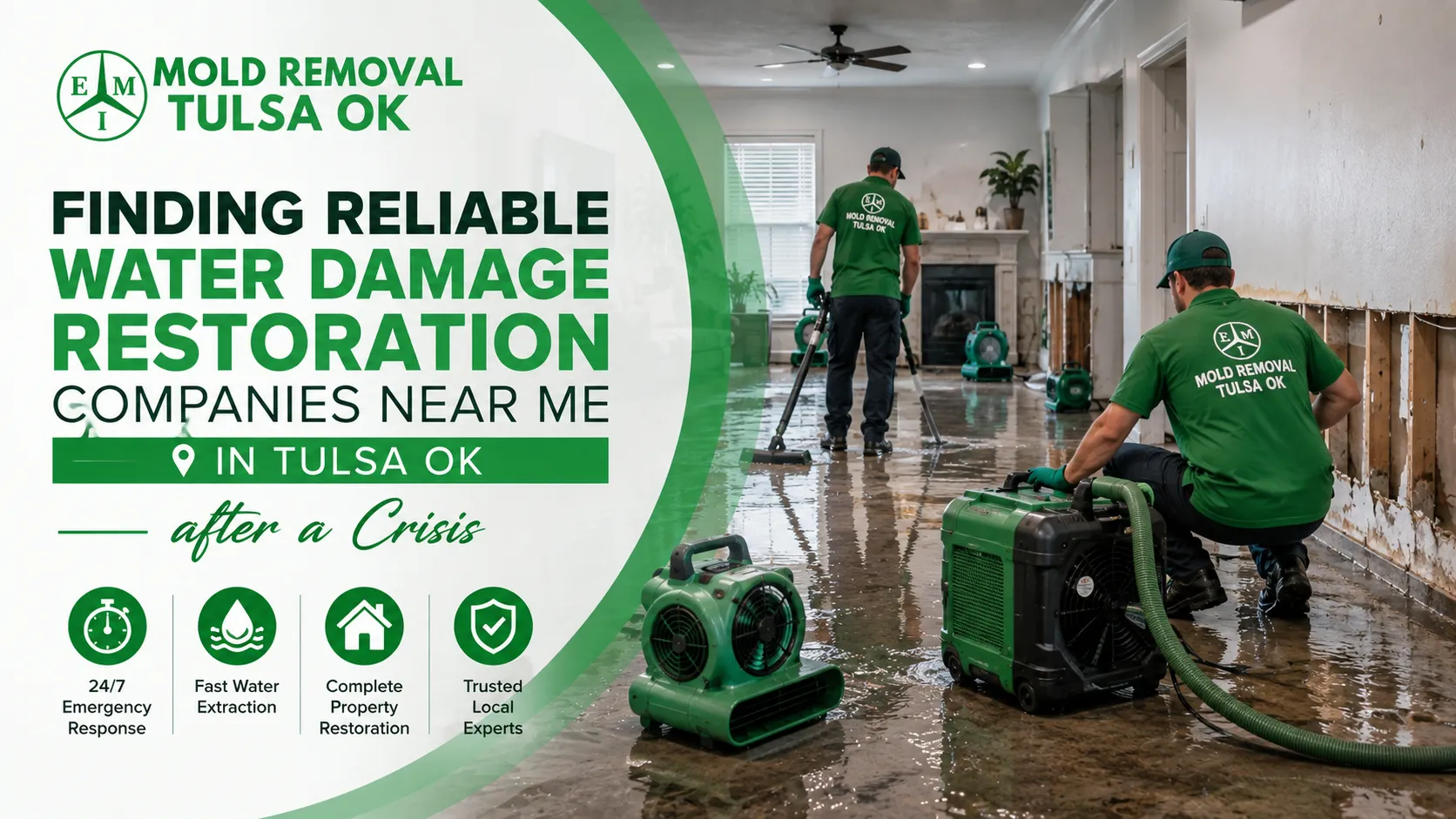
Tulsa weather swings from scorching summers to ice storms that burst pipes in January. A crew based in another state simply cannot mobilize fast enough when the Arkansas River floods or a sudden freeze hits midtown. Consequently, local technicians arrive within hours, not days. They understand the specific soil composition affecting foundation drainage in neighborhoods like Brookside or Jenks. Furthermore, they maintain relationships with Tulsa County permit offices and local insurance adjusters. This familiarity accelerates approvals and reduces friction during the claims process. Therefore, prioritizing a Tulsa-based address over a national 800-number call center pays dividends immediately.
Critical Certifications That Separate Pros from Amateurs
Anyone with a shop vac and a fan can call themselves a restoration company. However, the Institute of Inspection, Cleaning and Restoration Certification (IICRC) sets the global standard. Technicians holding a Water Damage Restoration Technician (WRT) certificate understand psychrometrics—the science of drying. They calculate specific humidity, dew point, and equilibrium moisture content to dry structures scientifically rather than guessing. In addition, look for Applied Structural Drying (ASD) and Commercial Drying Specialist (CDS) designations for complex losses. Moreover, verify the company carries general liability and pollution insurance. Without these policies, you could be liable for worker injuries or cross-contamination. Always ask for certificate numbers and verify them on the IICRC website before signing a work authorization.
Understanding the Three Categories of Water Intrusion
Not all water damage is created equal. The industry classifies contamination levels to determine safety protocols and salvageability. Category 1 originates from a clean source like a broken supply line or overflowing sink. It poses minimal risk if addressed quickly. Category 2, often called “gray water,” contains significant chemical or biological contaminants. Dishwasher discharge or washing machine overflow fits here. Porous materials like carpet pad usually require removal. Category 3, or “black water,” is grossly unsanitary. Sewage backups, rising floodwater, and toilet overflows beyond the trap fall into this tier. This scenario demands full PPE, antimicrobial application, and removal of all porous building materials. Consequently, accurate classification dictates the entire restoration protocol and protects your family’s health.
The Mitigation Process: What to Expect Day by Day
Emergency Contact and Inspection
The clock starts the moment you call. A project manager should arrive within two to four hours for emergency service. They perform a thorough moisture inspection using thermal imaging cameras and penetrating meters. This mapping identifies hidden saturation behind walls and under subfloors. Subsequently, they document everything with photos and moisture readings for the insurance claim.
Water Extraction and Containment
Powerful truck-mounted extractors remove standing water first. Portable units follow for hard-to-reach areas. Technicians then establish containment barriers using polyethylene sheeting and negative air pressure machines. This prevents cross-contamination to unaffected rooms. Additionally, they apply EPA-registered antimicrobials to affected framing to inhibit mold germination.
Structural Drying and Monitoring
Air movers and dehumidifiers create a vortex of dry air across wet surfaces. Technicians monitor progress daily, adjusting equipment placement based on psychrometric readings. They track drying goals against the “dry standard” taken from unaffected materials in the same structure. Therefore, drying continues until equilibrium is reached, not just until surfaces feel dry.
Reconstruction and Final Walkthrough
Once materials hit dry standards, equipment is removed. The reconstruction phase begins—replacing drywall, baseboards, flooring, and paint. A final walkthrough with the homeowner and adjuster ensures satisfaction. Finally, a certificate of drying completion is issued for your records and future resale disclosures.
Red Flags When Vetting Restoration Contractors
Desperation makes homeowners vulnerable to predatory practices. Be wary of companies demanding full payment upfront or pressuring you to sign a “direction to pay” form assigning insurance benefits directly to them before scope agreement. Furthermore, avoid crews using unmarked vehicles or lacking branded uniforms. Legitimate Tulsa firms invest in fleet branding and employee background checks. Another warning sign is the absence of a physical office address. A PO Box or virtual address suggests a lead-generation middleman, not a restoration contractor. Additionally, check Oklahoma Secretary of State records for active business status. Finally, read recent Google reviews filtering for “water damage” specifically. Generic five-star reviews for carpet cleaning do not translate to structural drying competence.
Insurance Claims: Your Rights and Responsibilities
Oklahoma law allows you to choose your own restoration contractor. Insurance carriers often provide a “preferred vendor” list, but you are not obligated to use them. However, using a preferred vendor can streamline billing because they have pre-negotiated pricing agreements. Regardless of who you hire, the contractor should communicate directly with your adjuster. They submit the scope, drying logs, and invoices using Xactimate, the industry-standard estimating software. Consequently, this reduces disputes over line items. Keep a detailed log of every conversation, including date, time, and person spoken to. Moreover, mitigate further damage immediately—tarping a roof leak or shutting off the main water valve. Failure to mitigate can give the insurer grounds to deny coverage for subsequent deterioration.
Cost Factors Influencing Your Final Invoice
Restoration costs vary wildly based on category, affected square footage, and material type. Category 1 mitigation on 500 square feet of hardwood might run $3,500 to $5,000. Category 3 sewage cleanup in a finished basement easily exceeds $15,000 before reconstruction. Accessibility plays a role; crawlspace work costs more than open basement drying. Additionally, asbestos or lead testing in pre-1978 homes adds expense if demolition is required. Most reputable Tulsa firms provide a “not-to-exceed” estimate for the mitigation phase. Reconstruction is typically estimated separately after demolition reveals the full scope. Always clarify if the quote includes equipment rental days, monitoring visits, and antimicrobial application. Hidden fees for “project management” or “administrative costs” should be itemized or rejected.
Preventing Future Water Disasters in Tulsa Homes
Proactive maintenance costs pennies compared to restoration. Install a water leak detection system with automatic shutoff valves on the main supply line. Smart sensors placed near water heaters, washing machines, and under sinks alert your phone instantly. Furthermore, test your sump pump quarterly by pouring a bucket of water into the pit. Ensure the discharge line extends at least ten feet from the foundation and does not freeze in winter. Clean gutters and downspouts biannually, especially after heavy oak leaf drop in autumn. Grade soil away from the foundation at a 5% slope for the first six feet. Finally, know where your main water shutoff valve lives and tag it with bright tape. Every family member should be able to turn it off in seconds.
Choosing Between Mitigation-Only vs. Full-Service Providers
Some companies specialize solely in emergency mitigation—extraction, drying, and tear-out. They hand off reconstruction to a separate general contractor. This model works if you have a trusted builder already lined up. However, coordination gaps often cause delays and finger-pointing. Full-service restoration firms employ carpenters, painters, and flooring installers in-house. They manage the project from wet demolition to final paint touch-up. This single-point accountability reduces timeline creep significantly. Ask potential hires: “Do your employees perform the rebuild, or do you subcontract it?” If they subcontract, request the subcontractor’s license and insurance certificates. Ultimately, the decision hinges on your tolerance for project management versus convenience.
Water Damage Restoration Companies Near Me in Tulsa Ok: Making the Final Decision
After gathering three estimates, compare them apples-to-apples. Verify each scope includes the same line items: extraction hours, air mover count, dehumidifier size, monitoring days, and antimicrobial treatment. Check that all three hold active IICRC firm registration. Call references from the last six months, specifically asking about communication and timeline adherence. Moreover, trust your gut during the initial inspection. The project manager should explain the science clearly, not use fear tactics. They should welcome your questions about drying goals and equipment placement. Consequently, the right partner feels like an advocate, not a salesperson. Sign a detailed contract specifying payment schedule, change order process, and warranty on workmanship—typically one year for reconstruction.
Frequently Asked Questions
How fast does mold grow after water damage in Tulsa humidity?
Mold spores germinate within 24 to 48 hours in Tulsa’s climate. High humidity accelerates colonization on drywall, insulation, and carpet padding. Professional drying within the first day dramatically reduces this risk. Delaying mitigation past 72 hours almost guarantees microbial growth requiring specialized remediation.
Will my homeowners insurance cover the full cost of restoration?
Coverage depends on the cause. Sudden, accidental events like burst pipes or appliance failures are typically covered. Gradual leaks, foundation seepage, or floodwater from rising rivers usually require separate flood insurance or endorsements. Your restoration contractor should help document the cause to support your claim.
Can I stay in my home during the drying process?
It depends on the contamination category and affected areas. Category 1 losses in isolated rooms often allow occupancy. Category 2 or 3 situations, or whole-house drying with loud equipment running 24/7, usually necessitate temporary relocation. Your contractor and adjuster can authorize loss-of-use coverage for hotel stays.
What is the difference between water mitigation and water restoration?
Mitigation stops the damage from spreading. It includes extraction, drying, antimicrobial treatment, and controlled demolition of unsalvageable materials. Restoration rebuilds the structure to pre-loss condition—hanging drywall, laying flooring, painting, and reinstalling trim. Some firms handle both; others specialize in one phase.
How do I verify a Tulsa restoration company’s IICRC certification?
Visit the IICRC website and use their “Locate a Pro” tool. Enter the company name or firm registration number. This confirms active status and lists certified technicians employed there. Ask the estimator for their personal certification card; legitimate technicians carry them proudly.
Don’t Let Water Damage Escalate
Every minute of delay increases repair costs and health risks. Connect with certified Tulsa restoration experts who answer 24/7 and arrive ready to work.
Call Emergency Dispatch Now: (918) 268-5526
Licensed • Insured • IICRC Certified • Local Response Under 2 Hours
Helpful resources: For more information, see EPA guidelines on mold and FEMA disaster recovery resources.