
A burst pipe or flash flood turns a normal Tuesday into a crisis within minutes. Standing liquid seeps into subfloors, wicks up drywall, and invites mold colonies to bloom before you finish your morning coffee. Calling a professional Water Damage Restoration Service immediately stops that chain reaction, preserves structural integrity, and saves thousands in replacement costs. This guide walks you through the science, the process, and the smart decisions that protect your biggest investment.
Key Takeaways
- Rapid response within the first 24–48 hours prevents secondary mold growth.
- Certified technicians follow IICRC S500 standards for every project phase.
- Advanced moisture mapping finds hidden saturation behind walls and under floors.
- Insurance coordination is smoother when pros document every step with photos and moisture logs.
- Choosing a local, licensed crew ensures accountability and faster emergency arrival.
The Hidden Dangers Lurking Behind Wet Walls
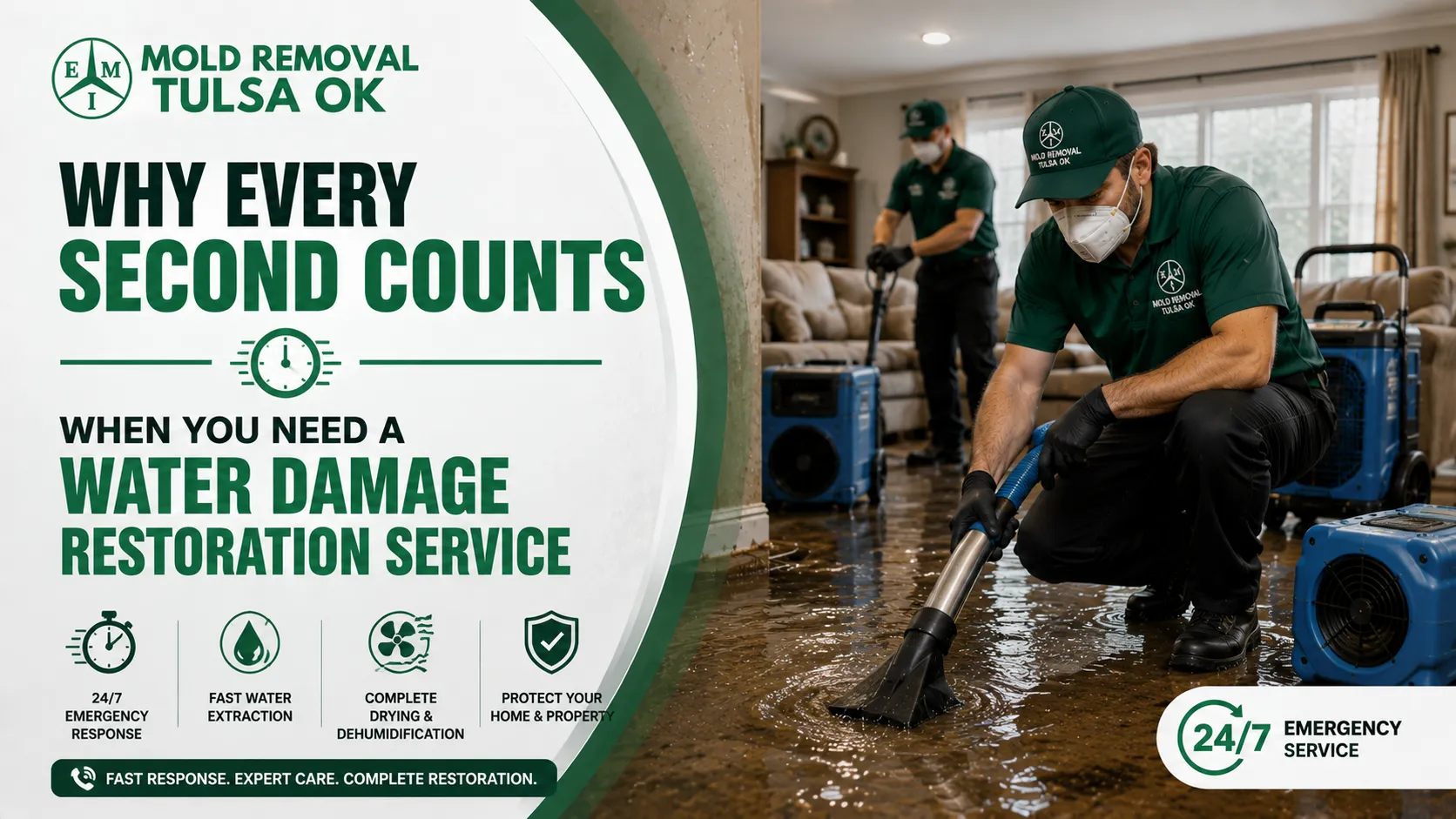
Water migrates fast. Gravity pulls it downward while capillary action draws it sideways into framing, insulation, and cabinetry. Consequently, what looks like a small puddle often masks gallons trapped in unseen cavities. Furthermore, Category 2 (gray) and Category 3 (black) contamination introduce bacteria, viruses, and toxins that demand specialized antimicrobial treatment. Ignoring these realities leads to warped hardwood, delaminated plywood, and persistent musty odors that devalue property.
Industry Standards That Separate Pros from Amateurs
The Institute of Inspection, Cleaning and Restoration Certification (IICRC) publishes the S500 Standard. Therefore, reputable firms train every technician on psychrometry, evaporation rates, and containment protocols. In addition, they carry liability insurance, workers’ compensation, and often hold manufacturer certifications for drying equipment. Hiring a crew without these credentials risks incomplete drying, voided warranties, and potential liability if a worker is injured on your premises.
Psychrometry: The Science of Drying
Effective drying balances temperature, humidity, and airflow. Technicians calculate the specific humidity ratio and dew point to create a vapor pressure differential that pulls moisture from materials into the air. Subsequently, dehumidifiers capture that vapor, condensing it into liquid for removal. This precision prevents over-drying, which cracks wood, or under-drying, which leaves mold food behind.
Step-by-Step: What Happens After the Call
First, the crew performs a safety assessment—checking electrical hazards, structural stability, and contamination category. Next, they extract standing water using truck-mounted or portable extractors. After extraction, they remove non-salvageable materials like saturated carpet pad, wet insulation, and damaged drywall. Then comes the drying phase: air movers and dehumidifiers run continuously while technicians monitor moisture content daily. Finally, antimicrobial agents are applied, and reconstruction begins once equilibrium moisture content is verified.
Moisture Mapping Technology
Infrared cameras and penetrating meters create a moisture map of the affected zone. Consequently, technicians place drying equipment exactly where data dictates, not where guesswork suggests. This targeted approach cuts drying time by up to 30 percent, reducing disruption and rental costs for equipment.
Category Classifications Determine the Protocol
Category 1 originates from a clean source—supply lines, rainwater, or melted ice. Category 2 contains significant contamination—dishwasher overflow, washing machine discharge, or toilet bowl water without feces. Category 3 is grossly unsanitary—sewage, rising floodwater, or stagnant liquid supporting bacterial growth. Each category escalates PPE requirements, demolition extent, and antimicrobial application. Therefore, accurate classification protects occupant health and ensures code compliance.
Navigating the Insurance Claim Maze
Adjusters need detailed documentation: photos, moisture readings, line-item estimates, and daily drying logs. A seasoned restoration partner speaks the carrier’s language, submits Xactimate estimates, and negotiates supplements when hidden damage appears. Moreover, they maintain a chain-of-custody for damaged personal property, simplifying contents claims. Policyholders who attempt DIY mitigation often face claim denial for failure to mitigate loss.
Common Coverage Pitfalls
Gradual leaks, lack of maintenance, and flood events (rising ground water) frequently fall under exclusions. However, sudden accidental discharge—like a water heater rupture—is typically covered. Reviewing your policy’s “water backup” endorsement and “mold limitation” clause before disaster strikes prevents unpleasant surprises.
Equipment Arsenal: More Than Just Fans
Low-grain refrigerant (LGR) dehumidifiers pull moisture down to 30 grains per pound, far beyond conventional units. Desiccant dehumidifiers excel in cold environments or dense materials like concrete. Air movers come in axial, centrifugal, and low-profile models for specific airflow patterns. Furthermore, injection drying systems force dry air into wall cavities and under cabinets without demolition. This arsenal allows tailored solutions for every material and climate.
Mold Prevention Starts on Day One
Mold spores germinate at 60 percent relative humidity within 24–48 hours. Therefore, the drying goal is to drop ambient RH below 50 percent and material moisture content below 16 percent for wood. Antimicrobial fogging or wiping adds a chemical barrier, but physical drying remains the primary defense. Post-remediation verification by a third-party industrial hygienist provides clearance documentation for future buyers or insurers.
Choosing the Right Partner in Your Area For Water Damage Restoration Service
Look for a local company with a physical address, not a storm-chasing call center. Verify IICRC firm certification, check Google and BBB reviews for consistency, and ask for recent references. Emergency response time should be under two hours. Transparent pricing, written scope of work, and a dedicated project manager signal professionalism. Additionally, confirm they handle reconstruction so you avoid coordinating multiple contractors.
Red Flags to Avoid
High-pressure sales tactics, demands for full payment upfront, unmarked vehicles, and refusal to provide certificate of insurance are warning signs. Likewise, companies that skip moisture mapping or promise “dry in 24 hours” without data are guessing, not restoring.
Commercial vs. Residential Complexity
Commercial losses involve fire suppression systems, raised access floors, data centers, and regulatory compliance (OSHA, HIPAA, FDA). Downtime costs dwarf residential claims. Therefore, commercial crews stage equipment in phases, isolate affected zones with containment barriers, and often work nights or weekends to maintain business continuity. Specialized certifications like IICRC CRT (Commercial Drying Specialist) validate this expertise.
Preventive Maintenance: Your First Line of Defense
Install smart leak detectors near water heaters, washing machines, and under sinks. Inspect supply lines annually; replace rubber hoses with braided stainless every five years. Maintain gutters, grade landscaping away from foundations, and test sump pumps quarterly. A $15 water alarm can alert you before a $15,000 loss unfolds.
Environmental Responsibility in Modern Restoration
Green restoration uses EPA Safer Choice antimicrobials, HEPA filtration for air scrubbing, and energy-efficient LGR units. Technicians salvage building materials whenever possible, reducing landfill waste. Furthermore, digital documentation replaces paper, and route optimization lowers fleet emissions. Clients increasingly demand sustainability reports alongside drying logs.
Post-Restoration Verification Gives Peace of Mind
Final walkthrough includes moisture readings matching pre-loss conditions, odor assessment, and visual inspection. A certificate of dryness signed by the project manager and homeowner closes the file. Retain all records—photos, invoices, drying logs—for future resale disclosures or insurance audits. This paper trail proves due diligence and protects property value.
Frequently Asked Questions
How fast should I call for help after discovering water intrusion?
Call immediately. The first 24 hours are critical to prevent mold germination and limit material saturation. Most reputable firms offer 24/7 emergency dispatch and arrive within two hours.
Will my homeowner’s insurance cover the full cost?
Coverage depends on the cause. Sudden accidental discharge is usually covered; gradual leaks, flood, and maintenance neglect often are not. A restoration partner can help interpret your policy and document the loss correctly.
Can I stay in the house during the drying process?
Usually yes, if the affected area can be isolated and air quality remains safe. Category 3 losses or extensive demolition may require temporary relocation for health reasons.
How long does structural drying typically take?
Most residential projects dry in three to five days. Dense materials like concrete or plaster may require seven to ten days. Daily moisture readings determine the exact timeline.
What certifications should I verify before hiring a company?
Look for IICRC firm certification, WRT (Water Restoration Technician) and ASD (Applied Structural Drying) designations for crew leads, plus state licensing where required. General liability and workers’ comp insurance are non-negotiable.
Don’t Let Water Win—Act Now
Every minute of delay multiplies damage and cost. Our IICRC-certified crew is standing by 24/7 with truck-mounted extractors, LGR dehumidifiers, and the expertise to restore your property fast.
Call Emergency Hotline: 1-918-268-5526
Licensed • Insured • Locally Owned • Insurance Billing Experts
Helpful resources: For more information, see EPA guidelines on mold and FEMA disaster recovery resources.