
When a pipe bursts at 2 a.m. or a flash flood overwhelms your basement, panic sets in fast. You need Water Damage Restoration Tulsa Oklahoma experts who arrive within the hour, not the next day. Every minute of delay allows moisture to migrate behind walls, under floors, and into structural beams, exponentially increasing repair costs and health risks. This guide walks you through the critical first steps, the science of drying, and how to choose a local partner who actually answers the phone.
Key Takeaways
- Speed is everything: Mitigation must begin within 24–48 hours to prevent mold colonization.
- Category matters: Clean water (Category 1) degrades to hazardous black water (Category 3) quickly in Tulsa’s heat.
- Local knowledge wins: Contractors familiar with Tulsa’s clay soil and aging infrastructure diagnose hidden moisture faster.
- Document everything: Photos, videos, and written logs are your best leverage during insurance negotiations.
- Verification is non-negotiable: Demand post-drying moisture maps and third-party clearance testing before reconstruction starts.
The First 60 Minutes: What to Do Before Help Arrives
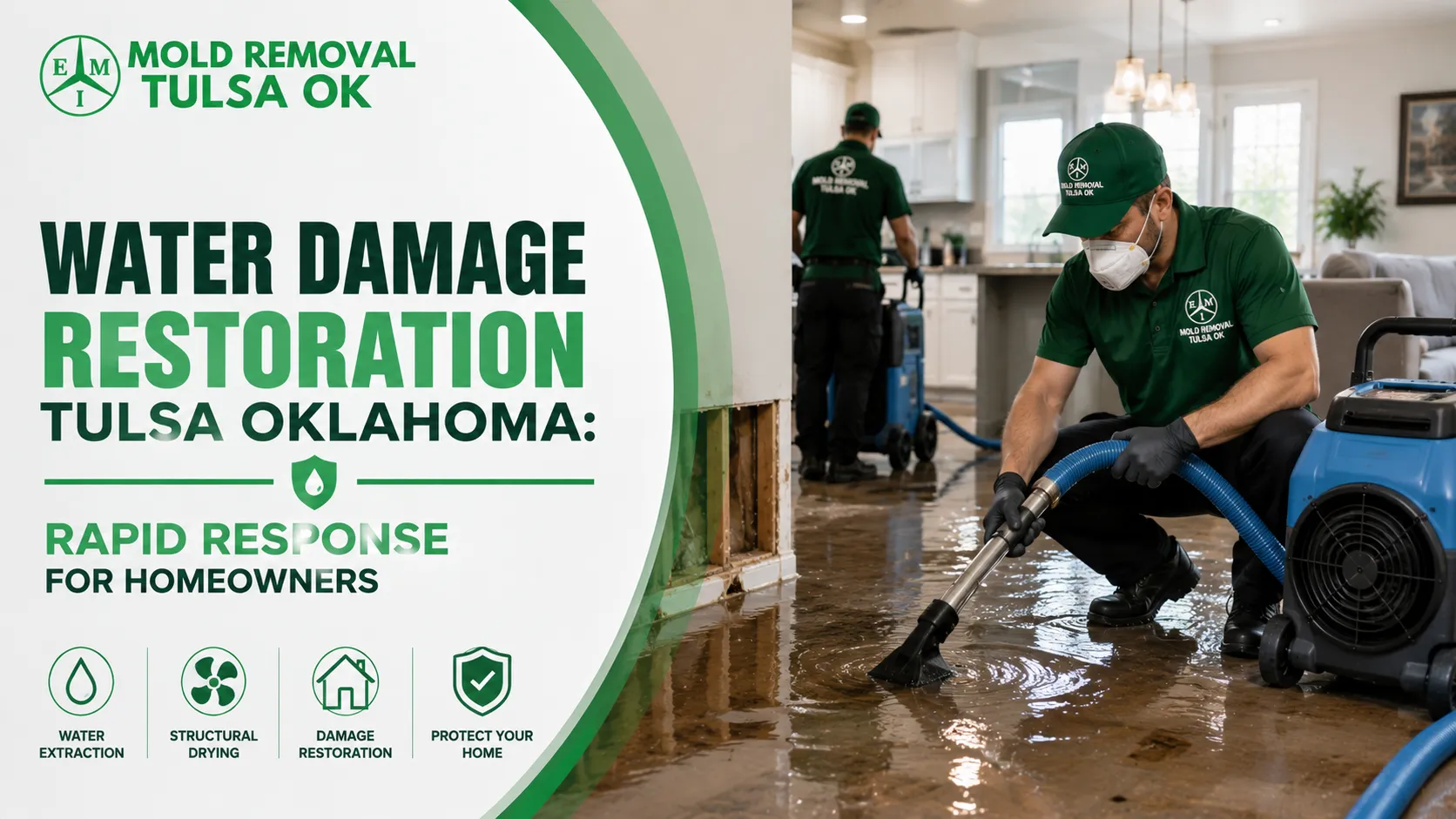
Shut off the main water valve immediately if the source is plumbing. Electricity and water are a lethal combination; therefore, cut power to affected zones at the breaker panel if you can reach it safely. Furthermore, move valuables, electronics, and sentimental items to dry areas. However, never enter a room with sagging ceilings or buckling floors—structural failure can happen without warning.
Open windows to encourage cross-ventilation, provided outdoor humidity is lower than indoors. Consequently, this simple step jump-starts evaporation. Remove saturated rugs and cushions, but leave tacked-down carpet for professionals; improper removal damages subfloors and spreads contaminants. In addition, call your insurance agent to open a claim, but do not authorize repairs until a certified estimator scopes the loss.
Understanding the Science: Categories and Classes of Loss
Category 1: Clean Water
This originates from sanitary sources like supply lines, sink overflows, or rainwater intrusion. It poses minimal risk initially. Nevertheless, Tulsa’s summer temperatures accelerate bacterial growth, turning Category 1 into Category 2 within 48 hours. Rapid extraction and aggressive airflow are usually sufficient for full recovery.
Category 2: Gray Water
Dishwasher discharge, washing machine overflow, or toilet bowls with urine fall here. Contaminants include detergents, organic matter, and microbes. Consequently, porous materials like carpet pad and insulation typically require removal. Technicians must apply antimicrobial treatments before drying begins.
Category 3: Black Water
Sewage backups, flooding from the Arkansas River, or storm surge carry pathogens, pesticides, and heavy metals. This is a biohazard scenario. Therefore, full PPE, containment barriers, and HEPA filtration are mandatory. Most porous structural materials must be discarded to protect occupant health.
Class of Damage: Measuring Saturation
Class 1 affects a small area with low porosity materials. Class 2 involves entire rooms with wet carpet and wicking up walls 12–24 inches. Class 3 means ceilings, walls, insulation, and subfloors are saturated—often from overhead leaks. Class 4 denotes specialty drying situations like hardwood floors, plaster, or concrete slabs with deep moisture binding. Tulsa’s prevalence of slab-on-grade foundations makes Class 4 common after slab leaks.
Why Tulsa Homes Face Unique Moisture Challenges
Our region sits on expansive clay soil that swells when wet and shrinks during droughts. This constant movement cracks foundation slabs and shifts plumbing joints, creating hidden leak pathways. Moreover, the Arkansas River watershed and frequent severe thunderstorms dump inches of rain in minutes, overwhelming storm drains and causing hydrostatic pressure against basement walls.
Older neighborhoods like Brookside, Maple Ridge, and Kendall-Whittier feature cast-iron sewer lines nearing the end of their lifespan. Root intrusion and corrosion lead to sudden backups. Conversely, newer subdivisions in Bixby or Owasso often suffer from improper grading or undersized sump systems. A local restoration firm recognizes these patterns instantly, whereas out-of-town franchises often miss the root cause.
The Professional Mitigation Process: Step by Step
1. Emergency Contact and Dispatch
Reputable companies operate 24/7/365 with live dispatchers, not answering services. They gather critical details: source of water, affected square footage, flooring types, and electrical hazards. Consequently, the right truck—stocked with extractors, dehumidifiers, and air movers—rolls immediately.
2. Inspection and Moisture Mapping
Technicians use thermal imaging cameras and penetrating moisture meters to define the wet boundary. They document findings in software like Xactimate or Encircle, creating a digital moisture map. This map guides equipment placement and provides evidence for adjusters. Furthermore, it prevents the “we didn’t know it was wet there” dispute later.
3. Bulk Water Extraction
Truck-mounted extractors remove 90–95% of free water. Portable units reach upper floors or tight crawls. Weighted extraction tools compress carpet and pad simultaneously, pulling moisture from the cushion without delamination. Speed here directly correlates to reduced drying time.
4. Controlled Demolition and Content Manipulation
Non-salvageable materials—wet drywall above the flood cut, saturated insulation, ruined pad—are removed. Contents are inventoried, photographed, and moved to a climate-controlled warehouse for cleaning or storage. Consequently, the structure becomes accessible for airflow.
5. Structural Drying: The Balanced System
Air movers create high-velocity airflow across wet surfaces, breaking the vapor boundary layer. Low-grain refrigerant (LGR) dehumidifiers pull moisture from the air, maintaining a vapor pressure differential that drives evaporation. Technicians monitor psychrometric readings (temperature, humidity, grains per pound) daily, adjusting equipment to hit the “drying sweet spot.” Over-drying cracks wood; under-drying grows mold.
6. Antimicrobial Application and HEPA Filtration
EPA-registered botanicals or quaternary ammonium compounds treat affected framing. Negative-air machines with HEPA filters scrub airborne spores during demolition. This step is critical for Category 2 and 3 losses, but prudent for all projects given Tulsa’s high ambient mold spore counts.
7. Verification and Clearance
Final moisture readings must meet IICRC S500 standards: wood moisture content below 16%, drywall below 12%, concrete relative humidity below 75%. Some insurers require third-party Indoor Environmental Professionals (IEPs) to perform clearance sampling. Keep these reports—they protect resale value.
Navigating the Insurance Maze
Most policies cover sudden and accidental discharge, but exclude gradual seepage, foundation cracks, or flood (rising ground water) unless you carry a separate NFIP or private flood endorsement. Consequently, the cause determination dictates coverage. A restoration contractor experienced in Tulsa claims helps you articulate the “sudden and accidental” narrative with evidence.
Request a “scope of loss” meeting with the adjuster and your project manager on-site. Furthermore, never accept a lowball estimate based on desk reviews. Supplementals are standard; hidden damage behind cabinets or inside wall cavities emerges during demolition. Your contractor should submit supplements with photos and moisture data directly to the carrier.
Choosing the Right Restoration Partner in Tulsa
Certifications That Matter
Look for IICRC firm certification, WRT (Water Damage Restoration Technician) and ASD (Applied Structural Drying) designations for crew leads. Additionally, MICRO (Mold Removal) certification is vital given our climate. Verify these on the IICRC global registry—logos on a website prove nothing.
Local References and Response Time
Ask for addresses of recent jobs in your zip code. Drive by if possible. A true local company averages 60–90 minute arrival times across the metro. Franchises often dispatch from Oklahoma City or Dallas, adding hours to the clock.
Transparent Contracts
Avoid “time and materials” open-ended agreements. Insist on a detailed scope with line-item pricing tied to Xactimate codes. Moreover, the contract should define the drying goal, equipment counts, daily monitoring fees, and a “not-to-exceed” cap for the mitigation phase.
Full-Service Capability
Mitigation is only half the battle. Firms that also handle reconstruction (drywall, paint, flooring, cabinetry) eliminate the coordination nightmare between separate trades. One project manager, one warranty, one point of accountability.
Prevention Strategies for Tulsa Homeowners
Install a smart water leak detector with automatic shutoff on the main line. Devices like Flo by Moen or Phyn Plus learn usage patterns and alert you via smartphone before catastrophic failure. Furthermore, test your sump pump quarterly; install a battery backup and a high-water alarm. Grade soil away from the foundation at a 5% slope for at least six feet.
Insulate exposed pipes in crawlspaces and attics—Arctic blasts in February 2021 proved Tulsa isn’t immune to deep freezes. Schedule a camera inspection of sewer laterals every two years if you have mature trees. Finally, review your policy annually; add sewer backup endorsement and consider flood insurance even in Zone X. The cost is pennies compared to a $50,000 mitigation bill.
Health Implications of Delayed Drying
Mold spores germinate at 60% relative humidity; Tulsa averages 70%+ in spring. Colonies release mycotoxins and MVOCs (microbial volatile organic compounds) that trigger asthma, allergies, and neurological symptoms in sensitive individuals. Children, seniors, and immunocompromised occupants face the highest risk. Consequently, professional drying isn’t just about property—it’s about public health.
Bacteria from Category 2/3 water produce endotoxins that remain potent long after the water is gone. HEPA vacuuming and damp wiping of all surfaces in the containment zone are mandatory. Moreover, HVAC systems must be inspected; contaminated ductwork redistributes hazards throughout the home.
Commercial Properties: Higher Stakes, Tighter Timelines
Apartment complexes, offices, and retail spaces in downtown Tulsa or the Blue Dome District face business interruption losses that dwarf repair costs. Every day of closure bleeds revenue and tenant goodwill. Therefore, commercial mitigation requires phased containment—isolating affected wings while operations continue elsewhere. Large-desiccant dehumidifiers and temporary power distribution enable 24/7 drying without disrupting unaffected tenants.
Documentation must satisfy commercial adjusters, property managers, and often lenders. Detailed daily logs, psychrometric charts, and progress photos become legal exhibits. A restoration firm with commercial project management experience is non-negotiable for these losses.
Frequently Asked Questions
How fast does mold start growing after water damage in Tulsa?
Mold spores can germinate within 24 to 48 hours when moisture and organic food sources are present. Tulsa’s high humidity accelerates this timeline, making rapid professional drying critical to prevent colonization.
Will my homeowner’s insurance cover a slab leak repair?
Most policies cover the tear-out and restoration to access the leak (slab penetration, flooring removal) but exclude the actual pipe repair itself. Coverage varies by endorsement, so review your specific policy language with your agent immediately.
Can I stay in my home during the drying process?
For Category 1 losses affecting limited areas, yes—though equipment noise and dry air can be uncomfortable. For Category 2 or 3, or when containment barriers isolate large sections, temporary relocation is strongly recommended for health and safety.
What is the difference between water mitigation and water restoration?
Mitigation stops ongoing damage: extraction, drying, and stabilization. Restoration rebuilds the property to pre-loss condition: drywall, paint, flooring, trim. Many Tulsa firms handle both phases seamlessly under one contract.
How do I know if the structure is truly dry?
Professionals use calibrated moisture meters and thermal imaging to verify materials meet IICRC dry standards (e.g., wood below 16% MC). Request the final moisture map and, if desired, hire an independent IEP for clearance testing before reconstruction begins.
Don’t Let Water Win. Call Tulsa’s Trusted Team Now.
Every minute counts. Our IICRC-certified technicians are standing by 24/7 with truck-mounted extractors and thermal imaging ready to deploy across the metro.
Call Emergency Hotline: (918) 268-5526
Licensed • Insured • Locally Owned • Direct Insurance Billing